Towing in Rain: What Drivers Should Do First
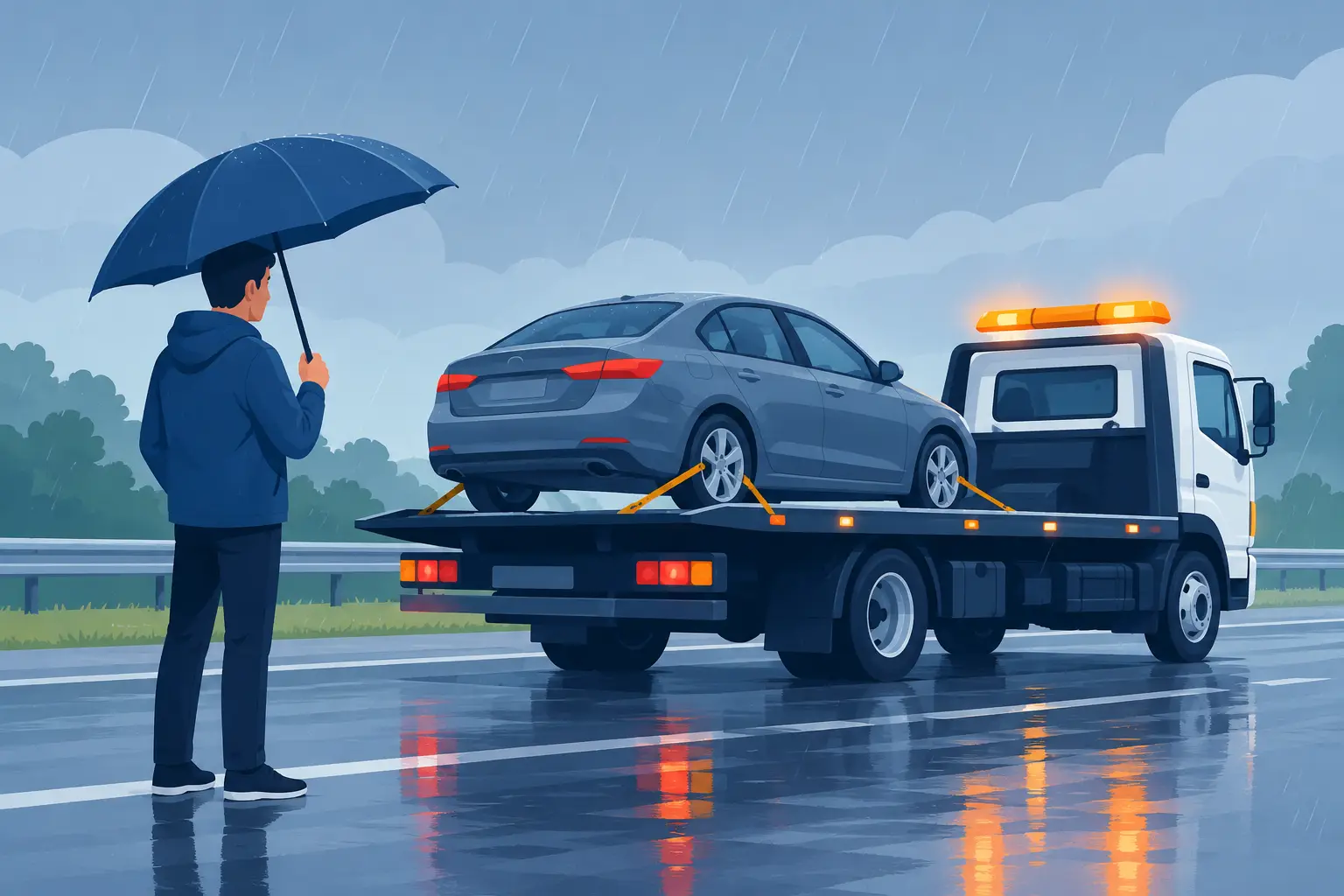
Rain changes a routine breakdown into a more serious roadside safety problem. Whether your car will not start, you have a flat tire, or you have been in a collision, towing in rain requires slower decisions, better visibility, and a clear plan for getting everyone out of harm’s way.
On wet roads, a stopped vehicle is harder for approaching drivers to see and harder for them to avoid. The priority is not figuring out the mechanical problem on the shoulder. It is protecting yourself, your passengers, and your vehicle until help arrives.
Get Out of Traffic If You Can Do So Safely
If your vehicle is still movable, use your turn signal and gradually steer toward the nearest safe location. A parking lot, wide shoulder, rest area, or side street is far better than stopping in an active lane. Avoid sudden braking or sharp steering, especially on standing water, where traction can disappear quickly.
Do not try to push a disabled vehicle across wet traffic lanes. That can put you and anyone helping you in a dangerous position. If the vehicle cannot move safely, turn on your hazard lights right away and call for assistance.
On a freeway or busy road, staying inside the vehicle with your seat belt fastened is often the safest choice. Keep the doors locked and wait for professional help. If there is smoke, fire, rising water, or another immediate hazard, move away from the vehicle only when you can reach a safe area well away from traffic.
Make Your Vehicle Easier to See
Heavy rain can hide a vehicle’s lights, color, and position until another driver is much too close. Leave your hazard flashers on. If it is dark or visibility is especially poor, turn on your headlights as well, provided doing so does not drain a weak battery.
If you carry reflective triangles, flares, or a high-visibility vest, use them only if it is safe to step outside and place them. Never walk along a narrow shoulder next to fast-moving traffic just to set out warning devices. Your safety matters more than any roadside marker.
If you are waiting in a safe location, keep an eye on changing conditions. Rain can cause water to pool quickly near curbs, low spots, ditches, and underpasses. A location that seemed manageable ten minutes ago may become unsafe as runoff increases.
Why Rain Makes Towing More Complicated
A professional tow is still very possible in wet weather, but rain affects nearly every part of the job. Roads are slick, winch lines and equipment need careful handling, and loading angles can be more challenging. Visibility also affects how a tow operator positions the truck and protects the work area.
This is especially true after an accident. A vehicle may be damaged in ways that are not obvious from the driver’s seat, and wet pavement can leave debris spread across the roadway. Trying to drive a damaged car farther, even a short distance, can create another hazard or cause more damage.
For motorcycles, trailers, and light trucks, the towing method matters even more. Secure tie-down points, weight distribution, and appropriate equipment help protect the vehicle during loading and transport. A quick tow should never mean a careless tow.
What to Tell the Towing Company
Clear information helps the dispatcher send the right truck and prepare the operator before arrival. You do not need to diagnose the vehicle. Just describe what happened and where you are as accurately as possible.
Share your closest cross street, freeway direction, mile marker, business name, or a recognizable landmark. Let the dispatcher know whether your vehicle is in a travel lane, on a shoulder, in a ditch, in a parking lot, or at home. Mention if the vehicle is all-wheel drive, has very low clearance, is towing a trailer, or has damage that may affect how it can be loaded.
It also helps to explain the weather conditions at your location. Rain can vary widely across the area. If there is flooding, poor visibility, or slick conditions on a steep road, that information allows the operator to plan for the safest approach.
In Gresham and Troutdale, rain can turn familiar routes into difficult recovery locations fast, particularly near busy roads, hills, and areas where water collects. A local towing team will understand why location details matter and can focus on reaching you safely rather than guessing where to look.
Do Not Let a Tow Strap Become a Rainy-Day Solution
When a vehicle will not move, it is tempting to call a friend with a truck and a tow strap. On a dry, empty private property, that may sometimes be a controlled option for a minor situation. On a wet public road, it can be a risky choice.
Tow straps can fail, vehicles can slide, and the driver of the disabled vehicle may have limited braking or steering control. The risk goes up in rain, darkness, traffic, or on an incline. A professional tow truck provides the right equipment, lighting, securement, and experienced handling for the situation.
The same caution applies to attempting roadside repairs in a downpour. Opening the hood beside traffic, changing a tire on wet pavement, or crawling near the underside of a vehicle can put you at risk. If the repair is not simple and safely away from traffic, a tow is usually the smarter call.
Prepare for the Tow While You Wait
Once help is on the way, gather what you may need from the vehicle if it is safe to do so. Take your phone, identification, insurance information, keys, medications, and valuables. If you have a child seat, work equipment, or other essential items, let the tow operator know before the vehicle is loaded.
Take a few photos of your vehicle and its surroundings if conditions allow. This can be useful after a collision or when documenting existing damage. Do not stand in traffic or expose yourself to heavy rain and passing vehicles just to get pictures.
Keep your phone charged when possible and listen for calls from the towing company. A driver may need to confirm your exact location, ask which direction you are facing, or tell you where to wait safely. If you are in an unsafe spot, say so clearly.
Choosing the Right Destination
Not every tow needs to go to the same place. If the issue is a dead battery, empty fuel tank, or another problem that can be resolved on-site, roadside assistance may get you moving without a tow. If the vehicle has collision damage, overheated, lost a wheel, or will not run reliably, a repair shop may be the better destination.
Consider where you can safely leave the vehicle after hours. Some repair shops do not accept drop-offs overnight, while a dealership may require an appointment. If you are unsure, ask the towing provider what information they need before transport begins.
Tow Guys LLC approaches rainy roadside calls with the same goal as every emergency call: get to you promptly, protect the scene, and move your vehicle with care. That reassurance matters when the weather is bad and you are already dealing with an unexpected problem.
A Little Preparation Helps Before the Next Storm
You cannot prevent every breakdown, but a few supplies can make waiting for help safer. Keep a charged phone or charging cable, flashlight, rain jacket, basic first-aid kit, reflective gear, and emergency contact information in the vehicle. Check your tires, wipers, lights, and battery before the rainy season gets underway.
Most of all, give yourself permission to stop and call for help rather than trying to force a solution in unsafe conditions. In rain, the best decision is often the one that gets you out of traffic, keeps you visible, and lets a trained towing professional handle the vehicle from there.
Need a tow in Gresham or East County? Call Tow Guys 24/7 at (971) 222-7994.