Insurance Towing Versus Private Towing Explained
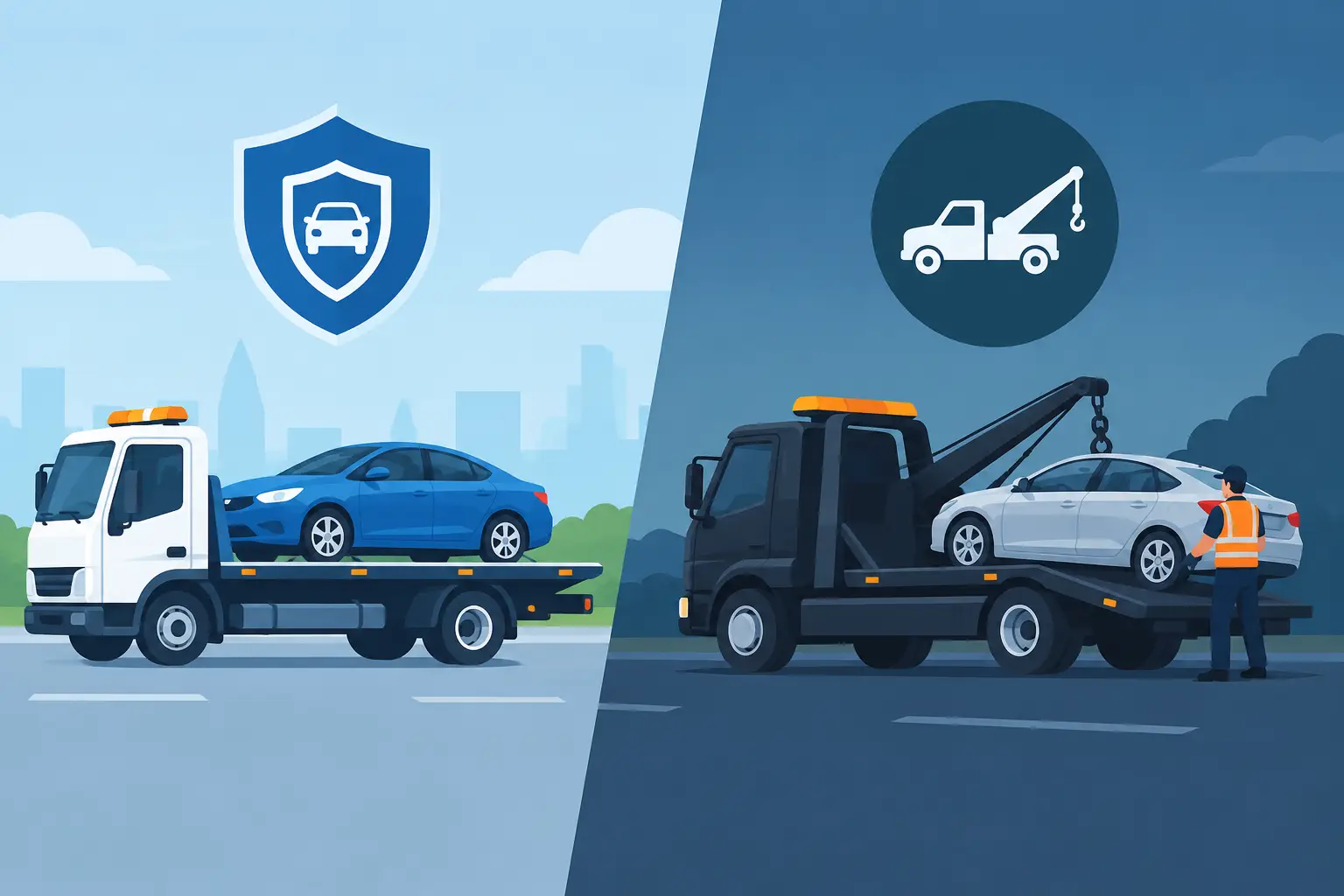
A dead battery in a grocery store lot, a flat on the way to work, or a crash that leaves your car undrivable creates one immediate question: who is going to move the vehicle? Insurance towing versus private towing can change how quickly help arrives, what you pay up front, and how much control you have over the process.
Neither option is automatically better in every situation. Roadside coverage can be valuable when it works smoothly. But when you are stuck in an unsafe spot, need a specific destination, or cannot wait through a long dispatch process, calling a local towing company directly may be the practical choice.
Insurance Towing Versus Private Towing: The Main Difference
Insurance towing usually means you request roadside assistance through your auto insurer, a motor club, a credit card benefit, or a vehicle warranty program. That provider assigns the call to a towing company in its network. Depending on your coverage, the tow may be covered fully, covered up to a mileage or dollar limit, or require a payment for the amount beyond your benefit.
Private towing means you call a towing company yourself and arrange the service directly. You choose who responds, discuss the destination, receive the price information from the provider, and pay the towing company. If your insurance policy offers reimbursement, you can submit the receipt afterward.
The difference is not just about payment. It is also about dispatch control. With an insurance tow, a third party sits between you and the truck. With private towing, you speak directly with the team responsible for getting to you.
When Insurance Roadside Assistance Makes Sense
Insurance-provided towing can be a good fit for a routine breakdown when you are in a safe location, your policy includes enough towing distance, and the provider can send someone promptly. For drivers who already pay for roadside benefits, using them can reduce or eliminate an out-of-pocket expense.
Before you rely on coverage, check the details. Many plans limit the number of service calls per year, the number of miles included, or the total amount paid per tow. A policy may cover a tow to the nearest qualified repair facility rather than the shop you prefer. If your preferred mechanic is farther away, you may owe the difference.
Coverage also does not always mean immediate dispatch. Insurers and motor clubs commonly work with contracted providers across a broad area. During storms, rush hour, major collisions, or periods of high call volume, the assigned provider may be handling many calls at once. The wait can depend on network availability, not simply on how close a truck is to your vehicle.
If you use insurance towing after an accident, ask whether the tow is covered under roadside assistance, collision coverage, or another part of your policy. Accident-related towing may be handled differently than a non-starting car in your driveway. Getting a clear answer before authorizing service can help prevent surprises later.
Why Drivers Choose Private Towing
Private towing is often about speed, certainty, and personal service. When you call a local company directly, you can explain where you are, what happened, whether the vehicle is blocking traffic, and where it needs to go. The dispatcher can tell you whether the equipment and availability match your situation.
That direct contact matters when the details are not simple. A motorcycle needs proper handling. A truck, trailer, or all-wheel-drive vehicle may require specific equipment or loading procedures. A vehicle in a ditch, parking garage, tight driveway, or accident scene may need more than a standard tow. A local operator can assess the situation with you rather than treating every call as the same basic dispatch.
Private service also gives you more say in the destination. You may want your car taken home, to a trusted repair shop, to a dealership, or to a secure location until you can decide what comes next. Insurance plans sometimes impose destination rules or mileage limits. Calling privately lets you make the plan that works for you, provided the destination is accessible and safe for the tow.
For drivers in Gresham and Troutdale, a local company may also have a stronger understanding of nearby streets, repair options, and the conditions that affect response times. Tow Guys LLC is family-owned and focused on direct, professional help when local drivers need it most.
The Cost Question: Up-Front Payment vs. Reimbursement
The biggest reason drivers hesitate to call privately is the cost. That is understandable. A breakdown is stressful enough without worrying about an unexpected bill. Still, the lowest up-front cost is not always the lowest overall cost if an insurance dispatch leaves you waiting for hours, sends the wrong equipment, or limits where your vehicle can go.
With a private tow, ask for clear pricing before the truck is dispatched. The final price may depend on mileage, vehicle type, the condition and location of the vehicle, recovery needs, tolls, after-hours service, or special equipment. A reputable towing company should explain the relevant charges in plain language.
If your insurance includes towing reimbursement, save the itemized receipt, invoice, date of service, pickup location, destination, and any claim information your carrier requires. Call the insurance company if you are unsure whether prior approval is needed. Some plans allow reimbursement when you arrange your own tow, while others require you to use their dispatch line except in an emergency.
It is worth asking one simple question before deciding: "Will my coverage reimburse a private tow, and what is the limit?" If the answer is yes, direct towing may give you faster help without giving up your benefit. If the answer is no, you can still compare the known private cost with the time and limitations of the insurance option.
Situations Where Waiting Is Not the Best Option
There are moments when the decision should be driven by safety, not benefit details. If your vehicle is stopped in a traffic lane, on a narrow shoulder, near a blind curve, or in severe weather, take the fastest safe path to getting help. Move yourself and passengers away from traffic when possible, turn on hazard lights, and contact emergency services if there is an injury, fire, active traffic danger, or another urgent hazard.
After an accident, follow instructions from law enforcement and do not authorize a tow until you understand where the vehicle is going. If police request removal, ask for the towing company name, the destination, and how to retrieve your vehicle. Be especially cautious of unsolicited tow operators who arrive before you have called anyone or before an officer has directed the removal.
A non-emergency breakdown can also become unsafe after dark or in bad weather. If you have children, older passengers, or pets in the vehicle, a long wait may not be realistic. Direct private towing gives you the option to work with a nearby team that can respond based on the actual situation, not just a coverage workflow.
Questions to Ask Before You Authorize a Tow
A few clear questions can prevent confusion later. Ask how soon the truck can arrive, whether the company can safely tow your type of vehicle, and where the vehicle will be delivered. Confirm the expected price or the factors that may affect it. If insurance is involved, ask whether you need to pay first and seek reimbursement or whether the company can bill the provider directly.
For an accident tow, also ask about storage. If a vehicle is taken to an impound or storage yard, daily fees can add up quickly. Know the location, hours, identification requirements, and any steps needed to release the vehicle to a repair shop or insurance adjuster.
Do not feel pressured to choose a destination you do not understand. Your vehicle may need to go to a body shop, mechanic, dealership, home, or another safe location depending on the damage and your insurance claim. A good towing team will explain the options without adding to the stress.
Make the Choice Before You Need It
The best time to review roadside benefits is not while you are standing beside a disabled car. Look at your insurance policy now, note its towing distance and reimbursement rules, and keep the information available in your phone. It also helps to know a dependable local towing provider before a breakdown forces a quick decision.
When the vehicle will not start or cannot be driven safely, choose the option that gets you and your passengers out of harm's way with the least confusion. Your coverage matters, but so do response time, proper vehicle handling, and getting your car where it needs to be. A clear call and a trusted towing professional can turn a bad roadside moment into a manageable next step.
Need a tow in Gresham or East County? Call Tow Guys 24/7 at (971) 222-7994.