
8 Best Questions Before Towing Your Vehicle
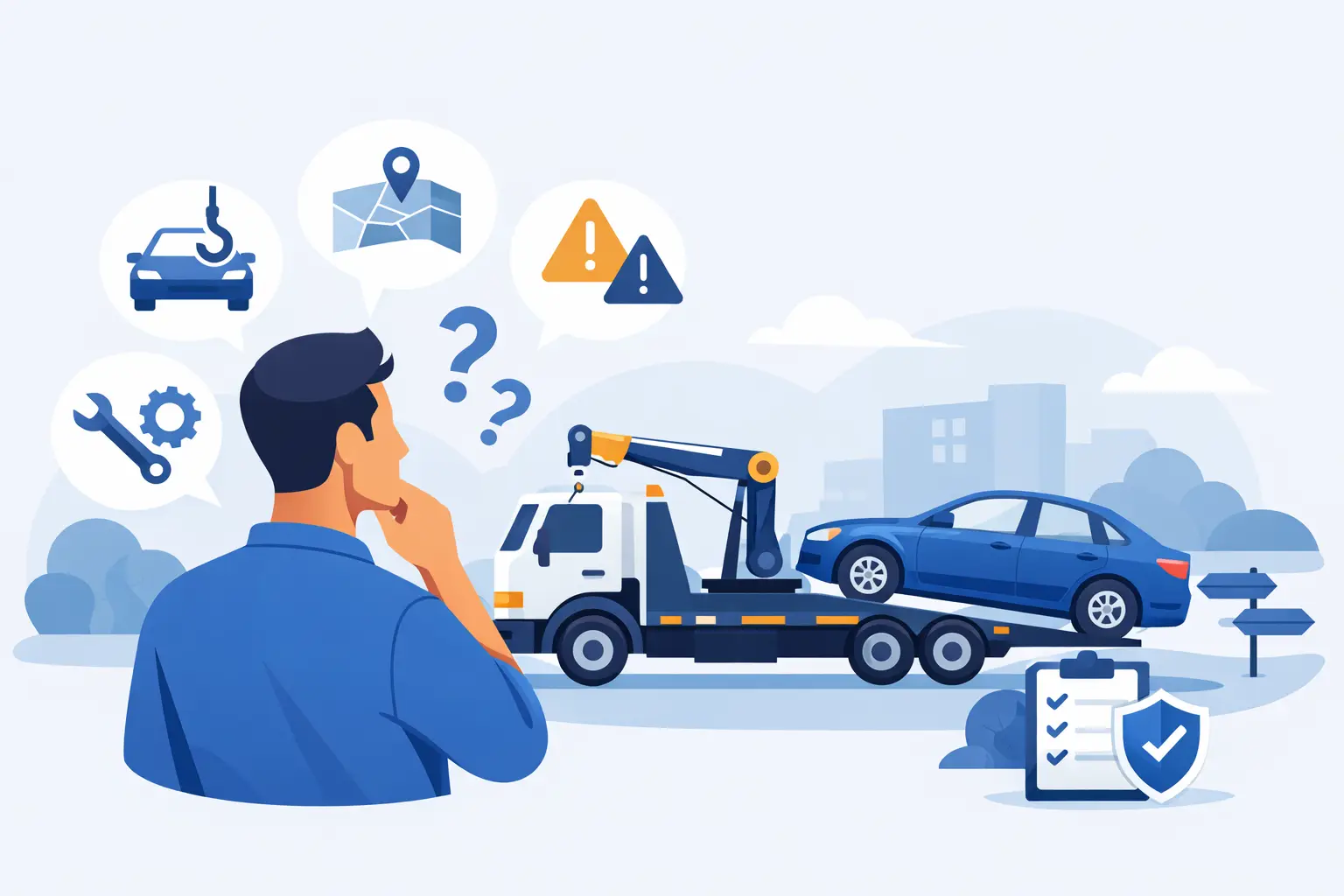
A dead battery at the grocery store is frustrating. A breakdown on I-84, in heavy rain, or after dark can feel much bigger than that. Asking the best questions before towing helps you move from uncertainty to a clear plan, protect your vehicle, and avoid surprises when help is on the way.
You do not need to become a towing expert while standing beside the road. You simply need a few direct answers from the company you call. A professional dispatcher should be able to explain what happens next in plain language, listen to your situation, and help you make the safest decision.
Best Questions Before Towing: Start With Safety
Before discussing price or destination, make sure you and your passengers are safe. If your vehicle is in a travel lane, near fast-moving traffic, damaged after a collision, leaking fluid, or creating a hazard, move to a safer location only if it is safe to do so. Turn on your hazard lights and call 911 when there is an immediate danger, injury, fire risk, or blocked roadway.
When you call for towing, explain where the vehicle is, which direction you are facing, and any nearby landmark, exit, or business. Accurate location details are often the fastest way to prevent delays. Let the dispatcher know if you are in a parking lot, driveway, garage, shoulder, or difficult-to-reach area, since access can affect the equipment needed.
1. How Soon Can You Get Here?
An honest arrival estimate is one of the first things to ask. Towing times depend on traffic, weather, call volume, distance, and whether a truck is already assisting someone nearby. No company can control every delay, but a reliable provider should give you a realistic window rather than a vague promise.
Ask whether the driver will call or text when they are close. That is especially helpful if you are waiting somewhere unfamiliar or need to meet the driver at a repair shop. If you are stranded with children, older passengers, or pets, say so. It gives the dispatcher useful context and may help them recommend the safest next step while you wait.
2. What Information Do You Need From Me?
A good tow starts with good information. The dispatcher will usually need your location, phone number, vehicle year, make, model, color, and license plate number. They may also ask what is wrong with the vehicle and whether it is drivable.
Be specific about conditions that change the job. Tell them if the car is all-wheel drive, lowered, locked, missing a wheel, stuck in mud, parked in a tight garage, or involved in an accident. Mention a trailer, motorcycle, light truck, or unusual load as well. Sending the right truck and equipment the first time saves time and reduces the chance of handling problems.
3. Can You Tow My Type of Vehicle Safely?
Not every tow is the same. A standard passenger car may be simple to load, while an all-wheel-drive vehicle, electric vehicle, motorcycle, trailer, or work truck can require a different approach. The right method depends on the vehicle, its condition, and where it is located.
Ask whether the company has the equipment needed for your vehicle and whether a flatbed or another towing method is recommended. Flatbed towing can be a strong choice for many damaged, low-clearance, all-wheel-drive, and non-running vehicles, but the proper choice always depends on the situation. If your owner’s manual has towing instructions, share that information when possible.
4. What Will the Tow Cost, and What Does That Include?
Price matters, especially when the breakdown was not in your plans. Ask for an estimate and ask what the estimate includes. A clear answer should cover the service call, loading, towing distance, and the destination you provide.
It is also reasonable to ask what could change the final price. Extra distance, after-hours service, winching, recovery work, difficult access, storage, tolls, or special equipment may affect the total. That does not mean every tow will include extra charges. It means you deserve to know about possible factors before authorizing service.
Do not choose solely on the lowest number you hear. A low quote that leaves out equipment, mileage, or recovery work can become confusing later. The better choice is a company that explains the price clearly and sends the right help for the job.
5. Can You Help Without Towing Me?
Sometimes a tow is necessary. Sometimes roadside assistance can get you moving again. Ask whether the problem sounds like something the driver can assess or resolve on scene, such as a dead battery, an empty fuel tank, a minor lockout situation, or a vehicle that will not start.
A professional company will not pressure you into a tow if a safe roadside solution makes more sense. On the other hand, do not insist on driving a vehicle that may have serious mechanical trouble. Overheating, severe collision damage, steering problems, brake trouble, warning lights combined with poor performance, or a flat tire without a safe spare can turn a short drive into a more expensive repair or a safety risk.
6. Where Can You Take My Vehicle?
Have a destination in mind before the truck arrives. You may choose a repair shop, dealership, tire shop, your home, or another approved location. Ask whether the shop is open, whether it accepts after-hours drop-offs, and where the driver should leave the keys if you cannot be there.
If you are unsure where to go, ask for practical guidance based on the problem. A vehicle with collision damage may need a body shop, while a no-start issue could call for a general repair shop or dealership. If the car must be towed outside the immediate area, confirm the distance and cost before the truck is dispatched.
For drivers in Gresham and Troutdale, local familiarity can make a real difference when roads are busy, weather is poor, or a vehicle needs to be delivered to a nearby shop. The goal is not just getting the vehicle off the road. It is getting it to the right place with as little added stress as possible.
7. What Happens if My Vehicle Has Damage or Personal Items Inside?
Ask what you should remove before the tow. Take valuables, medications, work materials, important documents, garage remotes, and anything you will need right away. If the vehicle is headed to a shop after hours, you may not have access to it until the next business day.
It also helps to take a few clear photos of your vehicle before loading, especially after an accident or if it already has visible damage. This is not about expecting a problem. It is a simple record of the vehicle’s condition and can be useful for insurance or repair conversations.
Tell the driver about any special concerns, including low ground clearance, an inoperable door, a damaged wheel, loose parts, or a vehicle that cannot be put in neutral. Clear communication helps the driver load and secure it correctly.
8. How Will I Know the Driver Is Here to Help Me?
When you are waiting at night or on a roadside, confirmation matters. Ask the dispatcher for the truck description, the driver’s name if available, and how the driver will contact you on arrival. Keep your phone nearby, but stay aware of your surroundings instead of standing close to traffic.
You can also ask what you should do when the truck arrives. In many cases, the safest choice is to remain in a protected area until the driver confirms where you should stand and what information is needed. Do not attempt to help load the vehicle unless the driver specifically directs you to do something safe.
A calm, professional towing team will explain the next steps, verify the destination, and answer reasonable questions before leaving. That reassurance matters when you are already dealing with an unexpected problem.
The right questions do more than help you compare towing companies. They help you regain control of a stressful moment. Keep this list in your phone, and if you ever need help, focus first on getting yourself somewhere safe, sharing clear details, and choosing a provider that treats both you and your vehicle with care.
Need a tow in Gresham or East County? Call Tow Guys 24/7 at (971) 222-7994.