
Best Truck Transport Methods for Safe Local Towing
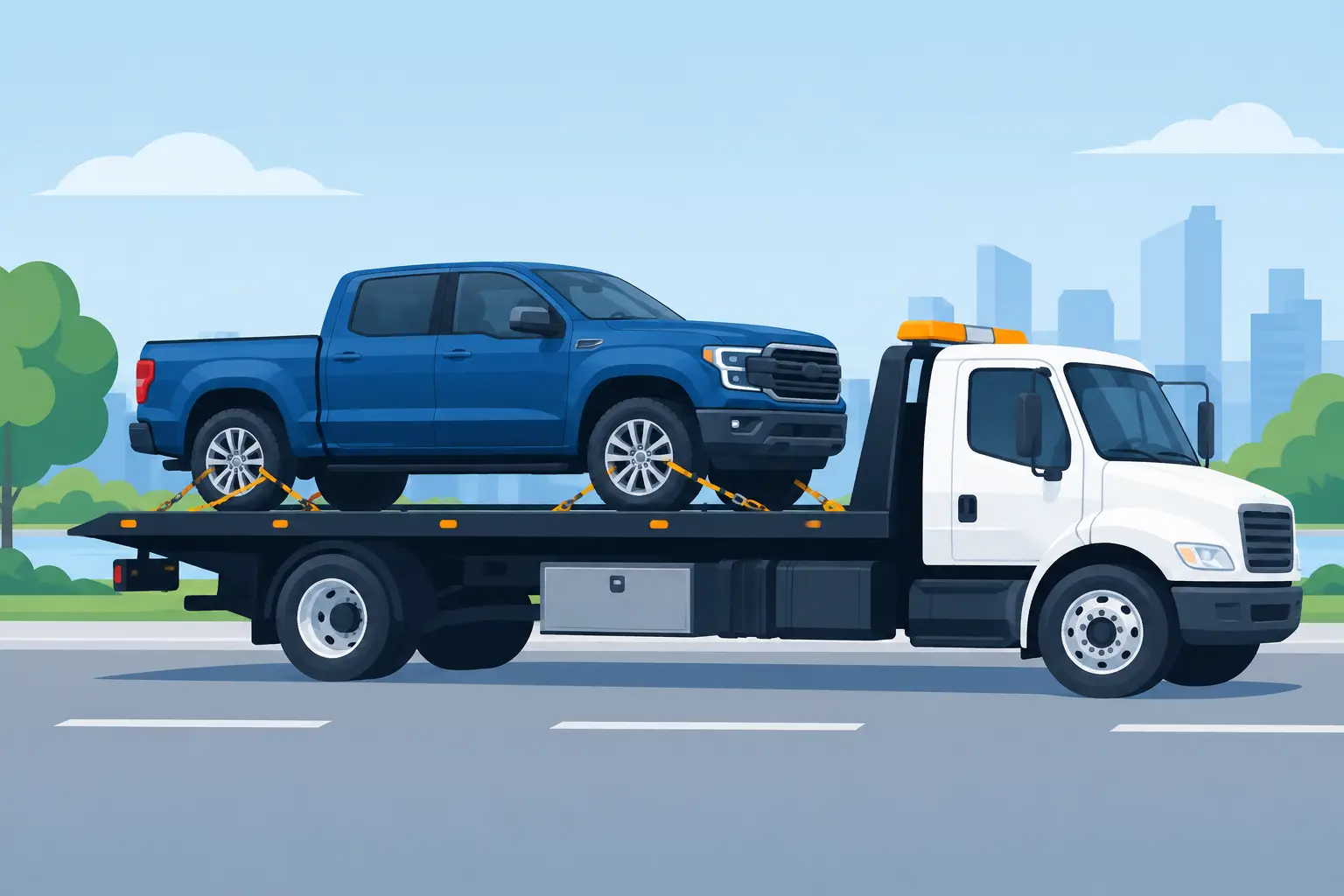
A disabled pickup on the shoulder is not just an inconvenience. It may be your work vehicle, your way home, or the truck you rely on to pull a trailer, carry tools, and take care of your family. The best truck transport methods protect the truck from further damage while getting it off the road quickly and safely.
The right choice depends on the truck’s condition, drivetrain, size, and location. A truck with front-end collision damage needs to be handled differently than one with a dead battery in a parking lot. That is why a qualified towing operator evaluates the situation before hooking up, rather than treating every call the same.
Best Truck Transport Methods for Common Breakdowns
For most pickups and light-duty trucks, flatbed towing is the safest all-around option. A flatbed keeps all four tires off the ground, reducing wear on the drivetrain, tires, suspension, and transmission. It is especially useful when the truck cannot roll, has collision damage, or has an all-wheel-drive or four-wheel-drive system.
A wheel-lift tow is another practical method when the truck is mechanically sound enough to roll and the towing distance is short. The operator lifts either the front or rear wheels while the other set remains on the road. This can be a fast, effective option for certain two-wheel-drive trucks, but it requires the correct end of the vehicle to be lifted. Towing a rear-wheel-drive truck from the front, for example, may require disconnecting the driveshaft or using tow dollies to prevent transmission damage.
Trailer transport is often the right solution for specialty trucks, heavily modified vehicles, or trucks that need to travel farther than a typical local tow. An equipment trailer or car hauler supports the entire vehicle much like a flatbed. It also gives the operator more flexibility with a truck that is low, inoperable, or difficult to load onto a standard tow truck.
The safest method is not always the fastest-looking method. A few extra minutes spent positioning a flatbed, checking recovery points, or securing the vehicle correctly can prevent a much bigger repair bill later.
Flatbed Towing: The Preferred Choice for Most Trucks
Flatbed towing works well because the truck rides completely above the road. The operator uses a winch to carefully load the vehicle, then secures it at appropriate tie-down points. This approach avoids turning the truck’s wheels and drivetrain during transport.
Flatbeds are usually the best fit when a truck has four-wheel drive, all-wheel drive, automatic transmission concerns, major suspension damage, a locked wheel, or accident damage. They are also a smart choice after overheating or engine trouble, when you do not want to risk running the vehicle again just to move it.
For many Gresham and Troutdale drivers, a flatbed is the reassuring answer after a roadside problem. Your truck stays stable, protected, and fully supported from pickup to drop-off.
Wheel-Lift Towing: Useful When Conditions Are Right
Wheel-lift towing uses a metal yoke to lift one axle while the other tires remain on the pavement. It is often quicker to position in tight parking lots, driveways, and congested roadside locations. For a two-wheel-drive truck with no collision damage, it can be a safe and efficient local transport method.
Still, wheel-lift towing has limits. The operator needs to know the truck’s drivetrain and whether it can be moved with one axle rolling. A truck with damaged steering, compromised tires, or a drivetrain that should not rotate should be loaded onto a flatbed instead.
This is one reason it helps to tell the dispatcher what kind of truck you have, whether it is two-wheel or four-wheel drive, and what happened before it stopped moving. Clear details help send the right equipment from the start.
How Drivetrain Changes the Best Truck Transport Method
Drivetrain matters more than many drivers realize. A towing setup that is fine for one pickup can be risky for another.
Two-wheel-drive trucks are generally more flexible. Rear-wheel-drive trucks are commonly towed with the rear wheels lifted or with the rear wheels supported by dollies. Front-wheel-drive trucks are usually lifted from the front. But even then, the truck’s condition decides whether a wheel-lift is appropriate.
Four-wheel-drive and all-wheel-drive trucks often need all four wheels off the ground unless the manufacturer specifically allows another procedure. Transfer cases, transmissions, and differentials can be damaged if the vehicle is towed improperly. When there is any doubt, a flatbed is the safer call.
Electric and hybrid trucks also deserve extra care. Their weight, battery placement, and manufacturer procedures can differ from conventional pickups. An experienced operator should identify proper loading and securement points instead of making assumptions based on a standard gas-powered truck.
Accident Recovery Calls for a Different Approach
After a collision, the best truck transport method is usually the one that moves the vehicle with the least additional stress. A truck may look drivable but have hidden damage to the steering, suspension, axle, or frame. Trying to drive it away can make the situation worse.
A flatbed is commonly used for accident recovery because it can carry a vehicle with damaged wheels, leaking fluids, broken suspension parts, or deployed airbags. If the truck cannot roll or is stuck in a difficult position, recovery equipment may be needed before loading can begin.
The goal is to keep people safe first, then protect the truck and clear the scene responsibly. If you are in an unsafe spot, move away from traffic if possible, turn on hazard lights, and wait in a secure location. Do not stand between vehicles or attempt to hook up your truck yourself.
What a Safe Truck Tow Should Include
A professional transport is more than attaching a hook and driving away. Before the truck moves, the operator should assess its condition, choose compatible equipment, and secure it for the route ahead.
Look for these basic steps during a truck tow:
- A check of the drivetrain, damage, wheel condition, and ability to roll.
- Proper use of approved tie-down or recovery points rather than fragile components.
- Securement that keeps the truck stable without damaging body panels or suspension parts.
- A final walk-around to check clearance, lights, loose items, and road-ready positioning.
If your truck carries tools, cargo, or a trailer, mention that before service arrives. Heavy items can affect loading, balance, and the type of truck needed for the job. A trailer may need separate transport or special handling, particularly if it is loaded or has damaged tires.
When You Need More Than a Tow
Sometimes transport is only part of the solution. A dead battery, empty fuel tank, flat tire, or locked-out cab may be resolved roadside without moving the truck at all. That can save time when the truck is otherwise safe and mechanically sound.
But if the engine will not start, the vehicle has overheated, warning lights point to a serious issue, or the truck was involved in a crash, towing is usually the safer choice. Do not keep trying to start a truck that is making unusual noises, leaking fluid, or showing signs of transmission trouble. Small problems can become expensive damage when a vehicle is pushed too far.
Tow Guys LLC approaches truck calls with the same priority every time: get you out of danger, choose the right equipment, and treat your vehicle with care. Whether your pickup is stranded at home, stopped near a busy road, or unable to move after an accident, the right transport method gives you one less thing to worry about.
When your truck cannot safely continue, focus on getting yourself to a safe place and sharing accurate details about the vehicle. A careful tow starts before the truck is loaded, and it can make all the difference in how smoothly the rest of your day goes.
Need a tow in Gresham or East County? Call Tow Guys 24/7 at (971) 222-7994.