
Checking Trailer Lights at the Roadside Safely
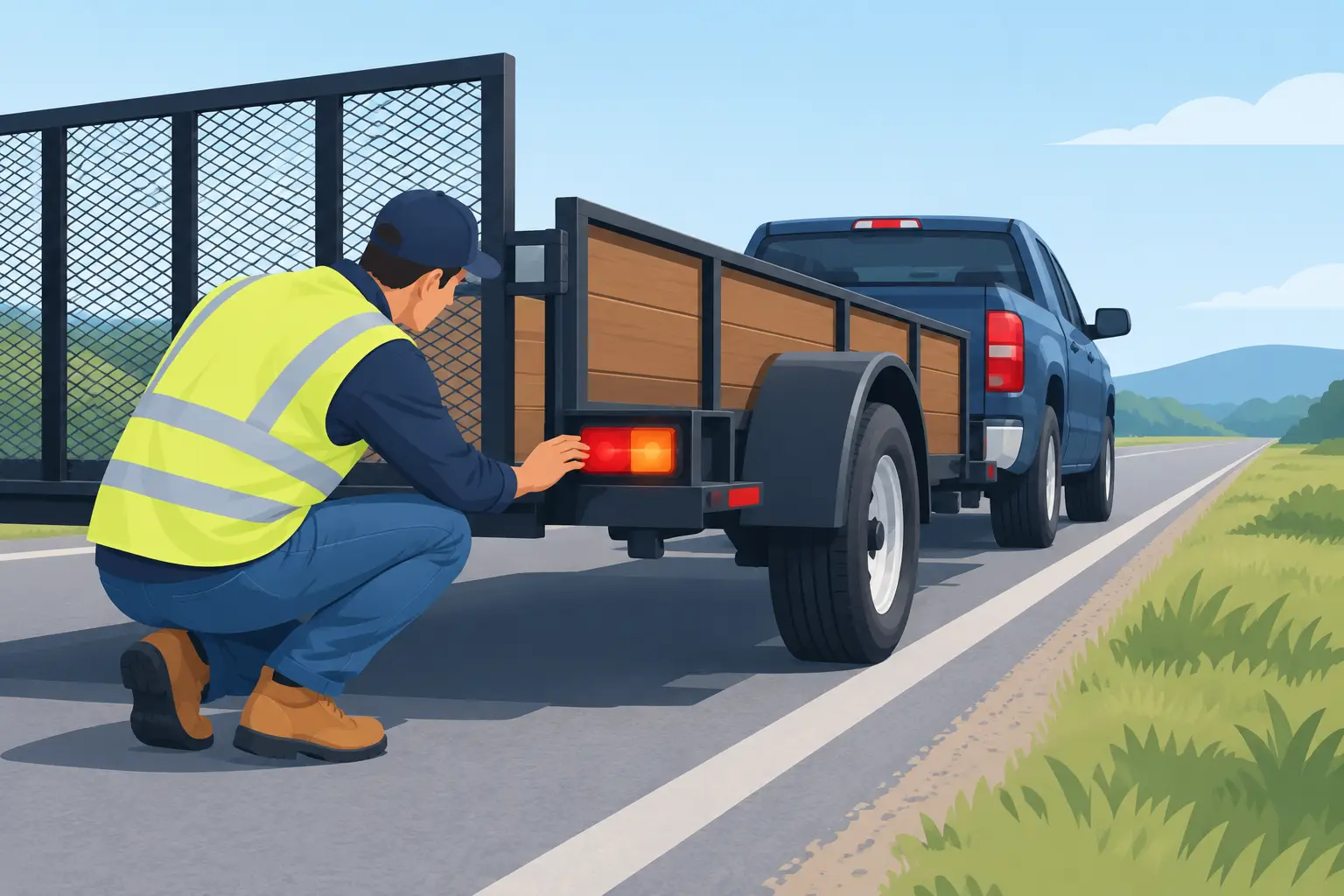
A trailer can look perfectly secure and still be unsafe to tow after dark if one light is out. Checking trailer lights roadside is often a simple first step, but it should never put you in a dangerous position beside moving traffic. Whether you are hauling a utility trailer, boat, camper, or work equipment, a few careful checks can tell you whether the issue is minor or whether it is time to stop and get help.
Start With Roadside Safety, Not the Wiring
If you notice a turn signal, brake light, or running light is not working, get off the travel lane before trying to inspect anything. Use your hazard lights, pull into a safe shoulder, parking lot, rest area, or other location with room around your vehicle and trailer. On narrow roads, busy highways, or roads with limited visibility, your safest choice may be to call for roadside assistance instead of troubleshooting beside traffic.
Set the parking brake, put the tow vehicle in park, and keep children and passengers away from the roadside. If it is dark, use a flashlight or work light, but avoid standing directly behind the trailer where another driver may not see you. Reflective clothing or a safety vest is especially helpful if you carry one.
Do not crawl under the trailer on the shoulder. A loose wire near the hitch may be accessible, but anything that requires getting underneath the trailer, removing parts, or working close to traffic can wait until the trailer is in a safer place.
What Your Trailer Lights Are Telling You
Trailer lighting problems are not all the same. Knowing which lights fail helps narrow down the likely cause.
If every trailer light is out, the most common problem is a disconnected plug, a damaged trailer connector, a blown fuse, or a poor ground connection. If only one side is out, look first at that side's bulb, lens, wiring, or connection. A brake light that works but a turn signal that does not may point to a wiring or vehicle-side connector issue.
Running lights that flicker often suggest corrosion, moisture, or a loose connection. Lights that dim when you apply the brakes can also indicate a weak ground. These symptoms may seem small, but they matter because other drivers rely on your signals to judge when you are slowing, turning, or changing lanes.
Check the Plug and Connector First
Start with the easiest and safest inspection: the trailer plug. Disconnect it from the vehicle and look for bent pins, dirt, corrosion, moisture, or a plug that does not seat firmly. Dry it gently if it is wet and clear loose debris. Do not force bent pins back into place with random tools, especially if the connector is cracked or the wiring is exposed.
Reconnect the plug firmly, then test the lights again. Sometimes the plug is simply not fully inserted, particularly after driving over rough roads or making a tight turn with the trailer.
Also inspect the wiring near the hitch. Look for wires that are dragging, pinched, pulled tight, or rubbing against metal. If you see bare wire, melted insulation, or a damaged connector, do not use tape as a roadside repair and continue towing. Electrical shorts can blow fuses, damage vehicle wiring, or create a fire risk.
Confirm the Tow Vehicle's Lights Work
Before assuming the trailer is at fault, check the lights on the tow vehicle. If the vehicle's brake lights or turn signals are not working correctly, the problem may be a fuse, bulb, switch, or electrical issue on the vehicle itself.
A basic trailer light tester can be useful for frequent trailer owners, but you do not need one to make a safe decision. If the tow vehicle's lights work but the trailer lights do not, the plug, trailer wiring, ground, or light assemblies are more likely suspects. If both vehicle and trailer lighting are acting up, it is best to avoid guessing at a roadside electrical repair.
A Practical Way to Test the Lights
Testing is easier with another person. One person can sit in the tow vehicle while the other stands well away from traffic and watches the trailer lights. Check the running lights, left turn signal, right turn signal, brake lights, and hazard lights one at a time.
If you are alone, use your phone camera only after parking safely. Position it where it can record the rear of the trailer from a protected area, then activate each function from the cab. Do not repeatedly walk into traffic or stand behind the trailer to test lights by yourself.
Pay attention to more than whether a light turns on. Check for a weak glow, rapid flashing, intermittent operation, or lights that brighten and dim when another circuit is used. Those signs can point to a connection problem that may worsen during the trip.
When a Quick Fix Is Reasonable
A simple correction can be reasonable when you are parked safely and the problem is obvious. For example, a loose trailer plug that reconnects securely, a dirty connector that can be cleaned dry, or a burned-out bulb that you can replace with the correct spare may get you moving again.
That said, test everything before returning to the road. Replacing one bulb does not help if the turn signal circuit, brake lights, or running lights are still failing. Make sure the lens is secure and that no wiring is hanging below the trailer.
If the lights work after reconnecting the plug but fail again when you move the trailer, treat that as an unresolved wiring issue. Vibration can make a loose connection fail at the worst possible time.
When You Should Stop Towing
There are situations where continuing is not worth the risk. Do not tow if you have no brake lights, no turn signals, or no running lights when conditions require them. A trailer without working signals is hard for other drivers to predict, especially in rain, fog, early morning traffic, or after dark.
You should also stop if you smell burning plastic, see smoke, find hot wiring, notice repeated blown fuses, or see damaged wires near the hitch, axle, or trailer frame. These are not issues to solve with a temporary roadside patch.
The same applies if your trailer is blocking a lane, has a flat tire, has shifted cargo, or cannot be safely disconnected. Trailer problems often overlap. A wiring issue can become much more stressful when you are already dealing with a breakdown, poor weather, or heavy traffic.
Checking Trailer Lights Roadside in Gresham Traffic
Around Gresham and Troutdale, wet roads, early darkness, and busy routes can make a lighting problem more hazardous than it first appears. If your trailer lights fail near an interchange, on a narrow shoulder, or in poor visibility, focus on getting out of harm's way instead of trying to diagnose every wire.
A professional roadside provider can help secure the situation, assess whether the trailer can be moved safely, and arrange towing or transport when needed. This is especially useful for drivers hauling equipment, motorcycles, work trailers, or campers that are difficult to leave unattended.
Tow Guys LLC understands that a trailer problem can interrupt a workday, family outing, or planned trip without warning. If the issue cannot be safely handled where you are, getting prompt local help is a practical decision, not an overreaction.
Keep a small trailer safety kit with a flashlight, reflective vest, spare fuses, gloves, a dry cloth, and the correct spare bulbs for your trailer. More importantly, give yourself permission to stop when the situation feels unsafe. A delayed trip is frustrating, but being visible and protected on the road matters more than getting there on schedule.
Need a tow in Gresham or East County? Call Tow Guys 24/7 at (971) 222-7994.