
What Causes Roadside Breakdowns? 8 Common Reasons
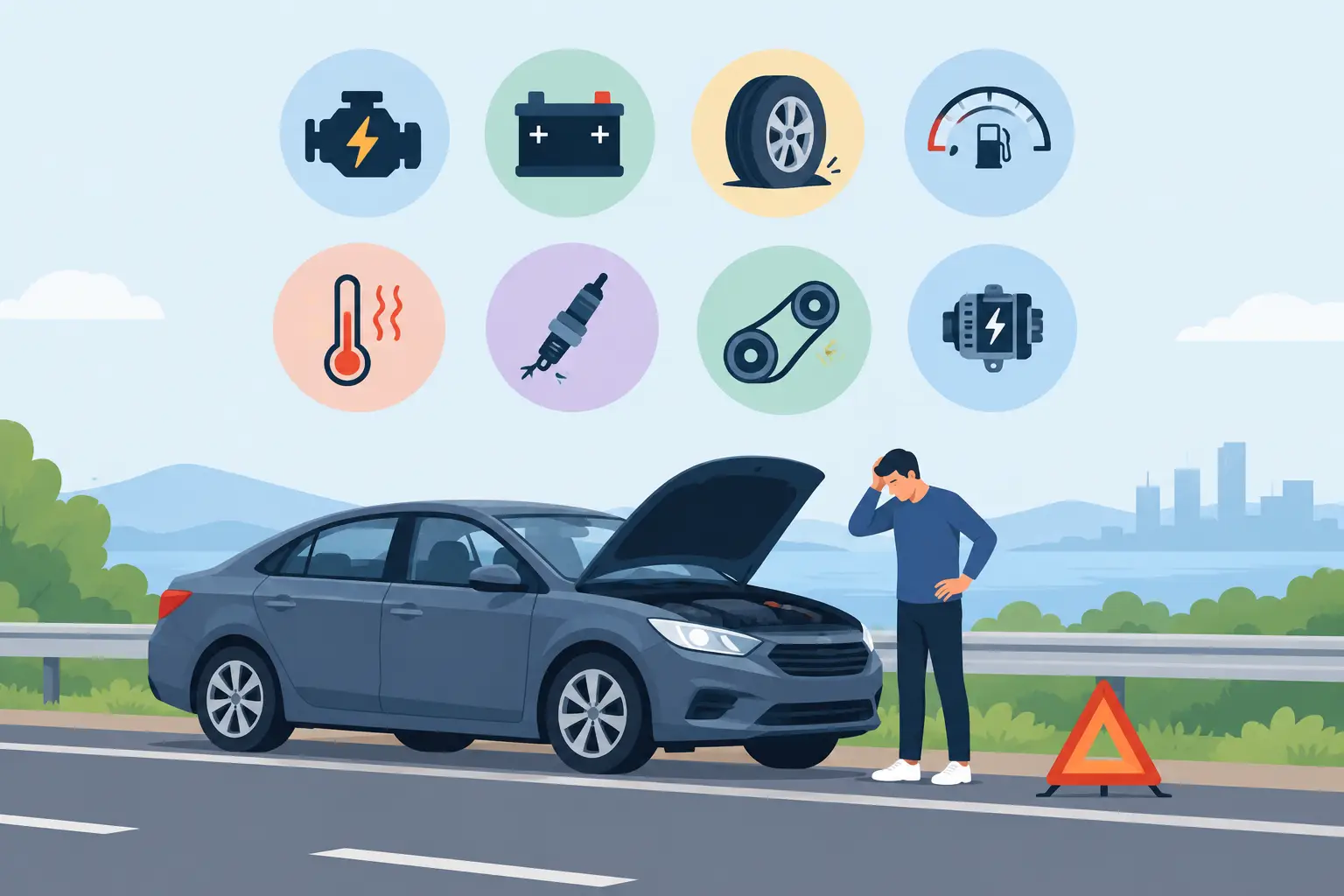
A breakdown rarely feels convenient. It may happen on the morning commute, during a school pickup, or just as rain starts falling on a busy Gresham road. What causes roadside breakdowns is usually not one dramatic failure, but a small vehicle problem that went unnoticed until the car could no longer keep moving.
Some issues are preventable with routine maintenance. Others happen without much warning, especially with older vehicles, extreme temperatures, rough roads, or a weak part that finally gives out. Knowing the common causes can help you spot trouble early and make safer decisions when your vehicle stops.
What Causes Roadside Breakdowns Most Often?
A dead or failing battery
Battery trouble is one of the most common reasons a vehicle will not start. Batteries naturally lose strength over time, and cold weather, short trips, corroded terminals, and leaving lights or electronics on can speed up the problem.
A slow crank, dim interior lights, clicking when turning the key, or a dashboard battery warning light can all point to a battery or charging issue. A jump-start may get the vehicle moving, but it does not always fix the root cause. If the battery is old or the alternator is not charging it properly, the vehicle may stall again once it is running.
Flat tires and tire damage
A nail, pothole impact, damaged valve stem, or worn tire can leave a driver with a flat in a hurry. In the Gresham and Troutdale area, wet roads can make a flat tire even more stressful because a vehicle may pull unexpectedly or become difficult to control.
Do not keep driving on a flat tire just to reach the next exit or parking lot. Doing so can ruin the wheel, damage suspension components, and turn a repairable puncture into a more expensive tire replacement. Pull over safely if you can, turn on hazard lights, and assess whether changing the tire is truly safe where you are stopped.
Alternator or charging system failure
The battery starts the vehicle, but the alternator keeps it supplied with electrical power while the engine runs. When an alternator fails, the car may start normally and then lose power as the battery drains.
Warning signs can include flickering headlights, a burning smell, whining noises, electrical accessories acting strangely, or the battery warning light coming on while driving. Continuing to drive after those signs appear is a gamble. The engine can shut off once the battery no longer has enough power, possibly leaving you in an unsafe place.
Overheating and cooling system leaks
Your engine produces intense heat, and the cooling system is responsible for controlling it. Low coolant, a leaking hose, a failed water pump, a stuck thermostat, or a bad radiator can cause the temperature gauge to climb quickly.
Steam from under the hood, a sweet smell, a high temperature reading, or a warning message means it is time to stop as soon as it is safe. Do not open a hot radiator cap. Pressurized coolant can cause serious burns, and driving an overheated engine can result in major engine damage. Let the vehicle cool and arrange professional help if there is any doubt about the cause.
Running out of fuel or a fuel delivery problem
Fuel gauges are not always exact, particularly on older vehicles or when driving on hills. A driver may also misjudge how far they can go after the low-fuel light comes on. Running out of gas is simple to fix when the location is safe, but it can become dangerous on a narrow shoulder, freeway, or poorly lit road.
Not every fuel-related breakdown means the tank is empty. A failing fuel pump, clogged filter, contaminated fuel, or injector issue can make a vehicle crank without starting or cause it to sputter and stall. Adding fuel will not solve those mechanical problems, so avoid repeated attempts to start the engine if it is clearly not catching.
Worn belts, hoses, and other neglected parts
Rubber parts do not last forever. Serpentine belts, coolant hoses, vacuum lines, and clamps are exposed to heat, vibration, and age every time the vehicle runs. A broken belt can disable the alternator, water pump, or power steering system. A split hose can quickly drain coolant and lead to overheating.
These failures are often preceded by clues: squealing at startup, visible cracking, fluid spots beneath the vehicle, or a smell of hot rubber. A quick inspection during oil changes or routine service can catch many of these issues before they leave you parked on the roadside.
Engine, ignition, or starting problems
Modern vehicles need the right mix of fuel, spark, air, and electronic signals to start and run. Trouble with spark plugs, ignition coils, sensors, the starter, or the fuel system can cause rough running, misfires, loss of power, or a no-start condition.
A check engine light is not always an emergency, but a flashing check engine light deserves immediate attention. It can indicate an active misfire that may damage the catalytic converter. If the engine shakes badly, loses power, or flashes a warning light, reduce risk by pulling over when safe rather than trying to push through the trip.
Brake, steering, or suspension damage
Not every breakdown begins with the engine. A brake issue, damaged steering component, broken wheel bearing, or suspension failure can make a vehicle unsafe to drive even if the engine is running perfectly.
Pay attention to grinding brakes, a steering wheel that pulls hard, violent vibration, clunking over bumps, or a vehicle that feels unstable. These symptoms can have several causes, and some are more serious than others. When steering or braking feels unreliable, towing is usually the safer choice than attempting to drive to a repair shop.
Warning Signs That Can Prevent a Roadside Breakdown
Vehicles often give drivers a chance to act before they quit completely. The key is not ignoring the early signs because the car still seems to be running.
Watch for new warning lights, trouble starting, changes in engine temperature, repeated fluid loss, unusual smells, grinding or squealing, and vibrations that were not there before. A puddle under the car also matters. Clear water may be condensation from the air conditioner, but colored, oily, or sweet-smelling fluid needs attention.
Regular maintenance lowers the odds of an unexpected stop, though it cannot eliminate every risk. Oil changes, tire pressure checks, brake inspections, battery testing, and coolant checks are inexpensive compared with the cost and stress of a breakdown. The right schedule depends on your vehicle's age, mileage, driving habits, and manufacturer recommendations.
What to Do When Your Vehicle Breaks Down
Your first job is not diagnosing the vehicle. It is protecting yourself, your passengers, and other drivers around you.
If possible, steer the vehicle out of traffic and onto a level shoulder, parking lot, or safe side street. Turn on your hazard lights, keep your seat belt on while traffic is moving nearby, and avoid standing next to the vehicle on the traffic side. If you are on a freeway or narrow road, staying inside with the doors locked may be safer than getting out.
Then take these practical steps:
- Note your location, nearby cross streets, mile marker, and the vehicle's make, model, and color.
- Do not walk along high-speed traffic to find help or fuel.
- Do not attempt repairs in an unsafe location, during poor visibility, or without the proper tools.
- Call for roadside assistance or towing when the vehicle cannot be safely driven or the issue is unclear.
A flat tire in a quiet, well-lit lot may be manageable for an experienced driver with the right spare and tools. A flat on a busy highway, an overheating engine, a brake problem, or a vehicle that will not start is different. There is no prize for taking an unnecessary risk.
When you need help in Gresham or nearby, Tow Guys LLC can provide prompt roadside assistance, fuel delivery, jump-start help, and towing for cars, trucks, motorcycles, and trailers. A calm call for help can turn a stressful stop into the next safe step home.
Need a tow in Gresham or East County? Call Tow Guys 24/7 at (971) 222-7994.