
Changing Tires on Busy Roads: Is It Safe?
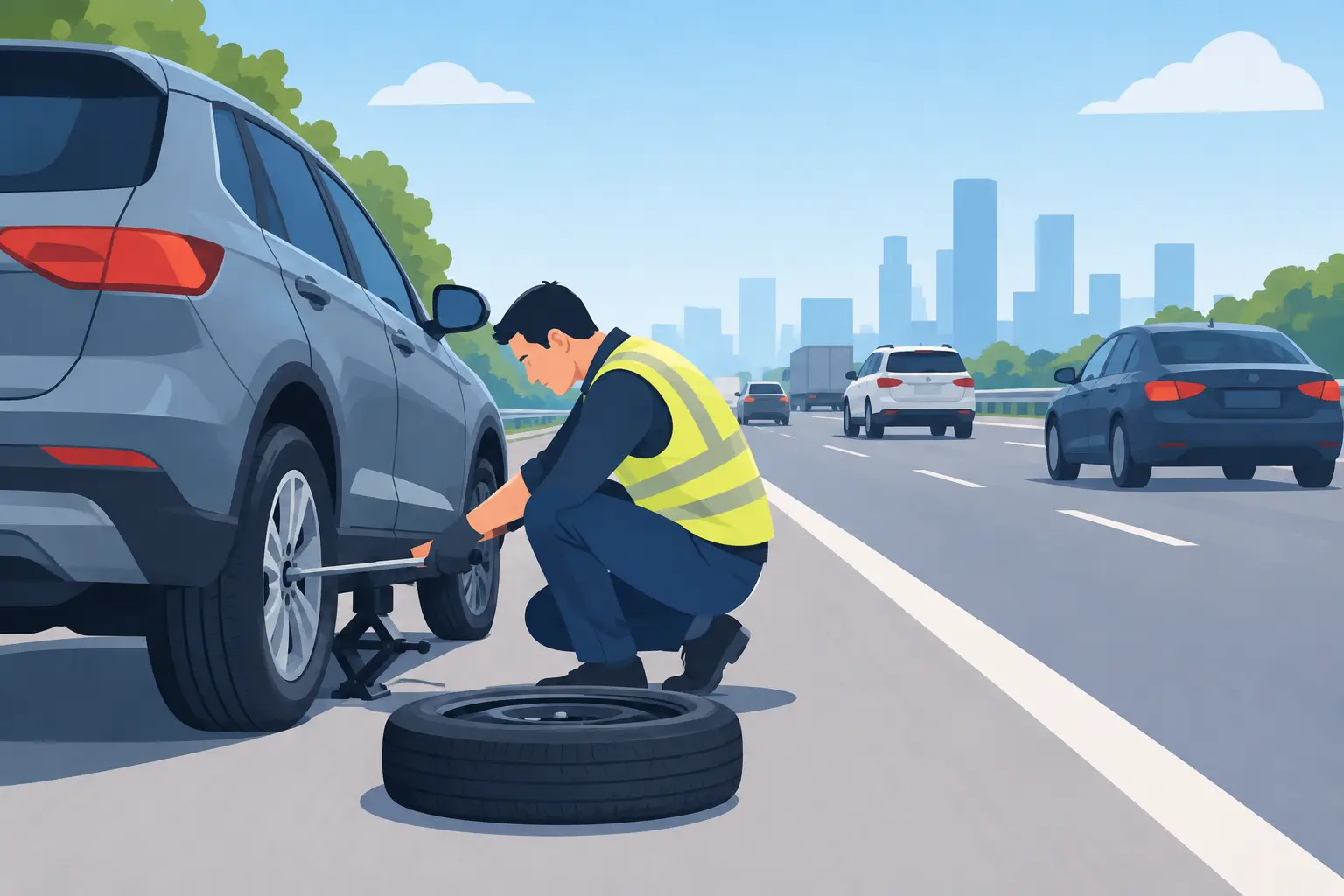
A flat tire is frustrating anywhere. On a crowded road, it can become dangerous in seconds. Changing tires on busy roads is not simply a question of whether you know how to use a jack. It is a question of traffic speed, visibility, shoulder width, weather, and whether you can get yourself out of harm's way first.
The safest choice is sometimes to change the tire. Other times, the right move is to stop, make your vehicle visible, and call for roadside help. There is no shame in choosing safety over a quick repair.
Changing Tires on Busy Roads: Start With Location
The moment you notice a flat, keep a steady grip on the wheel and avoid slamming on the brakes. Turn on your hazard lights, reduce speed gradually, and look for a place where you can get fully away from moving traffic.
A wide parking lot, side street, rest area, or gas station is far better than a narrow shoulder. If the tire is holding enough air to roll slowly and you can reach a safer spot without damaging the wheel, moving a short distance may be worth it. Driving too far on a completely flat tire, however, can ruin the tire and damage the rim.
Do not stop on a curve, just beyond a hill, near an intersection, or anywhere drivers will have little time to see you. The same goes for soft ground, steep slopes, and narrow shoulders beside fast-moving traffic. A roadside tire change requires stable ground and enough room for you to work without stepping into a travel lane.
On busy routes around Gresham and Troutdale, traffic can move quickly even when conditions are wet or visibility is poor. If passing vehicles are close enough to make you uncomfortable, trust that feeling. Your safety matters more than saving a short wait.
Make the Vehicle Visible Before You Get Out
Once you are stopped in the safest available place, put the vehicle in park, set the parking brake, and keep the hazard lights on. If it is dark, raining, foggy, or near dusk, visibility becomes even more important.
Before opening the door, look carefully for traffic, cyclists, and pedestrians. Exit from the side away from traffic whenever possible. If passengers are with you, have them stay buckled inside the vehicle unless staying in the vehicle would create a greater danger, such as a fire, flooding, or a location directly exposed to a crash risk.
If you have reflective triangles, flares, or a high-visibility vest, use them only when you can place or wear them without entering traffic. Do not walk along an active lane to set out warning devices. A phone flashlight may help you find your tools, but it will not make you visible enough to approaching drivers.
A good rule is simple: if you cannot safely stand beside your vehicle, you cannot safely change its tire.
When a Roadside Tire Change Can Be Reasonable
Changing a tire yourself can make sense when the vehicle is fully off the road, the surface is firm and level, traffic is well separated, and you have the right equipment. You also need a spare tire that is inflated and suitable for use.
If those conditions are met, work methodically rather than rushing. Read your owner's manual if you are unsure where the proper jack points are. Using the jack in the wrong location can damage the vehicle or make it unstable.
Use this basic order:
- Keep the parking brake engaged and place wheel wedges if you have them.
- Loosen the lug nuts slightly before lifting the vehicle.
- Place the jack on the manufacturer's designated lifting point and raise the vehicle only enough to remove the tire.
- Install the spare, tighten the lug nuts in a star pattern, lower the vehicle, and tighten the lug nuts again.
Never put any part of your body under a vehicle supported only by a jack. Do not let children or passengers stand nearby while you work. If the vehicle shifts, the jack leans, or the ground begins to sink, stop immediately and move away from the vehicle.
A compact spare is meant to get you to a repair shop, not to handle normal driving for days. Follow the speed and distance limits printed on the spare tire or in your owner's manual. After installing it, arrange a tire repair or replacement as soon as practical.
When Changing a Tire Is Not Worth the Risk
There are situations where even an experienced driver should not attempt the job. A narrow freeway shoulder, heavy rain, darkness, impaired visibility, aggressive traffic, or a tire on the traffic-facing side of the vehicle can turn a routine task into an emergency.
It is also wise to call for help if you are missing a spare, the spare is flat, the lug nuts will not loosen, the wheel is damaged, or your vehicle has specialty equipment you are unfamiliar with. Many newer vehicles do not include a traditional spare tire at all. Others require special lifting procedures, locking lug-nut keys, or tire repair kits that may not help with a sidewall blowout.
Motorcycles, trailers, light trucks, and vehicles carrying a heavy load have their own safety concerns. A jack that is too small or placed incorrectly can create a serious hazard. In these cases, professional roadside assistance is often the faster option because the technician arrives with the proper tools and knows how to secure the vehicle.
Calling for help is especially smart when you are alone, caring for children, injured, or feeling shaken after a blowout. Stress can make simple steps harder to remember. Getting assistance lets you focus on staying visible and safe rather than wrestling with equipment beside traffic.
What to Do While You Wait for Roadside Help
If you decide not to change the tire, stay calm and keep your location clear when you call. Share the road name, nearest cross street, direction of travel, vehicle description, and the side of the vehicle with the flat tire. If you can safely see a mile marker, business, exit number, or landmark, provide that too.
Keep your phone charged if possible and avoid standing outside near traffic. If you are safely parked away from the roadway, you may wait inside with the doors locked. If your vehicle is on a narrow shoulder and traffic is passing close by, move behind a guardrail or to another protected area if one is immediately available and safe to reach.
Be alert for strangers who pressure you to accept help or ask you to get into their vehicle. A legitimate roadside provider should be able to identify the company and explain what help is on the way. Tow Guys LLC provides prompt roadside assistance for drivers who need a safer solution to a flat tire in the Gresham area.
After the Spare Is Installed
Do not assume the problem is finished once the wheel is back on. Check that your tools, damaged tire, and loose items are secured before pulling back into traffic. Turn off the hazard lights only when you are moving normally with traffic again.
Drive cautiously and listen for vibration, pulling, or unusual noises. A flat can be caused by a puncture, damaged valve stem, worn tire, bent wheel, or impact with road debris. The tire should be inspected by a qualified shop, even if it appears to have only a small puncture.
A flat tire interrupts your day, but it does not have to put you in a worse situation. When traffic is close, the shoulder is narrow, or conditions feel unsafe, the best roadside decision is to protect yourself first and let trained help handle the tire.
Need a tow in Gresham or East County? Call Tow Guys 24/7 at (971) 222-7994.