
How to Move a Disabled Truck Without Making It Worse
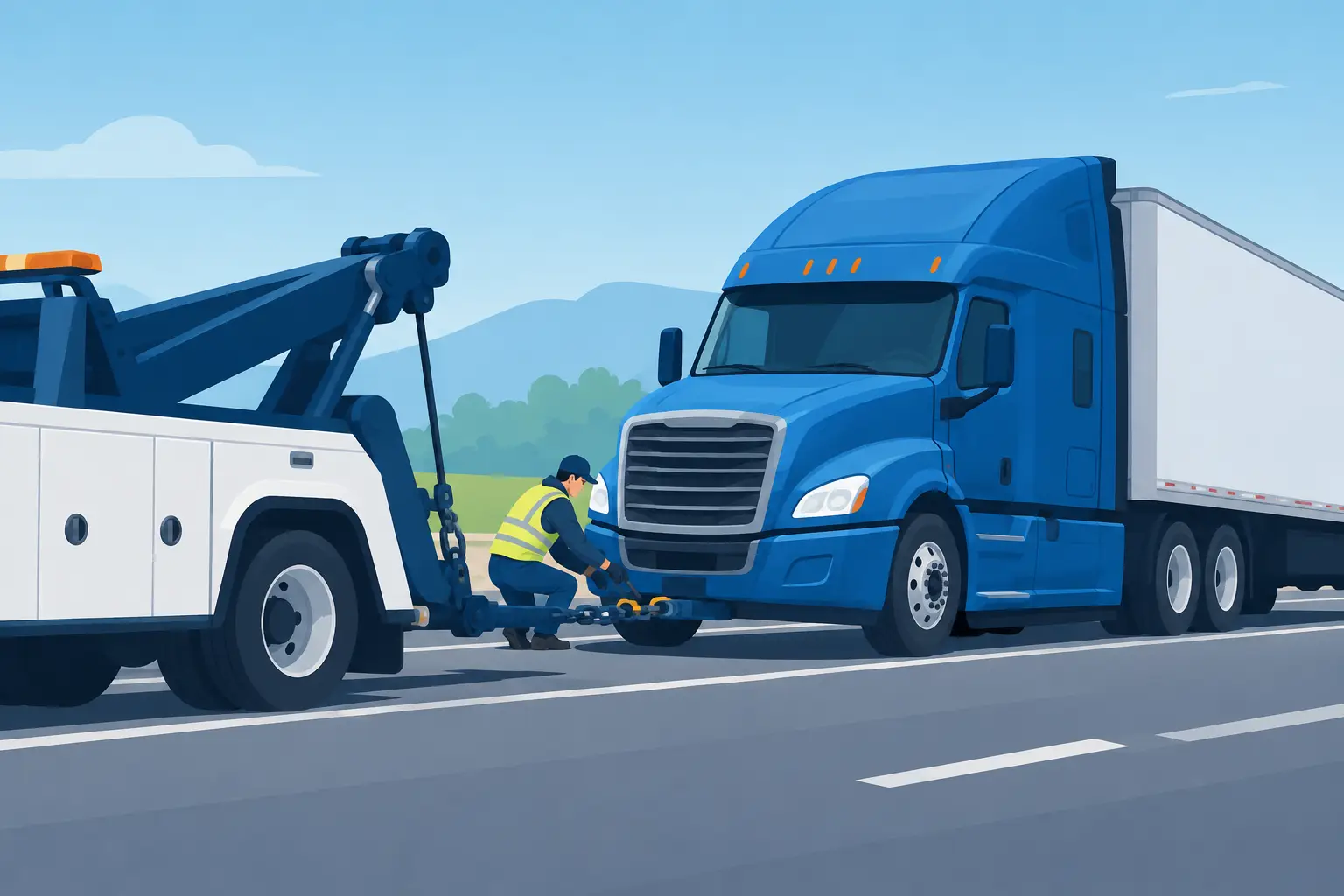
A disabled truck can turn a normal drive into a stressful situation fast, especially when it is blocking traffic, sitting on a narrow shoulder, or loaded with work equipment. If you are searching how to move disabled truck safely, the first decision is not which strap to use. It is whether moving it at all will put you, your passengers, or other drivers at greater risk.
A truck may be disabled because of a dead battery, flat tire, overheating, collision damage, transmission trouble, steering failure, or a mechanical issue you cannot see. Each problem changes what can be moved safely. When there is doubt, protect the scene and arrange professional towing rather than risking more damage or an injury.
Start With Safety, Not the Truck
Before attempting to reposition a disabled truck, get yourself out of immediate danger. Turn on the hazard lights, set out warning devices if it is safe to do so, and move passengers away from traffic. On a busy road, staying inside the truck with seat belts fastened may be safer than standing alongside it. On a quiet street or parking area, move to a protected spot well away from moving vehicles.
Look for warning signs that mean the truck should not be moved under its own power. These include smoke, flames, a fuel smell or visible leak, severe collision damage, a wheel bent at an unusual angle, a dragging part, or a truck that will not steer or brake normally. Call emergency services first if there is fire, injury, a dangerous fluid leak, or the truck is creating an immediate roadway hazard.
If the truck is stuck in a travel lane, tell the dispatcher exactly where you are, which direction you are facing, and whether traffic can get around you. Clear location details help a towing team reach you faster and bring the right equipment.
Determine Why the Truck Will Not Move
A truck that will not start is different from a truck that starts but cannot drive. A simple dead battery may be resolved with a proper jump-start, but a repeated no-start issue can point to a failing battery, alternator, starter, loose connection, or electrical fault. Jump-starting is only appropriate when there is no battery swelling, leaking, burning smell, or damaged wiring.
If the engine runs but the truck will not shift, accelerates poorly, makes grinding sounds, or has a transmission warning light, do not force it. Driving or pulling a truck with transmission trouble can turn a repairable issue into a major repair. The same applies when the temperature gauge is high. Let an overheating engine cool down. Never remove a hot radiator cap.
A flat tire also requires a careful decision. Changing a tire on level ground in a safe location may be reasonable if you have the correct spare, jack, and tools. On a shoulder, steep grade, soft ground, or high-traffic road, roadside assistance is usually the safer call. A truck can shift off a jack, and larger tires and heavier vehicles leave little room for error.
How to Move a Disabled Truck a Short Distance
There are a few situations where moving a disabled truck a very short distance is reasonable. For example, it may be running normally but parked where it blocks a driveway, or it may need to roll a few feet into a safer position after a minor issue. Only do this on level ground, at walking speed, and when the brakes and steering are fully functional.
For an automatic truck that is able to roll, keep the driver in the seat with a foot firmly on the brake. Confirm the path is clear, release the parking brake only when ready, shift to neutral if needed, and guide the vehicle slowly. Have one person spot from a safe, visible position if space is tight. Never let anyone stand downhill from the truck or between the truck and another vehicle.
Manual pushing is not a good solution for most trucks. Their weight, limited visibility, and tendency to gain momentum make them hard to control. Do not push a truck on a slope, near traffic, or when the driver cannot steer and brake. Avoid using your body to stop a rolling truck. Property can be repaired. A person cannot be replaced.
Do Not Use a Tow Strap as a Quick Fix
A tow strap can look like the fastest answer, but improvised pulling is one of the easiest ways to damage a truck or hurt someone. The strap must be rated for the vehicle's weight, connected only to manufacturer-approved recovery points, and used in a controlled environment. Attaching to a bumper, axle component, trailer hitch ball, suspension part, or unknown hook can cause parts to break free under tension.
A disabled truck may also need to be loaded a specific way. Four-wheel-drive, all-wheel-drive, low-clearance, collision-damaged, or transmission-failed vehicles can be damaged when pulled with the wrong wheels on the ground. In many cases, a flatbed tow is the safest choice because all four wheels are off the pavement.
Do not use chains, ropes, or ratchet straps as a substitute for proper recovery equipment. Do not jerk the pulling vehicle to get the truck moving. Sudden force can snap equipment and send metal hardware flying. It can also make a minor mechanical problem much worse.
When a Professional Tow Is the Right Call
Call for towing when the truck cannot be driven safely, is disabled in traffic, has collision damage, is stuck, has a mechanical failure, or needs to travel farther than a few feet. This is not giving up on the problem. It is the practical way to protect your truck, your schedule, and everyone near the roadside.
A trained towing operator can assess the truck, select the appropriate equipment, secure it correctly, and transport it without unnecessary wear. This matters for light-duty pickups, work trucks, trucks pulling trailers, and vehicles with special drivetrain needs. If you have a trailer attached, mention it when you call. The towing provider needs to know the full length, load condition, and whether the trailer is safe to move.
For drivers in Gresham and Troutdale, Tow Guys LLC can provide prompt towing and roadside help when a breakdown leaves you stranded. Give the dispatcher the truck's make and model, the issue you noticed, your location, and any access concerns such as a low parking garage, muddy shoulder, or trailer connection. The more accurate the details, the more prepared the responding technician can be.
Protect Your Truck While You Wait
Once help is on the way, avoid repeated attempts to start or move the truck. Cranking an engine over and over can drain the battery and strain the starter. Spinning the tires while stuck can dig deeper into mud, snow, or gravel and may damage tires or drivetrain components.
Gather your keys, registration, insurance information, and any items you need before the truck is loaded. If it is safe, take a few photos of the truck's condition and the surrounding area, especially after an accident or if it is stuck. Then wait in a safe place where the driver can find you easily.
The safest move is often a controlled tow, not a faster DIY attempt. A disabled truck is already asking for attention. Give it the careful response it needs, and you can get off the roadside with less risk and fewer surprises.
Need a tow in Gresham or East County? Call Tow Guys 24/7 at (971) 222-7994.