
Essential Steps After Vehicle Overheating
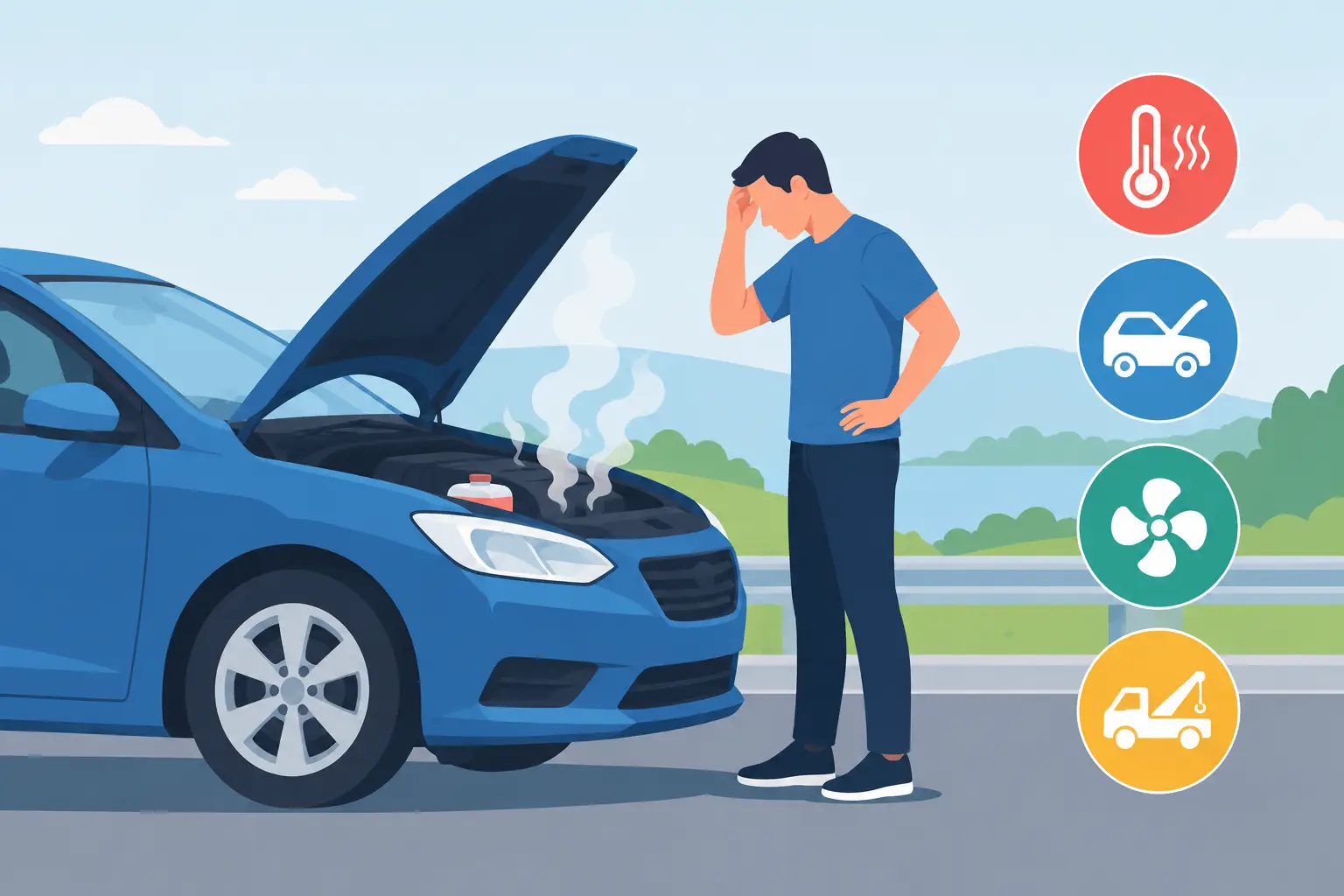
A temperature gauge in the red, steam from under the hood, or a warning message on the dash can turn an ordinary drive into a stressful stop fast. The essential steps after vehicle overheating are not about fixing the problem on the shoulder. They are about getting yourself out of danger, protecting the engine from further damage, and knowing when professional help is the safer choice.
Get to a Safe Place and Stop Driving
If you notice the temperature gauge climbing, turn off the air conditioning right away. A/C puts extra demand on the engine and cooling system. If traffic allows and the temperature is only beginning to rise, turning the heater to high can pull some heat away from the engine long enough to reach a safe place to pull over.
Do not treat that as a solution. Find the nearest safe shoulder, parking lot, or side street and stop as soon as you can. Avoid stopping in a travel lane, on a narrow curve, or where other drivers cannot see you. Turn on your hazard lights, shift into park, and shut the engine off.
Continuing to drive an overheating vehicle can turn a repairable cooling-system issue into serious engine damage. A blown hose or failing fan may be manageable. A warped cylinder head, damaged head gasket, or seized engine is a much bigger problem.
Keep Clear of Steam and Traffic
Steam escaping from the hood may look like smoke, but either way, treat it seriously. Stay inside the vehicle with the doors locked if you are stopped close to fast-moving traffic. If it is safe to exit, move well away from the roadway and stand where you are visible to approaching drivers.
If you see flames, smell strong burning, or believe there is a fire, move away from the vehicle and call emergency services. Do not open the hood in that situation. Opening it can feed a fire with oxygen and put you closer to hot fluids or flames.
A simple rule helps here: your safety matters more than saving a few minutes or trying to diagnose the issue roadside.
Do Not Open the Radiator Cap
This is one of the most important essential steps after vehicle overheating. Never remove the radiator cap or coolant reservoir cap while the engine is hot. The cooling system is pressurized, and hot coolant can spray out with enough force to cause severe burns.
Leave the engine off and allow it to cool completely. Depending on the weather, the severity of the overheating, and the vehicle, that may take at least 30 minutes and sometimes longer. Keep the hood closed until the steam has stopped. Once the vehicle has cooled, you can carefully raise the hood to let heat escape, but avoid touching hoses, the radiator, or any metal engine components.
Do not pour cold water over a hot engine. The sudden temperature change can damage hot engine parts, and it does not solve the reason the vehicle overheated in the first place.
Look for Obvious Clues Only After Cooling Down
After the engine has fully cooled, a quick visual check can help you explain the situation to a roadside technician or repair shop. Look beneath the vehicle for a puddle or steady drip. Green, orange, pink, yellow, or blue fluid may be coolant, depending on the vehicle. Clear water near the front of the vehicle could simply be A/C condensation, but after an overheating event, it is still worth mentioning.
You can also look at the coolant reservoir. On many vehicles, it is a translucent plastic tank marked with minimum and maximum lines. If the coolant level is low after the engine is cold, there may be a leak or another cooling-system problem. Do not assume adding coolant makes the vehicle safe to drive.
A low coolant level can be caused by a leaking hose, radiator damage, a failed water pump, a loose clamp, a cracked reservoir, or an internal engine issue. Overheating can also happen with normal coolant levels if the cooling fan, thermostat, radiator, or temperature sensor is failing.
If you are not comfortable checking under the hood, skip it. You do not need to diagnose the failure to make a safe decision.
Decide Whether Driving Again Is Worth the Risk
Some drivers let the vehicle cool, add coolant, and continue their trip. In rare cases, that may get a vehicle a very short distance to a repair facility. But it is a risk, especially if you do not know why the engine overheated.
Do not restart or drive the vehicle if it overheated severely, produced repeated steam, leaked coolant, showed an oil warning light, made knocking sounds, or quickly returns to a high temperature after restart. The same is true if the temperature gauge rose suddenly without warning. These signs can point to a problem that will not be fixed by waiting.
Even if the gauge returns to normal, the engine may have suffered damage or may overheat again once it is under load. Hills, stop-and-go traffic, towing a trailer, and warm weather can bring the issue back quickly. For drivers in Gresham and Troutdale, that can be especially risky when traffic leaves little room to pull over safely.
When in doubt, arrange a tow. It is often less expensive than gambling on a short drive and ending up with major engine repairs.
What to Tell Roadside Help or a Tow Driver
Clear details help a roadside team prepare for the right situation. Let them know whether the vehicle is fully disabled, whether it is leaking fluid, and whether it is parked in a safe location. Mention what you saw before stopping: a high temperature reading, steam, a warning light, a sweet coolant smell, loss of power, or unusual noises.
Also share the vehicle type and whether it has special needs. A motorcycle, light truck, trailer, or lowered vehicle may require different loading considerations. If you are in a parking garage, on a steep road, or beside heavy traffic, say so early. Those details help the driver plan the safest approach.
A professional towing service can transport the vehicle to your trusted repair shop or another safe location without asking the damaged cooling system to do more work. That is the right call when the cause is unclear or the vehicle cannot hold a safe operating temperature.
Prevent the Next Overheating Problem
Overheating is not always preventable, but regular maintenance lowers the odds of being stranded. Have coolant checked at the intervals recommended for your vehicle, and use the coolant type specified by the manufacturer. Mixing the wrong coolant or relying on plain water can create corrosion problems and reduce cooling performance.
Pay attention to small warning signs before they become an emergency. These include a coolant smell after driving, a temperature gauge that runs higher than usual, coolant spots where you park, a heater that suddenly blows cool air, or a cooling fan that seems unusually loud or never comes on. Addressing these early can prevent a roadside breakdown later.
Before a long drive, a summer trip, or hauling a trailer, take a moment to check the condition of visible hoses and watch for low coolant in the reservoir when the engine is cold. It is a small habit that can save a major interruption.
An overheating vehicle creates pressure to act fast, but the safest move is usually to slow down, get clear of traffic, and leave hot cooling-system parts alone. Once you are safe, getting dependable help protects both your vehicle and the people riding in it.
Need a tow in Gresham or East County? Call Tow Guys 24/7 at (971) 222-7994.