Can a Tow Truck Tow Lowered Cars Safely?
A lowered car looks great until it will not move and you are stuck wondering, can a tow truck tow lowered cars without scraping the bumper or damaging the underside? The short answer is yes, but not every tow is handled the same way. Lowered vehicles need the right truck, the right loading angle, and an operator who knows how to work carefully.
If your car sits low to the ground, the biggest risk is not the tow itself. It is the loading process. Front lips, side skirts, splitters, exhaust components, and low suspension parts can all get damaged if the driver uses the wrong approach. That is why experience matters. A careful tow operator plans the angle, checks clearance, and uses the right tools before the car ever starts moving.
Can a tow truck tow lowered cars without damage?
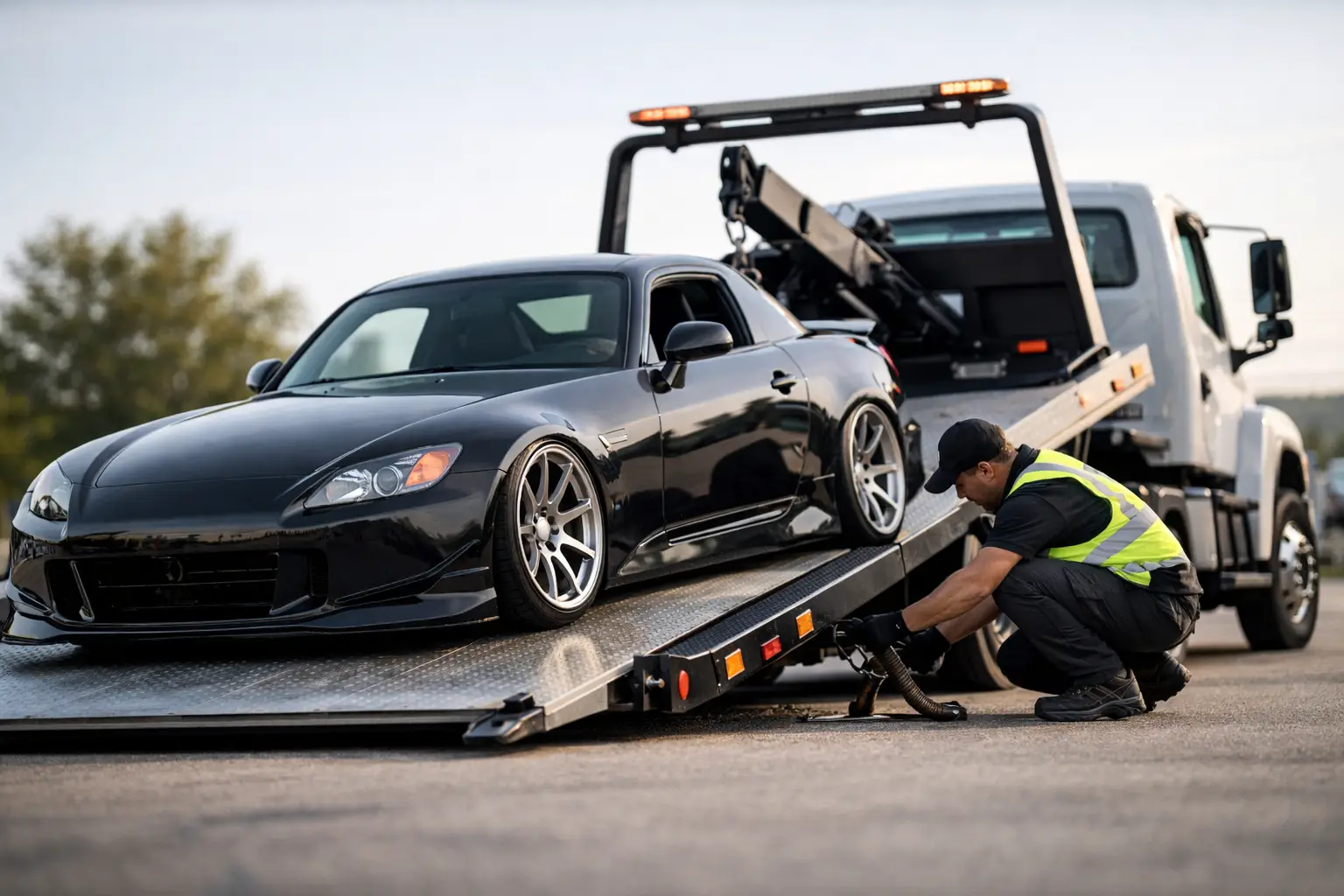
Yes, a tow truck can tow lowered cars without damage, but it depends on the equipment and the condition of the vehicle. A standard hook-and-chain approach is usually not the right choice for a lowered car. In most cases, a flatbed tow truck is the safest option because it keeps all four wheels off the road and gives the operator more control during loading.
Even with a flatbed, low clearance creates challenges. If the ramp angle is too steep, the front bumper can scrape. If the vehicle has an aggressive body kit or very low suspension, the center of the car can also bottom out while being pulled onto the bed. That is why skilled operators use techniques like extended ramps, wood planks, race ramps, or lift assistance to reduce the angle.
The answer is not just about whether a tow truck can do it. It is about whether the tow truck is equipped for it and whether the person running it takes the time to do it correctly.
Why lowered cars are harder to tow
Lowered cars have less space between the ground and the lowest parts of the vehicle. That affects almost every step of the towing process. A factory-height sedan usually has enough clearance for normal loading. A lowered car often does not.
The front end is usually the first concern. Many lowered vehicles have aftermarket bumpers, lips, or splitters that sit very close to the pavement. During loading, those parts can catch on the ramp if the angle is too sharp. On some cars, the exhaust, oil pan, crossmember, or side skirts can also be at risk.
Suspension setup matters too. Some lowered cars are lowered mildly with springs, while others sit much lower on coilovers or air suspension. A static drop can be more difficult to manage than an air ride car that can raise slightly before loading. Wheel size, tire profile, and how much overhang the bumper has all affect the approach.
That is why there is no one-size-fits-all answer. Two lowered cars can look similar and still require very different towing methods.
The safest way to tow a lowered car
For most situations, a flatbed is the safest and cleanest option. It allows the operator to keep the vehicle level, control the pull, and avoid dragging the car with two wheels on the ground. A wheel-lift truck may work in some cases, but it is usually less ideal for very low vehicles.
The real key is reducing the loading angle. An experienced operator may back the truck into a position that helps flatten the approach, use ramp extensions, or place boards in front of the ramps to create a gentler transition. This sounds simple, but it makes a major difference.
Winching also needs to be done with care. Pulling too quickly can make the vehicle jerk and scrape. Slow, controlled loading gives the driver time to watch clearances and stop if something looks off. If the car is stuck in park, has a broken suspension part, or was involved in an accident, that adds another layer of caution.
When handled correctly, towing a lowered car is very possible. It just takes more time and more attention than towing a stock vehicle.
What to tell the tow company before they arrive
If you drive a lowered car, the best thing you can do is be upfront when you call. Let the dispatcher know the car is lowered and mention anything that makes it more sensitive, like a front lip, side skirts, aftermarket bumper, long wheelbase, or very low exhaust.
It also helps to explain whether the car still rolls and steers. If the battery is dead but the car rolls freely, that is a different job than a car with collision damage or a wheel jammed into the fender. If your car has air suspension, tell them whether it can still raise. If it has special jack points or tow hook locations, mention that too.
Good information helps the company send the right truck the first time. That saves time and lowers the risk of damage.
Signs the tow operator knows how to handle lowered cars
You do not need a long technical explanation at the side of the road. You need confidence that the person loading your vehicle understands what they are doing. A professional operator will usually inspect the car first, talk through the plan, and avoid rushing.
They should pay attention to approach angle, underbody clearance, and tie-down points. They should also avoid careless shortcuts. If someone acts like every vehicle loads the same way, that is a concern. Lowered cars require patience.
In a local area like Gresham, drivers often call because they are already stressed from a breakdown, a non-start, or an accident. That is exactly when a calm, experienced tow operator matters most. You want someone who treats your car with care, not like just another quick pickup.
Common risks during a lowered car tow
Most owners worry about bumper damage, and that is a valid concern. But it is not the only one. Underbody scraping is common when the center of the car passes over a steep breakover point. Exhaust systems can also scrape if they hang lower than stock.
Tie-down mistakes are another issue. A lowered car may have limited access around suspension components, and improper strapping can damage wheels, lips, or bodywork. Cars with custom alignment, wide wheels, or delicate aero parts need extra attention.
There is also the risk of damage before the tow starts. If a lowered car is stranded in a steep driveway, parking garage entrance, or uneven shoulder, just getting it into a good loading position can be tricky. That is why the safest tow often starts with a careful assessment of the ground around the car, not just the vehicle itself.
Can a heavily lowered or modified car still be towed?
Usually, yes. But heavily modified cars can require extra setup. A car with an extreme drop, fixed aero, stretched tires, or a damaged suspension may need specialty ramps, skates, or additional lifting methods just to begin loading safely.
This is where honesty helps. If your car is not just lowered but very low, say so. If you know the front bumper barely clears speed bumps, mention it. That kind of detail is useful, not picky. It allows the operator to show up prepared instead of improvising under pressure.
For enthusiasts, trust matters. You have invested money and care into the vehicle. A professional towing company should respect that and approach the job accordingly.
What you can do while waiting for the tow truck
If it is safe to stay with the vehicle, gather any information that will help the operator. Note whether the car is front-wheel drive, rear-wheel drive, or all-wheel drive. If you have a removable front lip or can raise an air suspension system, that may help. If the car has a low driveway angle where it is parked, let the driver know before they start.
Try not to force the vehicle to move if something underneath is already scraping or broken. That can make the situation worse. It is better to wait for the right equipment than to drag the car a few feet and cause more damage.
If you are calling a local company like Tow Guys LLC, the best calls are the clear ones. Tell them the car is lowered, where it is located, and whether it rolls. That gives the team a better shot at arriving ready.
A lowered car does not need special treatment because it is flashy. It needs special handling because clearance is limited and mistakes happen fast. The good news is that a careful tow truck operator can usually move it safely, and that peace of mind matters a lot when your day has already gone sideways.
Need a tow in Gresham or East County? Call Tow Guys 24/7 at (971) 222-7994.