
Flat Tire Versus Towing: What Should You Do?
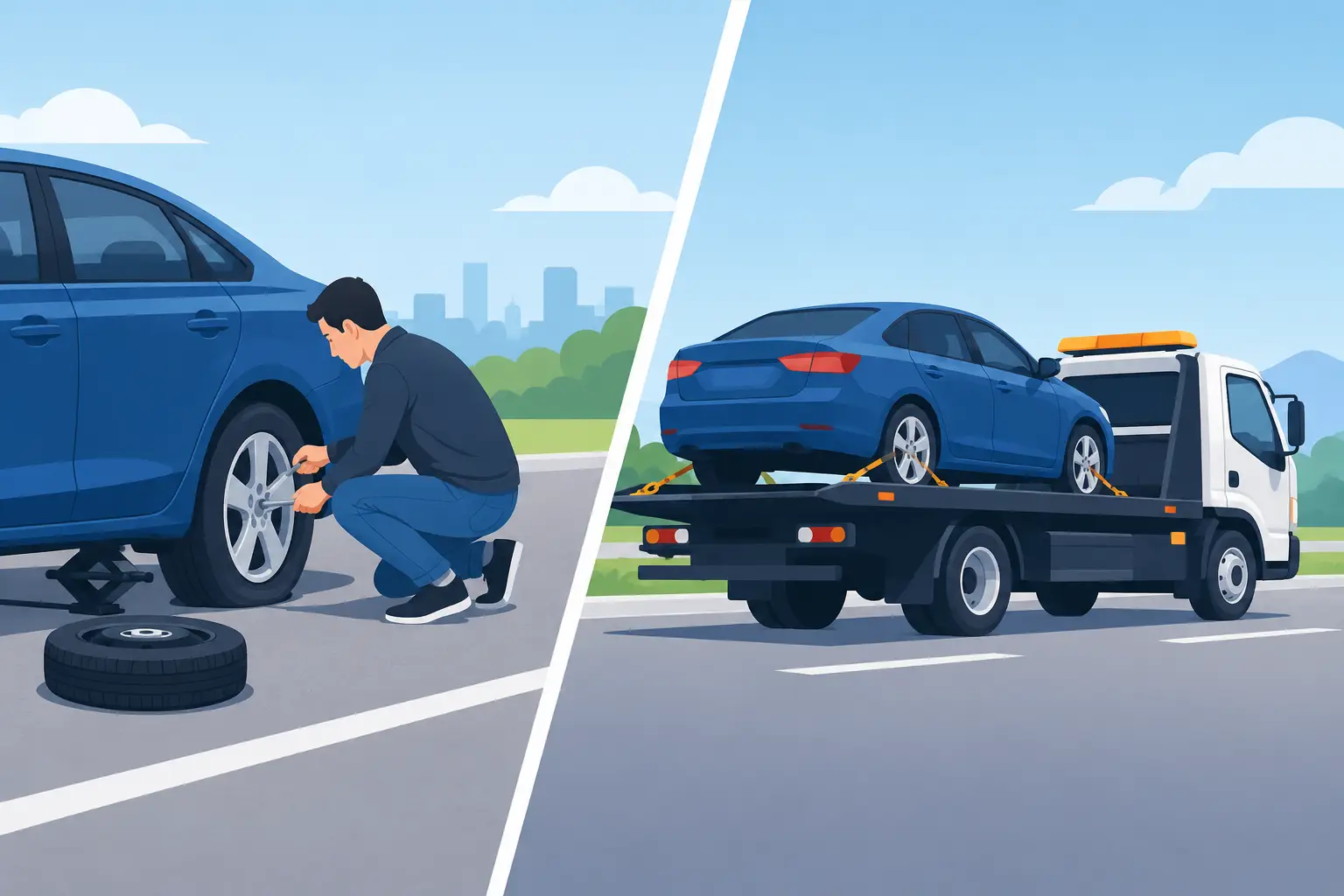
A flat tire can turn an ordinary drive into a stressful roadside decision fast. When it comes to flat tire versus towing, the right choice is not always simply putting on the spare. Your safety, the condition of the tire, where you are stopped, and the type of vehicle you drive all matter.
A spare-tire change may get you moving again in minutes. But in some situations, trying to handle the repair at the roadside can create a bigger problem - or put you in harm's way. Knowing when to choose roadside tire help and when to request a tow can save time, prevent vehicle damage, and help you get home safely.
When a Flat Tire Can Be Handled at the Roadside
A roadside tire change is often a reasonable option when the vehicle is parked safely away from traffic, the tire is the only issue, and you have a usable spare. A puncture from a nail or screw, for example, may leave the tire flat but cause no other damage to the wheel or vehicle.
Before changing the tire, make sure you can get fully off the road onto firm, level ground. Turn on your hazard lights, set the parking brake, and keep passengers in a safe location away from moving traffic. If you are on a narrow shoulder, a curve, a bridge, or an area with fast traffic, the safest choice is usually to stay in the vehicle with the doors locked and call for help.
Your spare also needs to be ready for use. Many drivers do not discover a low spare, missing jack, damaged lug wrench, or unfamiliar locking lug nut until they are already stopped on the side of the road. A compact spare is designed for temporary use, not regular driving. It may have a lower speed limit and a limited driving distance, so plan to have the damaged tire inspected or replaced as soon as possible.
Flat Tire Versus Towing: When a Tow Is the Smarter Call
Towing is the better answer when the flat tire is part of a larger issue or when changing it where you are stopped is unsafe. A tow protects you from traffic and can prevent additional damage to your vehicle.
Call for a tow instead of attempting a tire change if the wheel is bent, the tire has shredded apart, or the vehicle has been in a collision. Driving even a short distance on a completely flat tire can damage the wheel, brakes, suspension components, and tire pressure monitoring sensor. If you see a damaged rim, hear scraping, or notice the vehicle pulling sharply to one side, do not try to drive it on a spare without a professional assessment.
Towing is also the safer choice if you have no spare, your spare is flat, or your vehicle uses tires that cannot be mixed with a temporary spare. This can matter with all-wheel-drive vehicles, certain trucks, performance cars, and vehicles with larger or specialty tires. Differences in tire size or tread depth can affect the drivetrain. The owner's manual may allow a temporary spare in specific circumstances, but it is not worth guessing at the roadside.
Weather changes the decision too. Heavy rain, darkness, ice, or poor visibility make a simple tire change much more dangerous. In Gresham and Troutdale, wet roads and busy routes can leave little room between your vehicle and passing traffic. If you do not feel completely safe, trust that instinct and request assistance.
Signs Your Tire Is Not Safe to Repair
Not every flat can be patched. A repair shop may be able to fix a small puncture in the center of the tread, but damage near the sidewall is a different situation. The sidewall flexes while driving, and it cannot usually be repaired safely.
A tire should generally be replaced rather than repaired when there is a tear or bulge in the sidewall, damage from driving while flat, exposed cords, a large cut, or multiple close punctures. If the tire came apart while driving, a tow is often the safest next step. Putting on a spare may be possible, but it does not address the question of whether other parts were damaged when the tire failed.
Be careful with tire sealant as well. Some vehicles do not include a spare and instead come with an inflator kit and sealant. These kits can sometimes help with a minor tread puncture, but they will not fix a sidewall cut, damaged wheel, or tire that has separated. Sealant can also complicate later tire repairs. Read the instructions before using it, and do not rely on it to get you through a long drive.
What to Do Before Help Arrives
The first priority is making your location visible and keeping everyone out of danger. Pull as far from traffic as the vehicle can safely go. Turn on hazard lights, and if it is safe to do so, use reflective triangles or road flares. Do not stand between your vehicle and traffic, and do not sit in a parked vehicle if it is positioned where it could be struck from behind.
When you call for roadside assistance or towing, share the vehicle make and model, your location, the direction you are traveling, and whether the vehicle is in a safe spot. Let the dispatcher know if you have a spare, if the wheel appears damaged, or if you are carrying a trailer, motorcycle, or other special load. Clear details help the right equipment arrive without delay.
If you are unsure whether a tire can be changed safely, ask. A professional can help you decide whether roadside service is appropriate or whether your vehicle should be transported to a tire shop or repair facility. That is often much less stressful than taking a risk on a crowded shoulder.
A Spare Tire Is Not Always a Full Solution
A temporary spare solves one immediate problem: it gets the vehicle off the roadside. It does not necessarily make the vehicle ready for normal travel. Most compact spares have speed and distance restrictions printed directly on the tire. They can also handle differently, especially in rain or during braking.
If you install a spare, drive carefully and avoid high speeds, long trips, heavy loads, and aggressive turns. Have the original tire inspected promptly. If your vehicle is all-wheel drive or has different tire sizes front to rear, confirm the manufacturer's guidance before driving farther than necessary.
For drivers who do not have the physical ability, equipment, or confidence to change a tire, roadside help is a practical choice even when a spare is available. There is no prize for wrestling with lug nuts in the rain or beside traffic. A trained technician can change the tire efficiently while you focus on getting yourself and your passengers to safety.
Choosing Help Based on the Situation
The best choice comes down to safety first, then vehicle condition. A straightforward flat in a safe parking lot with a good spare may only require a tire change. A flat on a busy road, a damaged wheel, an unavailable spare, or any concern about a collision calls for more caution.
Tow Guys LLC provides around-the-clock roadside assistance and towing for drivers facing those difficult moments. Whether the immediate need is a spare-tire change or safe transport for a vehicle that should not be driven, experienced local help can take the pressure out of the decision.
A flat tire is inconvenient, but it does not have to become a dangerous roadside problem. If the location or damage does not feel safe, choose the option that protects you first and worry about the tire after you are out of traffic.
Need a tow truck in Gresham? See Gresham towing or call Tow Guys 24/7 at (971) 222-7994.