
What Happens During a Tow? A Driver’s Guide
A breakdown can turn an ordinary drive into a stressful stop on the shoulder, in a parking lot, or outside your home. Knowing what happens during a tow takes some of the uncertainty out of that moment. A professional tow is not just a truck pulling a vehicle away. It is a safety process designed to protect you, other drivers, and your vehicle from the first phone call through final drop-off.
What Happens During a Tow, Step by Step
The process usually begins when you call for help. The dispatcher will ask where you are, what kind of vehicle you drive, and what happened. If you are on a busy road, they may also ask whether the vehicle is in traffic, if anyone is injured, and whether you are in a safe place.
Be as specific as you can about your location. A nearby cross street, recognizable business, mile marker, or description of the direction you are traveling can help the driver find you faster. Let dispatch know if your car is in a garage, stuck in mud, has a locked wheel, will not shift into neutral, or has been in an accident. Details like these help send the right equipment.
You should also tell the dispatcher where the vehicle needs to go. That may be a repair shop, your home, a dealership, or another approved location. If you are not sure yet, the towing company can explain your options based on the vehicle’s condition and where you are stranded.
First priority: getting you to a safer place
Before the tow truck arrives, focus on your own safety. If your vehicle can be moved safely, pull as far from traffic as possible. Turn on your hazard lights. If you are on a highway shoulder or near fast-moving traffic, stand well away from the roadway when it is safe to do so.
In some situations, the safest choice is to stay inside your vehicle with the seat belt on until help arrives. In others, especially if there is smoke, leaking fuel, a collision hazard, or an unsafe traffic position, you may need to move away from the vehicle. Emergency responders and the tow operator can provide direction once they arrive. Conditions matter, so there is no single rule for every roadside situation.
The Tow Operator Assesses the Vehicle
When the tow truck arrives, the operator will usually confirm your destination and inspect the vehicle before hooking it up. This quick assessment determines the safest way to move it.
They will look at the vehicle type, its condition, drive configuration, clearance, damage, and position. A front-wheel-drive sedan may be handled differently than an all-wheel-drive SUV, a lifted pickup, motorcycle, trailer, or vehicle with collision damage. If wheels are locked, the car is in park, or suspension parts are damaged, extra equipment may be needed.
A trained operator may take photos or document existing damage before transport, particularly after an accident. This is a normal protection step. It helps establish the condition of the vehicle before loading and creates clarity for everyone involved.
The driver should also explain what they are doing if you have questions. You do not need to understand every piece of towing equipment, but you deserve to know how your vehicle will be moved and where it is going.
Choosing the Right Towing Method
Most passenger vehicles are transported by flatbed or wheel-lift towing. The right method depends on the vehicle and the circumstances.
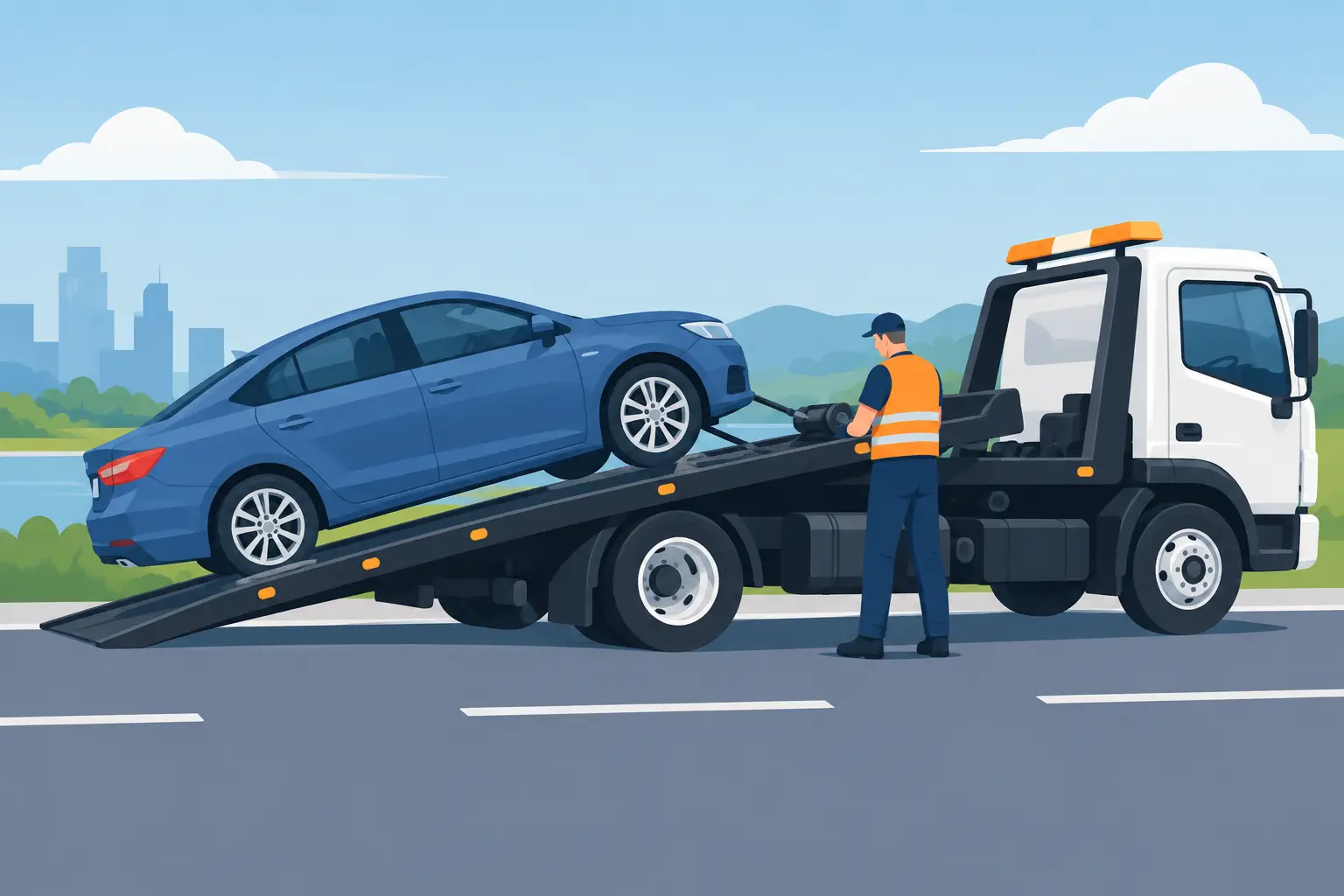
A flatbed tow loads the entire vehicle onto the truck’s platform. This keeps all four wheels off the road and is often preferred for all-wheel-drive vehicles, many luxury or low-clearance cars, motorcycles, heavily damaged vehicles, and longer-distance transport. It can also be a good choice when a vehicle cannot roll normally.
A wheel-lift tow raises either the front or rear wheels while the other end rolls behind the truck. It is a common, efficient option for certain vehicles when the drivetrain and condition make it appropriate. For example, a front-wheel-drive car can often be lifted from the front with its rear wheels rolling, but the operator will make that decision based on the vehicle’s needs.
The trade-off is not about one method always being better. It is about using the method that prevents drivetrain damage and keeps the load secure. A professional operator will not treat every car, truck, trailer, or motorcycle the same way.
Securing Your Vehicle for Transport
Once the towing method is selected, the operator prepares the vehicle for loading. They may ask you to remove personal items, take valuables, and make sure the keys are available. If your car is operable, they may ask you to place it in neutral, release the parking brake, or turn the wheel as directed. Never make those changes unless the tow operator tells you to do so.
For a flatbed, the vehicle is carefully pulled or winched onto the deck. Winching is common when a car will not start, cannot be driven, or needs a controlled load. The operator uses secure attachment points and wheel straps or chains suited to the vehicle and situation.
For a wheel-lift tow, the lifting equipment is positioned under the appropriate tires. Safety chains and lights are then connected as needed. The operator will check that the vehicle is stable before moving.
This part may take a few minutes longer than drivers expect, especially in rain, darkness, tight parking areas, accident scenes, or heavy traffic. That time is not wasted. Careful setup helps prevent avoidable damage and makes the trip safer.
Where Do You Go While Your Car Is Being Towed?
Many drivers assume they can ride in their own vehicle during a tow. In most cases, that is not allowed. It is unsafe and often against regulations to remain in a vehicle being transported.
Depending on the tow truck, local rules, available seating, and the nature of the call, you may be able to ride in the tow truck cab. However, that cannot always be promised. If there are passengers, children, pets, or limited cab space, you may need another ride arranged through family, a friend, rideshare, or roadside assistance coverage.
Ask about this when you call if transportation is a concern. It is much easier to make a plan before the truck arrives than while you are stranded on the side of the road.
During the Drive to the Drop-Off Location
After the vehicle is secured, the operator drives carefully to the agreed destination. Tow trucks need more room to turn, brake, and navigate than a standard passenger vehicle. The route may not always be the shortest route if road conditions, low clearances, traffic, or load safety make another route better.
If the destination changes, contact the towing company as soon as possible. A change from a nearby repair shop to a dealership across town can affect timing and cost. Clear communication prevents surprises.
For accident tows, the destination may be affected by police direction, insurance requirements, or whether the vehicle needs to go to a storage facility first. If law enforcement has control of the scene, follow their instructions. You can still ask questions about where the vehicle is going and how to retrieve it later.
At the Repair Shop, Home, or Storage Yard
At the destination, the operator unloads the vehicle carefully and places it where the location allows. At a repair shop, that may mean a designated drop-off area or key box. At a home, it may mean your driveway or a safe legal parking area.
Before the truck leaves, confirm that the vehicle is where you expected it to be. Collect your belongings, keys, paperwork, and any receipt or service details. If your car is going to a shop after hours, ask how the keys and repair information will be handled.
If the vehicle is being stored after an accident or impound-related situation, ask about the facility name, hours, release requirements, and any documents you will need. Insurance information, registration, identification, and lienholder details may matter depending on the situation.
What You Can Do to Make a Tow Easier
A few small steps can help the process move faster. Keep your phone charged when possible, know your vehicle’s make and model, and save your preferred repair shop’s address. If you carry roadside assistance coverage, have that information available before you need it.
When help arrives, give the operator room to work. Keep children and pets away from the loading area, do not stand between the tow truck and your vehicle, and avoid touching straps, chains, or lift equipment. The operator’s attention needs to stay on the load and surrounding traffic.
Most of all, do not feel embarrassed about calling for help. Vehicles break down, tires fail, batteries die, fuel gauges mislead drivers, and accidents happen. Calling early can be safer than trying to force a damaged or unreliable vehicle farther down the road.
When you need help in Gresham or Troutdale, a calm call and a professional response can turn a roadside problem into a manageable next step. Tow Guys LLC is here to help you get out of danger, protect your vehicle, and get moving toward a solution.
Need a tow truck in Gresham? See Gresham towing or call Tow Guys 24/7 at (971) 222-7994.