
Roadside Repair Versus Vehicle Recovery: When to Call
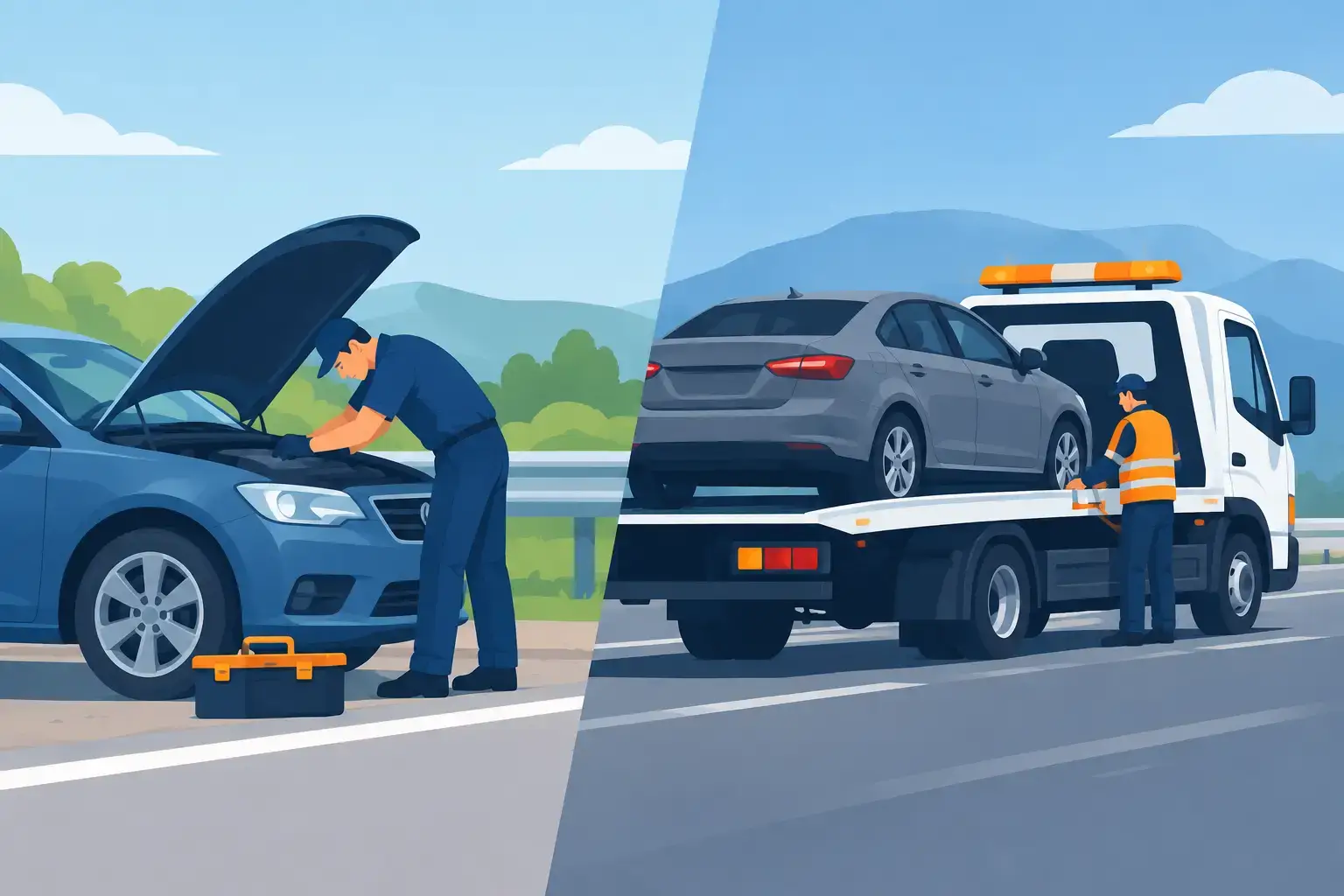
A car that will not start in your driveway needs a different response than a truck sitting damaged after a collision. Knowing the difference between roadside repair versus vehicle recovery can save time, prevent further damage, and help you make a safer decision when stress is already high.
The simple question is this: can the vehicle be made safe and drivable where it is, or does it need to be moved? Roadside assistance focuses on solving a manageable problem at the vehicle. Recovery focuses on safely removing a vehicle that cannot or should not stay where it is.
What roadside repair is designed to handle
Roadside repair, often called roadside assistance, is for common problems that may be resolved without taking the vehicle to a shop. The goal is to get you moving again safely, not to perform major mechanical work on the shoulder of the road.
A technician may be able to provide a jump-start for a drained battery, change a flat tire when you have a usable spare, bring fuel after an empty tank, unlock a vehicle, or help assess a no-start situation. These services are usually quicker than arranging a tow because the vehicle remains in place and the solution is straightforward.
That does not mean every apparent small problem is safe to fix roadside. A flat tire is often a roadside repair if the spare is inflated and the wheel hardware is accessible. But if the tire damage happened after striking debris, the rim is bent, or the vehicle is stopped in a dangerous location, towing may be the better choice.
When a jump-start is enough
A jump-start makes sense when a battery was drained by interior lights, a door left partly open, or an occasional weak charge. Once the vehicle starts, it should still be driven carefully and the battery or charging system checked if the issue returns.
If the vehicle starts and immediately dies, the battery case is swollen or leaking, warning lights remain on, or there is a burning smell, do not assume another jump will solve it. Those signs can point to a charging-system or electrical problem that needs diagnosis and possibly a tow.
When fuel delivery solves the problem
Running out of fuel is frustrating, but it is usually one of the fastest roadside calls to resolve. Fuel delivery can get you to a nearby station without asking a friend or family member to make an unsafe trip with a gas can.
Still, a vehicle that cranks but will not start after running empty may have another issue. Diesel vehicles and some modern fuel systems can require additional attention after the tank has run dry. In that case, the right next step depends on the vehicle and the symptoms.
What vehicle recovery means
Vehicle recovery is the safe removal, stabilization, or repositioning of a vehicle that is disabled, damaged, stuck, or unsafe to drive. It can involve a standard tow, winching, accident recovery, or specialized handling for motorcycles, trailers, light trucks, and other vehicles.
Recovery becomes necessary when the vehicle cannot be repaired at the roadside, cannot legally or safely be driven, or is positioned where it creates a hazard. The priority shifts from getting the engine running to protecting people, traffic, and the vehicle from further harm.
A recovery call may be needed after a collision, a mechanical failure, a wheel or suspension break, overheating, transmission trouble, engine warning signs, or a vehicle that has slid off the road. It may also be the right answer when a driver is stranded in a location where working beside traffic would be risky.
Accident recovery is about safety first
After an accident, damage is not always visible. A vehicle may look drivable while having a leaking fluid line, damaged steering component, compromised bumper, loose wheel, or tire damage. Driving it can turn a repairable situation into a more serious one.
Move to a safe location if the vehicle can be moved without risk and local conditions allow it. Turn on hazard lights, keep clear of traffic, and avoid standing between vehicles or near an active lane. If there are injuries, fire, leaking fuel, or an immediate roadway danger, call emergency services first.
Once the scene is secure, a recovery professional can transport the vehicle in a way that matches its condition. That matters for low-clearance cars, all-wheel-drive vehicles, motorcycles, trailers, and vehicles with collision damage.
A vehicle can need recovery without an accident
Not every tow follows a crash. Overheating can quickly damage an engine. A transmission that will not shift, a broken serpentine belt, severe vibration, a locked wheel, or an engine that stalls repeatedly all make continued driving a poor gamble.
The same is true when a vehicle is stuck in mud, a ditch, or an embankment. Spinning the tires or accepting a pull from an unprepared vehicle can cause more damage or put people in danger. A controlled recovery protects the vehicle and everyone nearby.
Roadside repair versus vehicle recovery: how to decide
Start with safety, not convenience. If the vehicle is in a travel lane, on a narrow shoulder, near fast-moving traffic, around a blind curve, or in poor visibility, a quick roadside fix may not be worth the exposure. Recovery or towing may be the safest option even if the mechanical problem appears minor.
Next, consider whether the problem has a clear, limited fix. A dead battery with no other symptoms, an empty fuel tank, or a simple flat with a good spare can often be handled roadside. If you are unsure what failed, hear unusual noises, smell smoke or fuel, see leaking fluids, or have multiple warning lights, do not try to diagnose it under pressure. Arrange for the vehicle to be moved.
Finally, think about what happens after the immediate fix. A jump-start gets a vehicle running, but it does not guarantee the alternator is charging. A spare tire gets you rolling, but it may have speed and distance limits. Roadside help can be the right first response while a repair shop remains the next destination.
What to do while help is on the way
Your first job is to make the scene as safe as possible. Pull as far from traffic as conditions permit, switch on hazard lights, and stay aware of passing vehicles. At night or in rain, visibility matters even more.
If you are safely off the road, remain inside the vehicle with doors locked when traffic conditions or the surrounding area make getting out unsafe. If you must exit, do so away from traffic and only when you can do it safely. Keep children and passengers away from the roadway.
When you call for assistance, share your exact location, the vehicle make and model, what happened, and any visible damage or warning signs. Mention if you are carrying a trailer, driving a motorcycle, or stuck off pavement. Clear details help the dispatcher send equipment that fits the job instead of delaying your help.
Do not accept a ride or an informal tow from someone you do not know. A proper tow or recovery is not just about pulling a vehicle from one place to another. It requires the right equipment, secure attachment points, and a driver who understands how to protect the vehicle during transport.
Local help when the decision is not clear
Drivers in Gresham and Troutdale do not need to diagnose every roadside problem before calling. Explain what you see, what you hear, and where the vehicle is located. An experienced local provider can help determine whether a jump-start, fuel delivery, tire change, tow, or recovery is the appropriate response.
Tow Guys LLC approaches both kinds of calls with the same priority: get to you promptly, treat you with respect, and choose the safest practical solution. Sometimes that means getting you back on the road in minutes. Other times, the best service is protecting your vehicle with a careful tow before a small issue gets worse.
When your vehicle leaves you stranded, do not let urgency push you into an unsafe decision. Get yourself out of danger first, then choose the help that matches the condition of the vehicle.
Need a tow truck in Gresham? See Gresham towing or call Tow Guys 24/7 at (971) 222-7994.