Towing Damage Prevention Starts Before the Hook
A tow should solve a bad situation, not create a second repair bill. Effective towing damage prevention starts before a truck ever connects to your vehicle: with an accurate assessment, the right equipment, and a driver who takes the time to secure the load correctly. Whether your car will not start in a Gresham parking lot or your motorcycle needs transport after a breakdown, careful handling protects the vehicle you rely on.
Why Towing Damage Happens
Most towing damage is preventable, but vehicles are not all built the same. A sedan with low ground clearance, an all-wheel-drive SUV, a lowered truck, and a motorcycle each require a different loading approach. Using the fastest available method instead of the correct one can put stress on bumpers, suspension parts, tires, driveline components, or body panels.
Damage can also happen before loading begins. A vehicle that has been in an accident may have a bent wheel, leaking fluid, locked steering, or damaged suspension. Trying to roll or pull it as if it were fully operational can make the original problem worse. The same is true for a vehicle stuck in mud, a ditch, or against a curb. Recovery requires controlled force and safe anchor points, not guesswork.
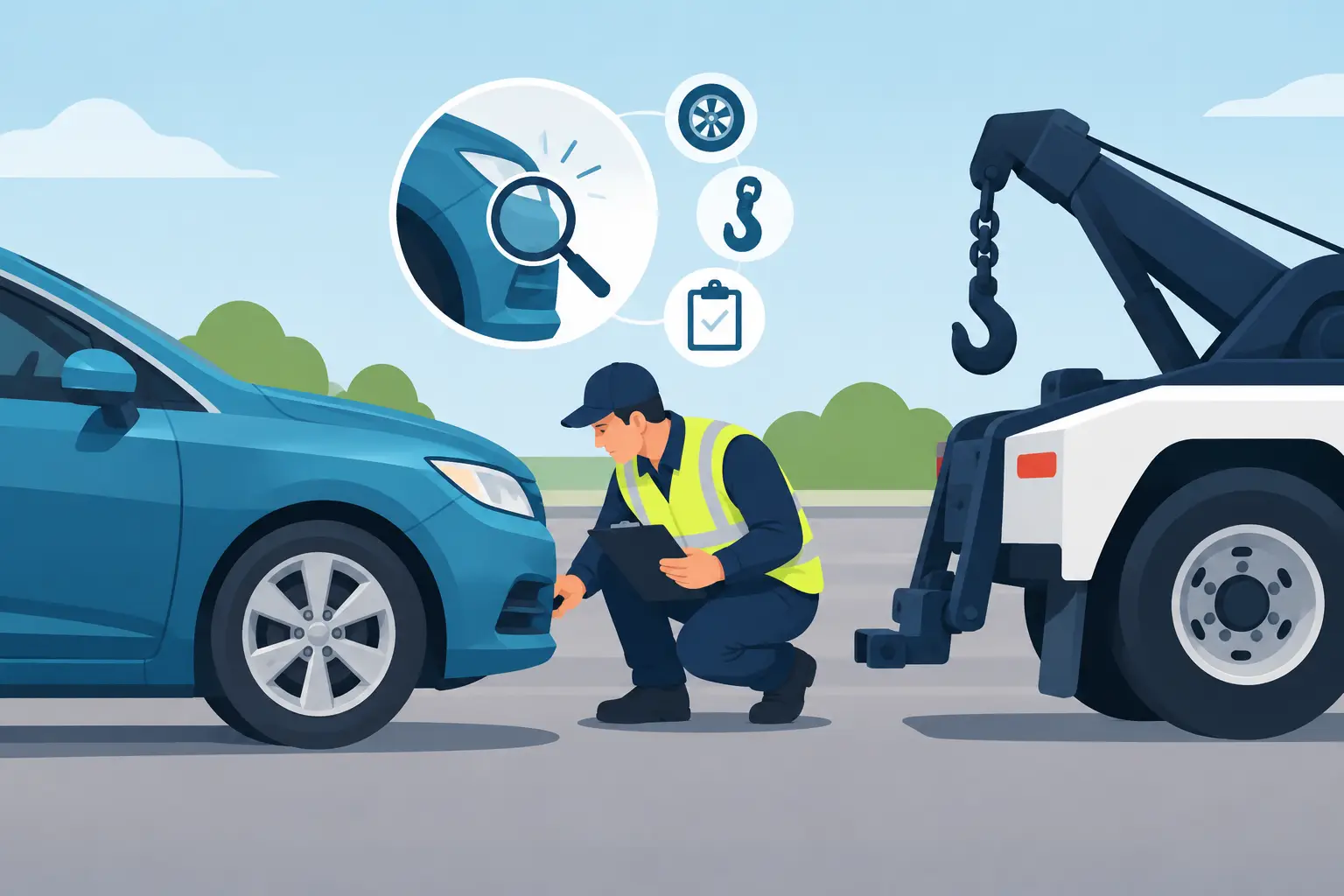
A professional tow operator considers the vehicle's condition, its drivetrain, where it is parked, and where it needs to go. That assessment takes a few extra moments, but it can prevent hours of repairs and frustration later.
Towing Damage Prevention Begins With Accurate Information
When you call for roadside help, the details you share affect the equipment and plan sent to you. You do not need to be a mechanic. Just describe what you can see and what happened as clearly as possible.
Tell the dispatcher your vehicle's make, model, and approximate year. Mention if it is all-wheel drive, four-wheel drive, electric, lowered, oversized, or carrying a trailer. If you know that the vehicle has a locked wheel, flat tire, transmission issue, steering damage, or has been in a collision, say so. These details help the tow operator arrive prepared instead of trying to adapt with unsuitable equipment at the roadside.
Location matters, too. A vehicle on a busy shoulder, in a tight apartment lot, inside a parking garage, or off the pavement may need a different approach than one parked safely in a driveway. If your vehicle is in a dangerous position, move yourself and your passengers to a safe area when possible. Do not stand between your vehicle and traffic while waiting for help.
Do Not Assume It Can Be Pulled From Any Point
Modern vehicles have plastic bumper covers, underbody panels, sensors, and components that are easy to damage if a hook or strap is attached in the wrong place. The visible part of a bumper is rarely a safe recovery point.
Many vehicles have manufacturer-designated tow points, but those points are not always intended for every type of recovery. A trained operator identifies appropriate attachment points and chooses the right straps, chains, wheel lifts, or winching equipment for the situation. If a vehicle needs to be moved but cannot roll normally, special tools may be necessary to avoid dragging it and damaging the tires, wheels, or underside.
Choose the Right Tow Method for the Vehicle
The safest tow method depends on the vehicle, not just the distance. For many cars, SUVs, luxury vehicles, electric vehicles, all-wheel-drive vehicles, and motorcycles, a flatbed is often the best option. The entire vehicle rides off the road, which limits wear on the drivetrain and reduces the chance of road debris damage during transport.
A wheel-lift tow can also be appropriate when the vehicle and situation allow it. It supports the vehicle by its tires rather than pulling from the bumper or suspension. Still, the operator must account for drivetrain layout. Towing the wrong end of an all-wheel-drive or four-wheel-drive vehicle with wheels on the ground can cause expensive mechanical damage.
Motorcycles deserve their own plan. They should be secured upright with proper soft straps and wheel restraints that avoid crushing bodywork, pinching cables, or loading fragile components. A bike that appears stable can shift quickly if it is tied down incorrectly. Trailer towing also requires attention to hitch condition, safety chains, tire condition, lighting, load balance, and the trailer's total weight.
There is no single towing method that is best for every call. The right answer depends on the vehicle and its condition, which is why a quick visual inspection is part of responsible service.
What Drivers Can Do Before the Tow Truck Arrives
You can help protect your vehicle without putting yourself at risk. Gather your keys, remove valuable items, and take photos of the vehicle if it has collision damage or if you want a record of its condition before transport. If you can safely access the vehicle, note any existing dents, broken glass, loose parts, or warning lights.
Avoid trying to force the car into neutral, releasing an electronic parking brake without understanding the process, or moving damaged parts out of the way yourself. On some vehicles, these actions can create additional problems. Let the tow operator know if the keys are unavailable, the vehicle will not shift, the wheels are turned, or the parking brake is engaged.
Before leaving, check that you have your phone, wallet, medication, garage opener, work items, and any child seats or personal belongings you need. If the vehicle is going to a repair shop after hours, confirm where it should be left and whether the keys need to be placed in a designated drop box.
Questions Worth Asking Before Transport
A reliable towing company should be comfortable explaining the plan in plain language. You can ask whether a flatbed is recommended, how the vehicle will be secured, and where it will be delivered. If the car has special needs, such as low clearance, all-wheel drive, accident damage, or a motorcycle rack, bring that up before loading begins.
It is also reasonable to confirm the destination address and make sure the shop can accept the vehicle. A correct tow to the wrong entrance, a closed facility, or an unsuitable parking area creates delays that no driver needs during an already stressful day.
Experienced operators do not treat these questions as a nuisance. Clear communication protects everyone involved and helps avoid misunderstandings about the vehicle's condition or destination.
Careful Loading Makes the Difference
The highest-risk moments are often loading and unloading. A low vehicle can scrape if the loading angle is too steep. A damaged vehicle can shift if it is pulled too aggressively. A heavy truck or trailer can become unstable if weight is not centered and secured correctly.
A careful operator adjusts the truck and ramps, uses the proper winching technique, and watches clearance throughout the process. Once loaded, the vehicle should be secured at appropriate points and checked before transport. This is not about making the job look complicated. It is about preventing movement, protecting the vehicle, and arriving with it in the same condition it was loaded.
At Tow Guys LLC, that kind of care is part of treating neighbors the way they should be treated: with a calm explanation, professional equipment, and attention to the details that matter when your vehicle is already having a bad day.
After the Vehicle Is Delivered
When practical, do a quick walk-around after delivery. Compare the vehicle to the photos you took earlier, look for obvious new issues, and make sure the destination is correct. If the vehicle is being left at a repair facility, notify the shop about the main problem and any special handling concerns, such as a key that does not work, a wheel that is locked, or a battery that is disconnected.
If you notice a concern, raise it promptly and calmly with the towing provider. Good documentation and direct communication make it easier to sort out questions while the details are fresh.
The best protection is simple: choose careful service, share accurate information, and do not rush a recovery that needs the right equipment. A few thoughtful minutes at the roadside can keep a breakdown from becoming unnecessary vehicle damage.
Need a tow in Gresham or East County? Call Tow Guys 24/7 at (971) 222-7994.