
Winch Out Service Gresham for Stuck Vehicles
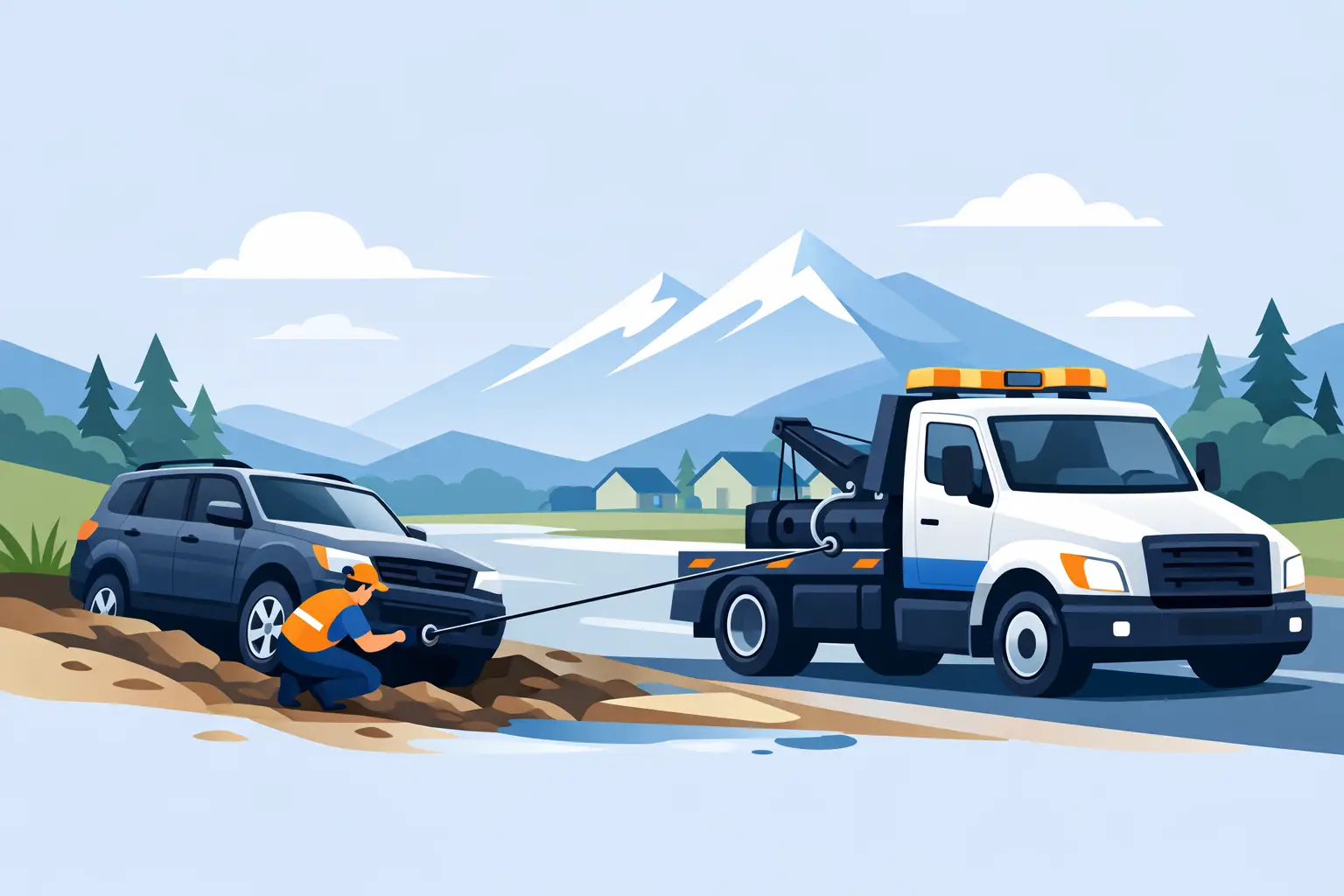
A winch out service Gresham drivers can depend on matters most when a normal drive turns into a vehicle recovery problem. Your car may be sitting in mud beside a wet road, buried in loose gravel, hung up on a steep driveway, or unable to gain traction after sliding off pavement. In that moment, spinning the tires or accepting a pull from an unprepared vehicle can make the situation worse. A professional winch-out is designed to get your vehicle back to stable ground with care for your safety, your vehicle, and the surrounding property.
When a Winch-Out Is the Right Call
A winch-out is not the same as a standard tow. Towing moves a vehicle from one location to another. A winch-out recovers a vehicle that cannot safely drive or be loaded onto a truck because it is stuck, off the roadway, or positioned at an unsafe angle.
This need can happen quickly in the Gresham area, especially during heavy rain, icy conditions, or on unpaved roads and driveways. A vehicle that looks only slightly stuck may have limited traction, soft ground beneath it, or damage risk from its position. Even an all-wheel-drive truck can get stranded when mud packs beneath the tires or one side slides into a ditch.
Common situations that call for professional recovery include a car stuck in mud or snow, a vehicle resting in a ditch, wheels spinning on gravel, a truck stuck on a soft shoulder, or a vehicle that has slid down an embankment. Trailers and motorcycles can also require careful recovery, although the right approach depends on their location, weight, and condition.
The deciding factor is safety. If the vehicle is no longer on firm, level ground or you are close to traffic, water, a slope, or a drop-off, it is time to stop trying to force it free.
Why Spinning the Tires Can Make Things Worse
The instinct to press the gas and power out is understandable. It can also turn a manageable recovery into a deeper, more expensive problem. Spinning tires dig holes in soft dirt, mud, snow, and gravel. Once the vehicle settles lower, the undercarriage can become caught on the ground and traction becomes even harder to regain.
Repeated attempts may also overheat components, damage tires, or send rocks and debris flying. If the vehicle is at an angle, sudden movement can cause it to slide farther from the road or into an obstacle. This is especially concerning near drainage ditches, trees, fences, or busy streets.
A professional operator assesses the ground, vehicle position, recovery points, and the safest direction of travel before applying force. The goal is not simply to pull hard. It is to apply controlled tension and bring the vehicle out in a way that limits further damage.
What to Do While Waiting for Winch Out Service in Gresham
Your first job is to protect yourself and the people with you. If your vehicle is in or near traffic and it is safe to exit, move to a protected location away from the roadway. Turn on hazard lights and use roadside warning devices if you have them and conditions allow.
Do not stand downhill from a stuck vehicle or directly in front of or behind it. If the vehicle shifts during recovery, those areas can be dangerous. Keep children and pets safely away from the recovery area as well.
When you call for help, give clear details about your location and the vehicle's condition. Mention whether you are on a main road, private driveway, trail, parking area, or rural property. Explain what the vehicle is stuck in, whether it is blocking traffic, and whether it is leaning, damaged, or near a ditch. These details help the recovery team arrive with the right equipment and plan.
If you can safely do so, take a few photos of the vehicle and the area around it. They can help communicate the situation. Do not try to crawl under the vehicle, place loose items under the tires, or attach a strap to an unknown point beneath the car. Modern vehicles have sensitive components and not every metal surface is made for recovery force.
How Professional Winch Recovery Works
A proper recovery begins with an on-site assessment. The technician looks at ground firmness, vehicle angle, available anchor positions, wheel placement, and access for the recovery truck. A simple muddy shoulder recovery may be straightforward. A vehicle resting off a steep driveway or caught in a deep ditch can require more careful positioning and a slower process.
The operator then identifies appropriate recovery points and uses a winch system to apply steady, measured pulling force. In some cases, the vehicle needs to be pulled forward. In others, it is safer to guide it backward or reposition the recovery truck first. There is no one-size-fits-all method, and a fast pull is not always the safe pull.
Once the vehicle is back on stable ground, it may be able to continue driving. That depends on whether there is tire, wheel, suspension, undercarriage, or mechanical damage. If the car has been pulled from a ditch, struck an obstacle, or has warning lights on afterward, towing it to a repair shop may be the safer choice.
Tow Guys LLC provides local recovery and towing support with the same focus: get there promptly, assess the situation clearly, and treat both the driver and the vehicle with respect. Roadside stress is real. Clear communication and careful work make a difference.
Winch Out Service Gresham Drivers Can Use for More Than Cars
Recovery needs are not limited to sedans and SUVs. Light trucks can sink into soft ground because of their weight, while trailers may lose traction or become difficult to maneuver on wet grass, gravel, and narrow driveways. Motorcycles require special care because an improper pull can cause additional damage or put the bike at greater risk of tipping.
The right recovery equipment and technique depend on the vehicle. A loaded trailer may need a different plan than an empty utility trailer. A pickup with four-wheel drive may still need a winch-out if its tires are buried or it is high-centered. A low-clearance car can be vulnerable to underside damage even when it appears only lightly stuck.
Being honest about the vehicle type and situation when you call helps avoid delays. Tell the dispatcher if you are driving a truck, towing a trailer, riding a motorcycle, or carrying a load. Also mention if the vehicle has aftermarket modifications, low ground clearance, or a known mechanical issue.
The Difference Between a Winch-Out and a Tow
Some recoveries end with the vehicle driving away. Others lead directly to a tow. The difference comes down to what happened before, during, and after the vehicle got stuck.
If the engine runs, the tires are intact, and the vehicle is safely back on solid ground, you may be able to continue your trip. But if you hit a curb, bottomed out, damaged a tire, lost fluid, or slid into a ditch, continuing to drive can create a larger repair bill or leave you stranded again a few miles later.
A professional operator can help you make a practical call based on what is visible at the scene. There is no benefit in taking chances with a damaged vehicle just because it has been pulled free. Sometimes the best next step is a tow to a trusted repair location or home.
Avoiding Another Stuck-Vehicle Situation
Not every recovery can be prevented, but a few habits reduce the risk. Slow down before entering wet grass, loose gravel, deep snow, or an unfamiliar unpaved area. Avoid pulling far onto a soft shoulder just to make room for traffic. If you are towing a trailer, give yourself more room to turn and avoid steep or narrow surfaces when traction is poor.
Pay attention to weather, especially after extended rain. Ground that looked solid yesterday may be soft today. If you are unsure whether a driveway, field, or shoulder will hold your vehicle, stopping before you commit is usually easier than backing out after you are stuck.
When your wheels are spinning, the safest choice is often the simplest one: stop, get to a safe place, and call for trained help. A careful winch-out can turn a frustrating roadside moment into a problem you leave behind safely.
Need a tow in Gresham or East County? Call Tow Guys 24/7 at (971) 222-7994.