Vehicle Recovery After Collision: What to Do
The crash itself happens fast. The confusion afterward can last much longer.
That is why vehicle recovery after collision matters so much. Once the immediate danger has passed, the next decisions - where your car goes, how it is loaded, and who handles the recovery - can affect your safety, your repair options, and your stress level for the rest of the day.
For most drivers, this is not a situation they have practiced. You may be shaken up, traffic may still be moving around you, and your vehicle may be leaking fluids, stuck against a curb, or too damaged to roll. In those moments, a calm, experienced recovery team makes a real difference.
What vehicle recovery after collision really includes
A lot of people hear the word towing and picture a simple hook-up and ride. After an accident, it is often more involved than that.
Vehicle recovery after collision can mean clearing a car from a traffic lane, stabilizing a vehicle that cannot move safely on its own, handling wheel or suspension damage, recovering a motorcycle without causing more cosmetic damage, or transporting a light truck or trailer that is no longer roadworthy. If the vehicle has been pushed into a ditch, pinned against an obstacle, or left with broken steering components, the job requires more than basic towing.
The goal is not just moving the vehicle. The goal is moving it safely, without creating additional damage and without putting the driver, passengers, or surrounding traffic at greater risk.
Your first priority is safety, not the vehicle
Right after a collision, it is natural to focus on the car. But your first job is to protect people.
If anyone is injured, call 911 right away. If the vehicle can be moved safely and local law enforcement directs you to move it, get it out of active traffic. If it cannot be moved, turn on hazard lights if possible, stay in a safer location away from traffic, and wait for professional help.
This is also the point where drivers sometimes make a bad situation worse. Trying to force a damaged car to drive, pushing it from an unsafe angle, or standing too close to moving traffic can create new risks. A damaged axle, bent wheel, or fluid leak may not be obvious at first glance. What looks drivable can quickly become dangerous.
When a collision-damaged vehicle should not be driven
Some damage is obvious. A crumpled front end, deployed airbags, or a wheel folded inward usually tells you the answer immediately. Other cases are less clear.
A vehicle should generally not be driven after a collision if it is leaking fluid, making grinding or scraping sounds, pulling hard to one side, showing steering problems, dragging body panels, or displaying warning lights that appeared after impact. Even a low-speed collision can damage suspension parts, tires, or the frame in ways that are not easy to spot from the roadside.
This is where professional judgment matters. A proper recovery operator does not just ask whether the engine starts. They look at how the vehicle sits, whether the wheels track correctly, and what loading method will prevent additional strain.
How the recovery process usually works
The best recovery jobs feel organized from the first phone call. You explain the situation, your location, the type of vehicle, and whether there are obvious hazards like blocked traffic, heavy damage, or fluids on the ground. That helps the towing team arrive with the right equipment.
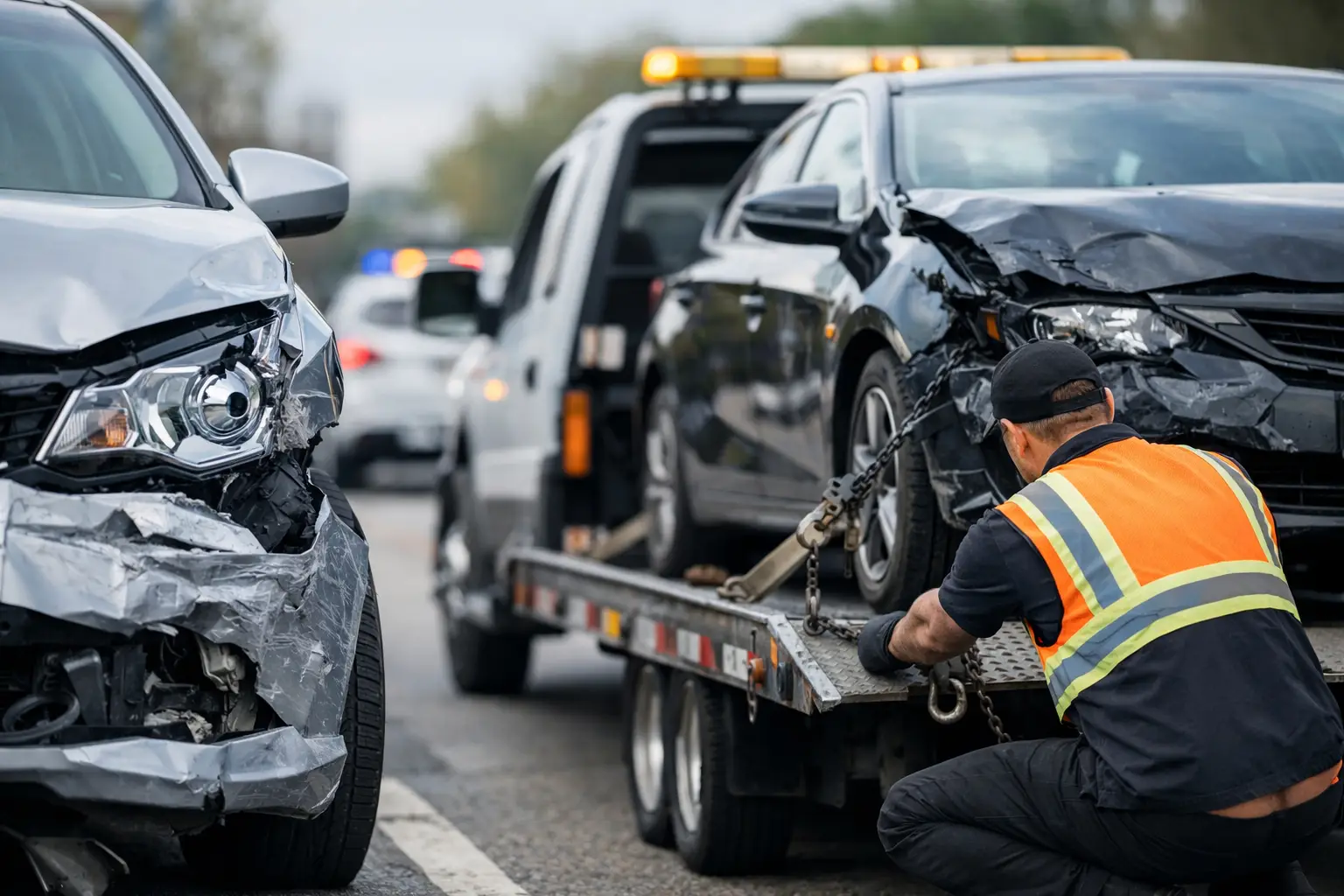
Once on scene, the operator assesses the vehicle position, damage, and safest loading angle. In some collisions, a standard tow setup is enough. In others, a flatbed is the better choice because it keeps all four wheels off the ground and reduces the chance of further damage. If the car is stuck, low to the ground, or has wheel damage, special care is needed during winching and loading.
Good operators also think beyond the vehicle itself. They watch traffic flow, choose the safest work area possible, and move with purpose. After an accident, efficiency matters, but rushing the wrong steps does not help anyone.
Vehicle recovery after collision and avoiding added damage
One of the biggest concerns drivers have is simple and reasonable: if the car is already damaged, how do you keep it from getting worse?
That comes down to equipment, technique, and experience. A collision-damaged vehicle may need skates, dollies, soft straps, careful winching, or a specific loading angle to avoid dragging damaged components. Motorcycles require their own securement methods. Trailers and light trucks also need the right setup based on weight, balance, and damage points.
There is no one-size-fits-all approach. A rear-end collision with minor wheel damage is different from a side impact that affects steering. A pickup with suspension damage is different from a sedan with front-end compression. Recovery should match the actual condition of the vehicle, not just the fact that it needs to be moved.
Where should the vehicle go after the crash?
This depends on the situation.
Sometimes the vehicle goes to a repair shop. Sometimes it needs to go to a body shop, your home, a dealership, or another secure location. If law enforcement is involved, there may be instructions about where the vehicle can be taken. If the damage is severe, storage may be part of the process until insurance decisions are made.
The main thing is to make that decision clearly before the truck leaves, whenever possible. In the middle of a stressful event, miscommunication happens easily. Confirm the destination, ask what type of tow is being used, and make sure you understand what happens next.
If you are unsure, say so. A good local company will explain your options in plain language and help you think through the practical choice based on the damage and your immediate needs.
What to have ready when you call for recovery
You do not need a perfect report. Just give the most useful information you can.
The location matters first, especially if you are near an intersection, shoulder, parking lot entrance, or freeway ramp. Then give the vehicle type, whether it can roll, and whether there is visible damage affecting wheels, steering, or fluids. If the car is stuck in an awkward position or traffic is blocked, mention that right away.
If you are in Gresham or Troutdale, local knowledge can save time. A team that knows the roads, traffic patterns, and common problem areas can often reach you faster and approach the scene more efficiently.
Why local accident recovery often feels less stressful
After a collision, people want quick answers from someone who sounds confident and steady. That is one reason local service matters.
A family-owned company like Tow Guys LLC is not working from a distance or treating your situation like a number in a queue. The value is simple: faster response, clear communication, and people who understand how stressful roadside incidents feel for drivers in this area. That personal approach matters when you are standing on the shoulder trying to figure out what happens next.
It also helps when the company regularly handles different vehicle types. Cars, motorcycles, trailers, and light trucks all present different recovery concerns. Experience across those situations leads to better decisions at the scene.
The trade-offs: fastest option vs best option
In urgent situations, people often focus only on speed. Speed matters, but it is not the only thing that matters.
The fastest available truck is not always the right truck if your vehicle has serious wheel, suspension, or underbody damage. On the other hand, waiting too long for a specific setup may not make sense if your car can be safely removed another way. The right answer depends on the damage, road conditions, traffic exposure, and where the vehicle needs to go.
That is why honest assessment is so important. You want a recovery team that balances urgency with care, especially when the vehicle is in a vulnerable condition.
After the vehicle is recovered
Once the vehicle is safely off the road, take a breath and focus on the next practical step. Gather your personal items if it is safe to do so. Take photos if needed. Keep track of where the vehicle was taken and who handled the tow. If insurance is involved, having those details ready will save time later.
Most of all, give yourself room to reset. Even a minor accident can leave you rattled. A professional recovery service cannot undo the collision, but it can remove one major source of uncertainty and help you move forward with a little more control.
When your car is damaged and the road is still moving around you, the best help is simple - someone answers, shows up, handles the recovery the right way, and gets you to the next step safely.
Need a tow in Gresham or East County? Call Tow Guys 24/7 at (971) 222-7994.