
7 Signs Needing Flatbed Towing You Shouldn't Ignore
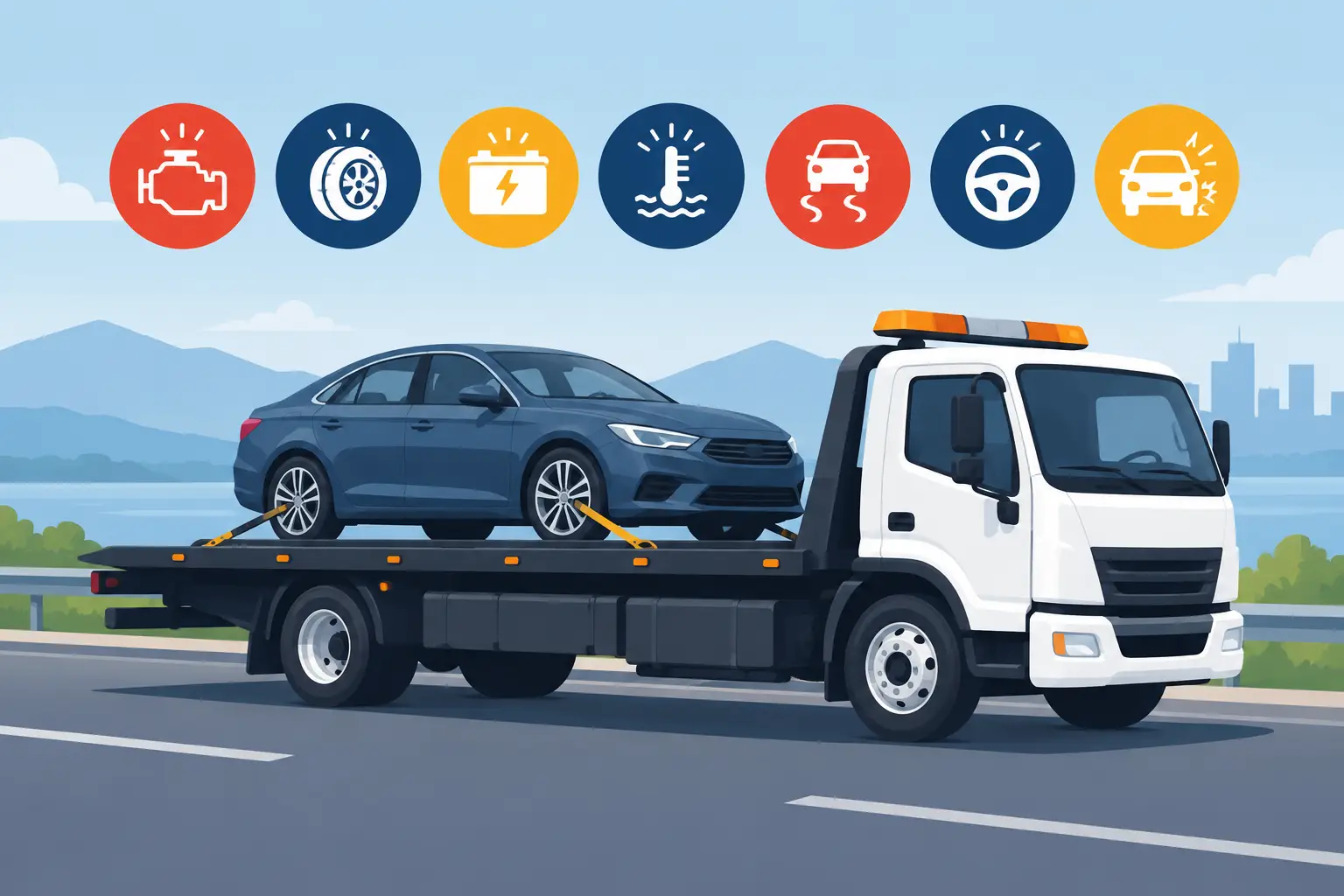
A vehicle can look driveable after a breakdown or collision and still be unsafe to move on its own wheels. Knowing the signs needing flatbed towing can prevent added damage, protect other drivers, and give you a safer path off the road when something has gone wrong.
Why a Flatbed Can Be the Safer Choice
A flatbed tow truck carries your entire vehicle with all four wheels off the ground. That matters when rolling the vehicle could damage the drivetrain, suspension, tires, body, or undercarriage. It also helps when a vehicle cannot be safely started, steered, or moved without dragging.
Not every tow requires a flatbed. A properly equipped wheel-lift tow can be appropriate for many standard vehicles when the vehicle is in good mechanical condition and the manufacturer allows it. But after an accident, with all-wheel drive, or when there is any doubt about whether the wheels should roll, a flatbed is often the careful option.
Put Roadside Safety First
If your vehicle is in an active lane, on a narrow shoulder, or near fast traffic, your first job is to get yourself and your passengers to a safer location if you can do so without crossing traffic. Turn on your hazard lights, keep a safe distance from moving vehicles, and call for help.
Do not crawl under the vehicle, try to force a damaged wheel straight, or attempt a temporary repair on a busy road. A few minutes spent waiting for the right equipment is better than turning a vehicle problem into an injury or a more expensive repair.
7 Signs Needing Flatbed Towing Are Clear
1. You Were in a Collision
Even a low-speed crash can bend steering parts, damage a wheel, crack a tire, or shift body panels into a tire's path. If the bumper is hanging, a wheel sits at an unusual angle, fluids are leaking, or the car pulls sharply, do not try to drive it away just because the engine still starts.
A flatbed keeps the vehicle from rolling on potentially damaged components. It is also a smart call when you cannot see the full extent of the damage. Problems beneath the vehicle are easy to miss at the roadside.
2. Your Vehicle Has All-Wheel Drive or Four-Wheel Drive
Many all-wheel-drive and four-wheel-drive vehicles should not be towed with only two wheels on the ground unless the manufacturer provides a specific procedure. Letting the wrong wheels roll can create heat and stress inside the transmission, transfer case, or differential.
If you are unsure how your vehicle should be moved, tell the dispatcher its year, make, model, and drivetrain. A flatbed avoids the guesswork by keeping every wheel off the pavement.
3. A Wheel, Tire, or Suspension Part Is Damaged
A blown tire alone may be resolved with a spare or roadside tire service, depending on the situation. But a flatbed is the better answer when the wheel is bent, the tire will not hold air, a control arm is broken, or the vehicle is sitting low on one corner.
Driving or towing a vehicle with damaged suspension can cause it to wander, scrape, or drag. The same applies when a wheel is pushed inward after hitting a curb, pothole, or another vehicle. If it does not look normal, do not assume it will roll normally.
4. The Vehicle Is Leaking Fluid
A small amount of water from air conditioning condensation is usually normal. Oil, coolant, brake fluid, fuel, or transmission fluid on the ground is different. These leaks can point to damage that gets worse when the engine runs or the wheels turn.
A fuel leak requires extra caution. Keep ignition sources away, move people to a safe distance, and let emergency responders know if you smell gasoline or see a growing puddle. For other serious leaks, a flatbed reduces the chance of running the vehicle or rotating components that may already be damaged.
5. The Car Will Not Start or Cannot Shift Properly
A no-start can have many causes, from a dead battery to an electrical or engine problem. Roadside assistance may get you moving if the issue is simply a weak battery, but repeated jump-start attempts are not always the answer.
Flatbed towing makes sense when the vehicle will not go into gear, cannot be placed safely in neutral, has a locked steering wheel, or cannot be loaded with its wheels rolling freely. It is particularly helpful for vehicles with electronic parking brakes, transmission concerns, or complicated no-start conditions.
6. Your Vehicle Sits Very Low
Lowered cars, performance vehicles, and some luxury models can be difficult to load without scraping a bumper, splitter, exhaust component, or undercarriage. A standard approach angle may be too steep, even if the car is mechanically sound.
An experienced operator can use the proper loading approach and equipment to reduce that risk. When you call, mention that the vehicle is lowered or has low ground clearance. That detail helps the tow team arrive prepared instead of making decisions beside a busy road.
7. You Need to Transport a Motorcycle, Trailer, or Specialty Vehicle
Motorcycles need secure tie-down points and careful handling to stay upright and protected during transport. Trailers may have tire, bearing, lighting, or hitch issues that make roadside movement unsafe. Light trucks with loaded beds and vehicles carrying valuable equipment can also need a more controlled transport plan.
Flatbed service is not just for wrecked cars. It is often the right fit whenever the vehicle needs to arrive without adding miles, wear, or risk. The towing method should match the vehicle's condition, size, and manufacturer guidance.
What to Tell the Tow Dispatcher
Clear information helps a towing company send the right truck the first time. Share your exact location, the vehicle's year, make, and model, whether it is all-wheel drive or lowered, and what happened before it stopped moving. Mention visible damage, flat tires, fluid leaks, a locked wheel, or a vehicle that is blocked in a parking garage or driveway.
If you were in a collision, say whether the vehicle is drivable only if you are confident it is safe. It is better to describe what you see than to make a judgment about the damage. A dispatcher and tow operator can use those details to plan the safest recovery.
While You Wait for the Flatbed
Stay visible, but do not stand beside the vehicle where other drivers may drift onto the shoulder. If you can safely remain inside a vehicle that is out of traffic, keep your seat belt on. If conditions make it safer to wait outside, move well away from the road, guardrails, and unstable ground.
Take photos of the vehicle and the surrounding scene when it is safe to do so, especially after an accident. Gather your insurance information, destination address, and any special instructions for a repair shop. Do not leave keys in the vehicle unless the tow operator tells you to.
When a breakdown leaves you unsure whether your vehicle can roll safely, choosing caution is the right move. For drivers in Gresham and Troutdale, Tow Guys LLC can help assess the situation and provide prompt flatbed transport when your vehicle needs a safer ride than the road can offer.
Need a tow in Gresham or East County? Call Tow Guys 24/7 at (971) 222-7994.