Protecting Vehicles During Towing Safely
A tow should solve a bad situation, not create a new repair bill. Protecting vehicles during towing means more than hooking up a car and driving away. It means choosing the right truck, securing the vehicle correctly, watching for clearance issues, and treating every car, truck, trailer, or motorcycle as if it were our own.
When your vehicle will not start, has been in an accident, or cannot be driven safely, you have enough to worry about. Knowing what a professional towing process should look like can help you make a safer call and feel more confident while help is on the way.
Why Towing Damage Happens
Most towing damage is preventable. It can happen when a vehicle is pulled from the wrong attachment point, loaded at the wrong angle, or transported with wheels turning when they should be off the road. Low-clearance vehicles may scrape during loading. All-wheel-drive vehicles can suffer drivetrain damage if they are towed incorrectly. A loose strap, unsecured steering wheel, or missed piece of road debris can turn a routine transport into a frustrating claim.
The vehicle itself matters. A compact sedan, lifted truck, electric vehicle, classic car, motorcycle, and loaded trailer each require a different approach. That is why the cheapest or fastest-looking option is not always the right one. The right tow method depends on the condition, weight, driveline, ground clearance, and location of the vehicle.
The Right Tow Truck Makes a Difference
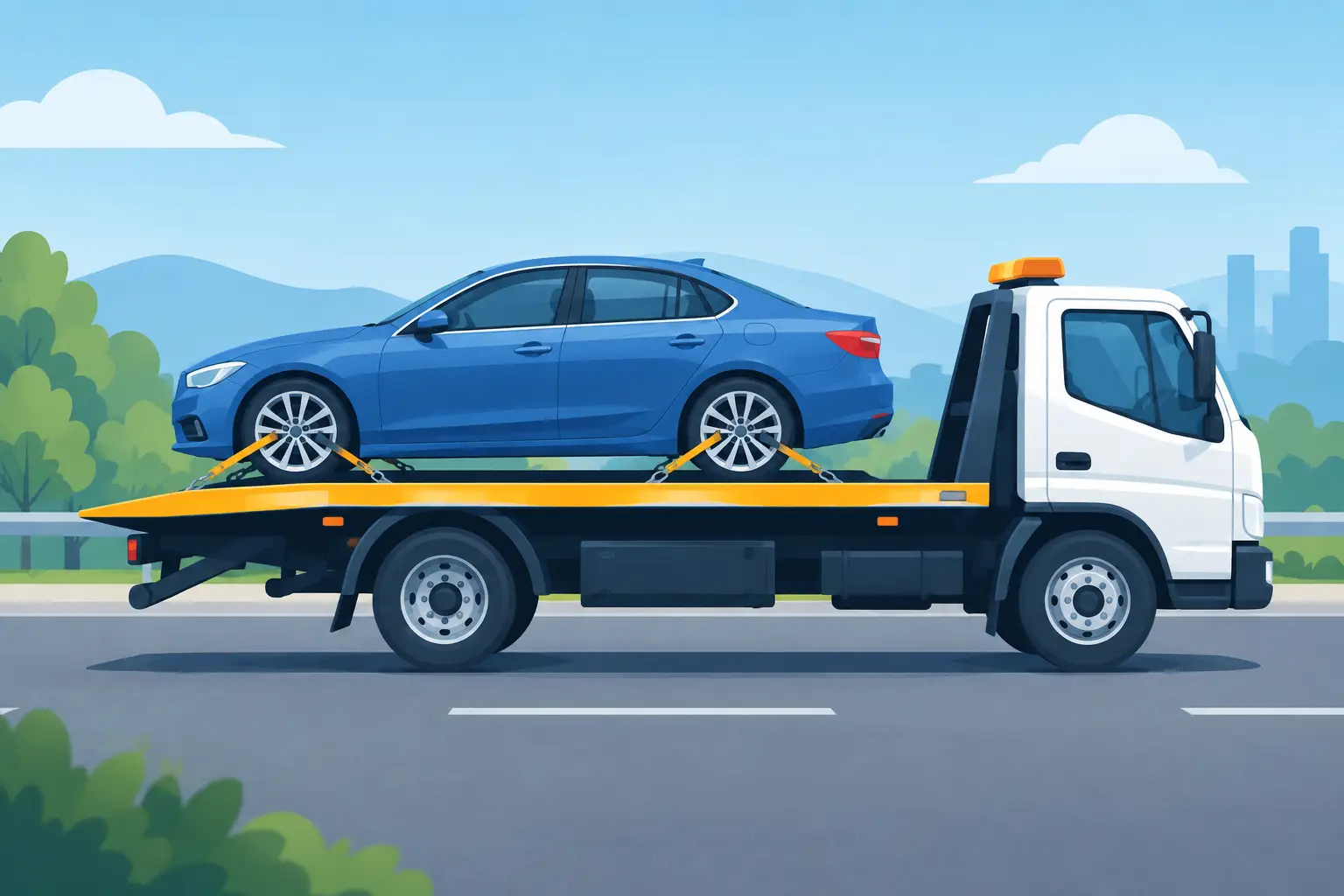
For many vehicles, a flatbed is the safest transport choice. The entire vehicle rides on the bed rather than rolling behind the truck, which reduces wear on tires, suspension, and drivetrain components. It is especially useful for all-wheel-drive vehicles, damaged cars, vehicles with a locked wheel, lowered cars, and motorcycles secured with proper equipment.
Wheel-lift towing is also a safe, practical option when used correctly. It supports the vehicle by its tires rather than hanging it from a bumper or frame. For a front-wheel-drive car, the drive wheels are typically lifted while the rear wheels roll freely. For rear-wheel-drive vehicles, the rear wheels may need to be lifted or placed on dollies. The exact setup depends on the manufacturer's towing guidance and the vehicle's condition.
A good operator does not force one method onto every call. If a car is sitting in a tight parking area, has collision damage, or cannot roll, the technician should assess the situation before moving it. Taking a few extra minutes at pickup is far better than causing damage that could have been avoided.
Extra Care for All-Wheel Drive, EVs, and Specialty Vehicles
All-wheel-drive and four-wheel-drive vehicles deserve special attention. Towing them with only two wheels on the ground can damage the drivetrain unless the manufacturer specifically allows it. A flatbed is often the preferred choice, though dollies may be appropriate in certain situations.
Electric and hybrid vehicles also have unique requirements. Their battery systems, underbody components, and electronic parking brakes need careful handling. If the vehicle has been in a collision, a trained tow operator should inspect it for visible battery damage, leaking fluids, smoke, or heat before transport.
Classic cars, lowered vehicles, and performance vehicles may need low-angle loading ramps, extended ramp attachments, or additional protection at contact points. A careful loading angle helps prevent bumper, spoiler, and undercarriage damage. The same goes for motorcycles, which need purpose-built wheel chocks and soft tie-downs placed at secure points, not a rushed strap-around-anything approach.
What Professional Vehicle Protection Looks Like
Protecting vehicles during towing begins before the truck moves. A professional operator should look over the vehicle, note existing damage when possible, identify recovery points, and check for hazards such as flat tires, broken suspension parts, or a locked steering wheel.
During loading, the vehicle should be centered on the bed or properly balanced on the wheel lift. Securement straps or chains must be appropriate for the vehicle and attached to approved locations. Straps should be tight enough to hold the vehicle steady without rubbing against brake lines, body panels, or delicate components.
Once loaded, the operator should recheck the securement. Road vibration can change tension, especially after the first few miles. Lights, ramps, doors, and loose parts should also be checked before leaving. These details are not optional extras. They are part of safe towing.
At drop-off, the same care matters. A vehicle should be unloaded slowly, placed where the customer or repair shop requests when conditions allow, and positioned safely. On a slope, in a narrow driveway, or at a busy repair facility, the operator may need to adjust the approach. Careful placement can prevent a rollaway, blocked entrance, or another unnecessary headache.
What You Can Do Before the Tow Truck Arrives
Your main job is staying safe, especially after a breakdown or crash. If your vehicle is in a dangerous location and you can move it safely, get it out of traffic. If you cannot move it, turn on hazard lights and stand well away from moving vehicles. Do not wait inside a disabled vehicle on the side of a high-speed road unless there is no safer place to go.
When you call for a tow, share the details that affect how the vehicle should be handled. Mention whether it is all-wheel drive, electric, lowered, damaged, stuck, or carrying a trailer. Let the dispatcher know if keys are unavailable, tires are flat, wheels are locked, or the vehicle is in a parking garage. These details help send the right equipment from the start.
Before the driver arrives, remove valuables and personal items if it is safe to do so. Take a few photos of your vehicle, including any existing collision damage. This is not about assuming the worst. It is a sensible record during a stressful moment, particularly after an accident.
If you have the owner's manual available, it may include specific towing instructions. You do not need to become an expert roadside, but telling the operator about any manufacturer warnings can be helpful. Never try to attach a rope, chain, or strap yourself unless you are trained and it is safe. Improper recovery attempts can damage the vehicle or seriously injure someone nearby.
Questions Worth Asking a Towing Company
When time allows, a few direct questions can tell you a lot about the service you are calling. Ask what type of tow truck they plan to use and whether it is suitable for your vehicle. If your car has all-wheel drive, low clearance, collision damage, or special equipment, ask how they will protect it during loading and transport.
You can also ask where the driver will take the vehicle and whether the destination can accept it after hours. Confirm the vehicle make, model, location, and destination before the truck leaves. Clear communication prevents wrong turns, unnecessary delays, and avoidable confusion at the repair shop.
The best towing companies answer these questions plainly. They do not make you feel like you are slowing them down. A calm, experienced response is often a good sign that your vehicle will receive the same careful attention on the road.
Local Conditions Can Change the Plan
Around Gresham and Troutdale, wet roads, uneven shoulders, steep driveways, and changing weather can all affect a tow. Rain can make loading surfaces slick. Gravel shoulders can shift under heavy equipment. A vehicle parked on a slope may require a different loading direction or extra securement.
That does not mean towing has to be risky. It means the operator needs to assess the scene instead of treating every roadside call the same. Experience matters most when conditions are less than ideal.
Care Is the Standard, Not an Upgrade
A dependable tow is not simply about getting a vehicle from point A to point B. It is about protecting the vehicle, the people around it, and the customer's peace of mind from the first phone call through final drop-off. At Tow Guys LLC, that careful approach is part of showing up for neighbors when they need help most.
If you ever need a tow, give the dispatcher the full picture, choose a company that uses the right equipment, and do not be afraid to ask how your vehicle will be secured. A few clear questions can help turn an already stressful roadside problem into a safer, smoother next step.
Need a tow in Gresham or East County? Call Tow Guys 24/7 at (971) 222-7994.