
Jump Start Versus Towing: Which Comes First?
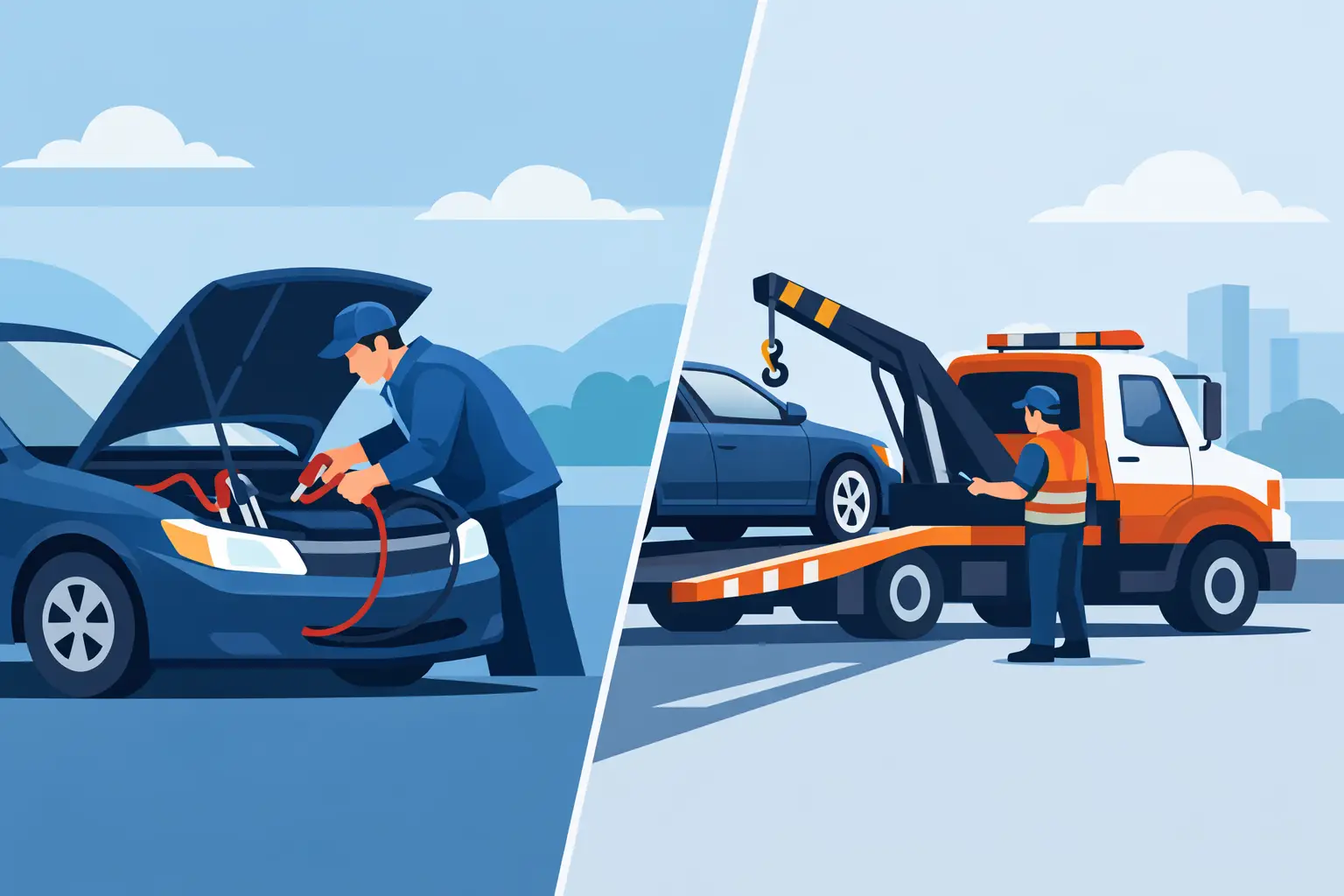
A car that will not start can turn an ordinary commute into a stressful roadside moment fast. The right choice in a jump start versus towing situation depends on more than whether the engine will crank. Your location, the condition of the vehicle, warning signs under the hood, and what happened before the breakdown all matter.
A jump start may get you moving again when a battery has simply run down. Towing is the safer answer when there is a larger mechanical, electrical, or safety issue. Knowing the difference can prevent damage, protect you near traffic, and help you make a calm decision when time feels tight.
When a Jump Start Is the Right First Step
A jump start makes sense when the vehicle appears otherwise normal and the likely problem is a discharged 12-volt battery. Common signs include dim interior lights, a slow or clicking crank when you turn the key, or headlights that were accidentally left on. Cold weather, short trips, and a battery nearing the end of its life can also leave enough power to run accessories but not enough to start the engine.
Before anyone connects jumper cables, move to a safe area if possible. Put the vehicle in park or neutral, set the parking brake, turn off lights and accessories, and keep people clear of moving traffic. A roadside shoulder, narrow street, or busy freeway ramp can make even a simple battery boost unsafe. In that case, roadside help is often the better choice.
A proper jump start should be treated as a test, not a permanent repair. If the engine starts, let it run and avoid immediately shutting it off. Drive directly to a safe place or a shop where the battery and charging system can be checked. A battery that dies once may have been drained by circumstance. A battery that dies repeatedly may be failing, or the alternator may not be charging it.
A Successful Start Does Not Always Mean the Problem Is Solved
If the vehicle starts with a boost but the battery warning light stays on, the lights flicker, or the engine begins to lose power, do not keep driving and hope for the best. Those signs can point to an alternator, belt, wiring, or electrical-system problem. The vehicle may stall again with little warning.
The same applies if it only starts after several attempts or dies shortly after the cables are removed. A boost may have supplied temporary power, but it did not fix the reason the battery went dead. Towing can save you from being stranded a second time, possibly in a less safe location.
Jump Start Versus Towing: Signs You Need a Tow
Towing is not an overreaction when the issue goes beyond a low battery. It is the practical choice when driving could cause more damage, leave you stuck in traffic, or put you and other drivers at risk.
Choose towing rather than a jump start if you notice smoke, a burning smell, leaking fluid, severely corroded or damaged battery components, or a swollen battery case. Do not attempt to jump a battery that is cracked, leaking, frozen, or visibly bulging. Batteries can release flammable gas and contain corrosive acid, so warning signs under the hood deserve caution.
A tow is also the right call when the vehicle will not start after a proper boost, when it cranks normally but will not fire up, or when a security or immobilizer issue appears to be involved. A normal crank without starting is not usually a simple battery problem. It may involve fuel delivery, ignition, sensors, or another issue that roadside cables cannot solve.
Mechanical trouble changes the answer as well. Do not drive a vehicle with overheating warnings, major fluid leaks, grinding noises, steering trouble, brake problems, a flashing check-engine light, or transmission issues. Continuing to drive can turn a repairable problem into a much more expensive one.
After a collision, towing is generally the safest path even if the vehicle still starts. Damage to the suspension, cooling system, tires, steering, or underbody is not always obvious at the roadside. A vehicle that seems drivable for a few blocks may not be safe for the trip home.
Special Care for Hybrids, EVs, and Newer Vehicles
Most hybrids and electric vehicles still use a small 12-volt battery for accessories and vehicle electronics. If that battery is discharged, the vehicle may not power on even though the main traction battery has charge. However, the jump points and procedures can be different from a conventional gas-powered car.
Never connect jumper cables to high-voltage components or orange-colored cables. Use the owner’s manual for the approved 12-volt jump point, or have a trained roadside technician handle it. Improper boosting can damage sensitive electronics and may create a serious safety risk.
Newer gas vehicles also have more electronic systems than older cars. Connecting cables in the wrong order, using damaged cables, or attaching to the wrong points can cause problems. If you are unsure where to connect, it is better to ask for help than to guess under pressure.
Your Location Can Make the Decision for You
The vehicle condition is only half of the decision. A minor battery issue in your driveway is very different from the same issue on a dark road, during heavy rain, or beside fast-moving traffic.
If you are in an exposed or dangerous location, stay inside the vehicle when it is safe to do so, lock the doors, turn on hazard lights, and call for assistance. Do not stand between vehicles while someone attempts a jump start. Avoid opening the hood if traffic is close, visibility is poor, or the shoulder is too narrow to work safely.
For drivers in Gresham and Troutdale, weather can add another layer of concern. Rain can reduce visibility and traction, while colder periods can expose a weak battery without warning. A quick boost may be appropriate in a safe parking area. On a busy roadway or in poor conditions, prompt roadside support or towing is often the more sensible choice.
What to Tell the Roadside Technician
Clear information helps a local provider send the right help and avoid unnecessary delays. Explain whether the engine clicks, cranks slowly, cranks normally without starting, or is completely silent. Mention any dashboard warning lights, smoke, smells, leaks, collision damage, or overheating.
It also helps to share the vehicle’s year, make, model, and whether it is a hybrid, EV, motorcycle, truck, or towing a trailer. Let the dispatcher know your exact location, whether you are in a safe spot, and where you need the vehicle taken if towing is needed. A good roadside team can arrive prepared for the situation rather than discovering key details after getting there.
Tow Guys LLC approaches these calls with the understanding that you are not looking for a lecture at the side of the road. You need a clear answer, careful service, and a safe next step. Sometimes that means a quick battery boost. Other times, it means protecting your vehicle with a professional tow.
Avoid the Second Breakdown
Once the immediate problem is handled, schedule a battery and charging-system inspection if the vehicle needed a jump. Many parts stores and repair shops can test battery health, but a complete diagnosis may be needed if the issue returns. Batteries commonly weaken gradually, then fail on the day you need the vehicle most.
Pay attention to slow starting, dim lights, repeated electrical glitches, and a battery warning light. Keep battery terminals clean, make sure the battery is secured properly, and replace aging batteries before they leave you stranded. If you use a portable jump pack, keep it charged and follow its instructions carefully.
The best roadside decision is the one that gets you out of danger without creating a bigger problem. If the signs point to a simple dead battery and you are in a safe place, a jump start can be enough. If anything feels uncertain, damaged, or unsafe, towing gives your vehicle and your family the safer path forward.
Need a tow in Gresham or East County? Call Tow Guys 24/7 at (971) 222-7994.