
Jump Start Versus Battery Replacement
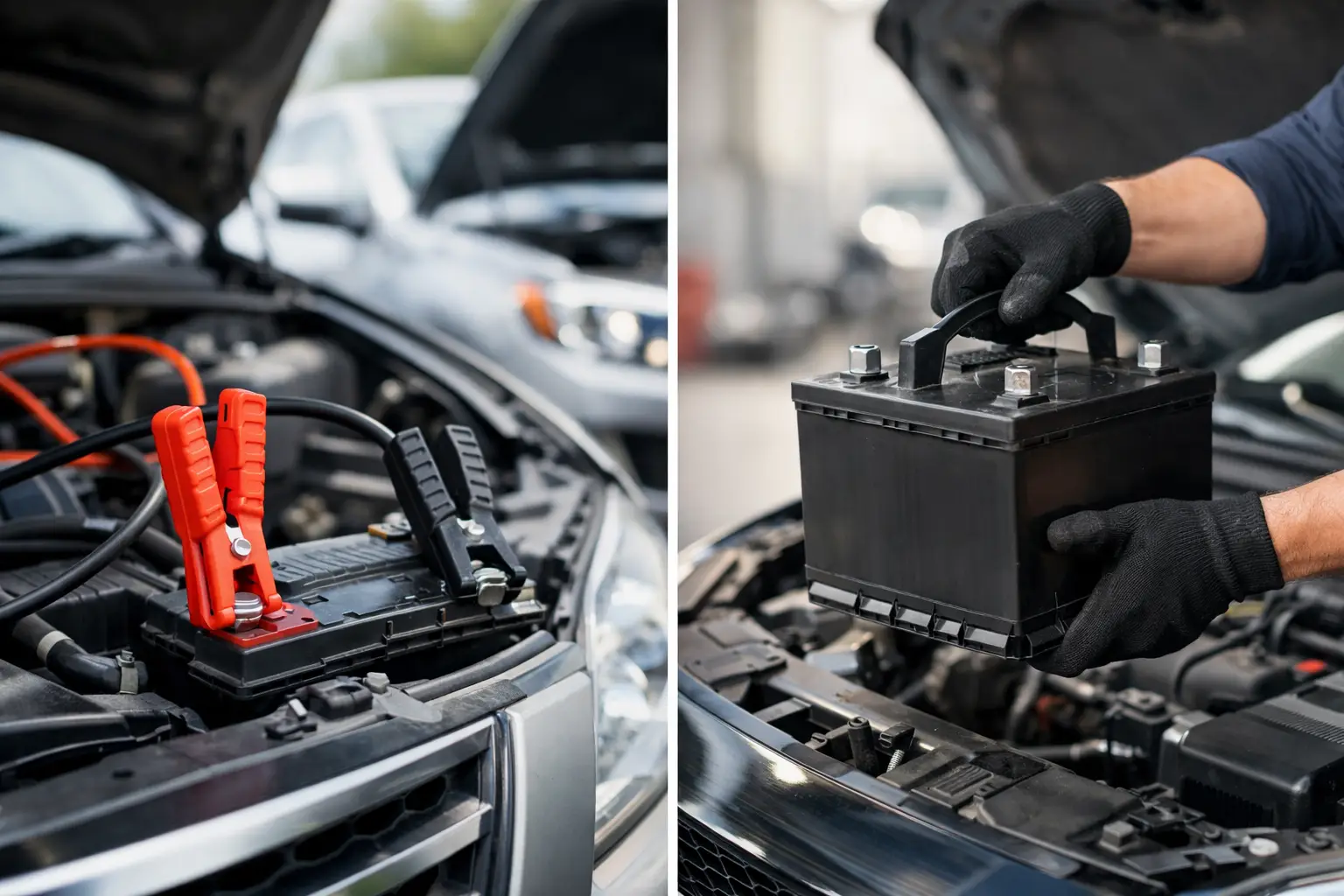
You turn the key, press the button, and get nothing but a click - or complete silence. In that moment, the question is not just how to get moving again. It is jump start versus battery replacement, and the right answer depends on why your vehicle is not starting in the first place.
For most drivers, the battery problem feels sudden. One day the car starts fine, and the next day you are stuck in a parking lot, driveway, or on the side of the road. The good news is that a dead battery does not always mean you need a new one. The bad news is that a jump start is not always the fix people hope it will be.
Jump start versus battery replacement - what is the difference?
A jump start is a short-term solution. It gives your battery enough power to start the engine by using another vehicle or a jump pack. If the battery is still healthy enough to hold a charge once the engine is running, you may be able to keep driving and avoid getting stranded again right away.
Battery replacement is the long-term fix when the battery itself has failed or is too weak to do its job reliably. If the battery cannot hold a charge, has reached the end of its life, or has internal damage, a jump start may get the car going once, but the problem is likely to come back.
That is why this is not really a debate about one being better than the other. It is about choosing the right response to the actual condition of the battery and charging system.
When a jump start makes sense
A jump start is often the right first step when the battery was drained for a clear reason. Maybe the headlights were left on. Maybe an interior light stayed on overnight. Maybe the vehicle sat too long without being driven. In these cases, the battery may simply be low, not ruined.
If the car starts normally after the jump and continues running well, that can be a sign the battery still has some life left. Even then, it is smart to stay cautious. A battery that was accidentally drained once may recover. A battery that keeps dying is telling you something else.
Weather can also play a role. Cold mornings put extra strain on batteries, especially older ones. A battery that barely made it through last winter may finally give up when temperatures drop again. In that case, a jump start might help you in the moment, but it may only be buying a little time.
When battery replacement is the better call
If your battery is several years old and your car has started slowly for a while, replacement is often the more dependable answer. The same goes for batteries that need repeated jump starts, show signs of corrosion around the terminals, or have a swollen case. Those are not signs of a battery that just needs a quick boost.
There is also the issue of reliability. Even if a jump start works, you have to ask whether you trust that battery to get you to work, pick up your kids, or start again after a stop at the gas station. If the answer is no, replacement is usually the safer choice.
This matters even more when you are already stranded somewhere inconvenient or unsafe. A temporary fix that leaves you stuck again an hour later is not much of a fix.
Signs your battery may be dead, not just drained
Some warning signs point more toward replacement than a simple jump. If the engine cranks very slowly, dashboard lights flicker, or you hear repeated clicking, the battery may be too weak to recover well. If electronic features act oddly before the car fails to start, that can also suggest low voltage from a failing battery.
Battery age matters too. Most car batteries last around three to five years, but that range is not a guarantee. Driving habits, weather, and vehicle demand all affect lifespan. Short trips can be hard on a battery because it does not get enough time to fully recharge.
If your battery is already near the end of that range, a no-start situation is less likely to be a one-time event. That does not mean every older battery is instantly bad, but it does mean replacement becomes more likely to make sense.
The problem may not be the battery at all
Here is where jump start versus battery replacement gets a little more complicated. Sometimes neither is the real answer.
A bad alternator can keep a healthy battery from charging. Loose or corroded connections can block power flow. A faulty starter can make it seem like the battery is dead when the real problem is elsewhere. In some vehicles, electrical drains from accessories or modules can slowly kill the battery even when the car is off.
That is why repeated dead-battery situations should never be brushed off. If you jump the car, drive it, and it dies again soon after, the battery may be worn out - or the charging system may be failing. Replacing the battery without checking the bigger picture can waste time and money.
Is it safe to keep driving after a jump start?
Sometimes yes, sometimes no. If the battery was drained by mistake and the vehicle starts strong after the jump, you may be fine to drive for a while. But if the battery is weak or the alternator is not charging correctly, the car can stall again after you shut it off, or even while driving if electrical power drops too far.
That is why roadside judgment matters. If you are close to home and the car seems normal, driving a short distance may be reasonable. If the vehicle is acting erratically, struggling to stay running, or showing warning lights, it is smarter to avoid pushing your luck.
No one wants to turn one stressful breakdown into two.
Why DIY is not always the best move
A lot of drivers have jumper cables in the trunk, but that does not always mean jumping the car yourself is the safest option. Modern vehicles are sensitive, and improper connections can damage electrical components. There is also the simple reality that being stuck on a shoulder, in the dark, or in bad weather is not the right place to experiment.
Professional roadside assistance can help you find out whether the car just needs a jump or whether it is time to stop treating the symptom and deal with the battery itself. For drivers in Gresham or Troutdale, that local response can make a stressful situation feel manageable a lot faster.
How to think about cost
People often choose a jump start first because it feels cheaper. In the moment, that makes sense. If the battery is only drained, a jump can save you from replacing something that still works.
But the cheapest option is not always the lowest-cost option over the next week. If you need multiple jump starts, miss work, get stranded again, or end up needing a tow after the battery fails completely, replacement would have been the better value.
The right question is not just, what costs less right now? It is, what gives me the best chance of avoiding another problem tomorrow?
A practical way to decide
If the battery died because of an obvious one-time drain, a jump start is usually the right first move. If the battery is old, unreliable, or has already needed help before, replacement is often the wiser path. And if the car keeps having starting problems after a jump or a new battery, the issue may be deeper than the battery alone.
That is the real answer to jump start versus battery replacement. Start with what the vehicle is telling you, not just what gets it running for the next ten minutes.
When your car will not start, speed matters, but so does choosing the fix that keeps you from ending up stranded all over again. A calm, experienced roadside technician can help you make that call with a lot less guesswork. And when the moment is stressful, that kind of help goes a long way.
Need a tow in Gresham or East County? Call Tow Guys 24/7 at (971) 222-7994.