
How to Wait for Tow Truck Help Safely
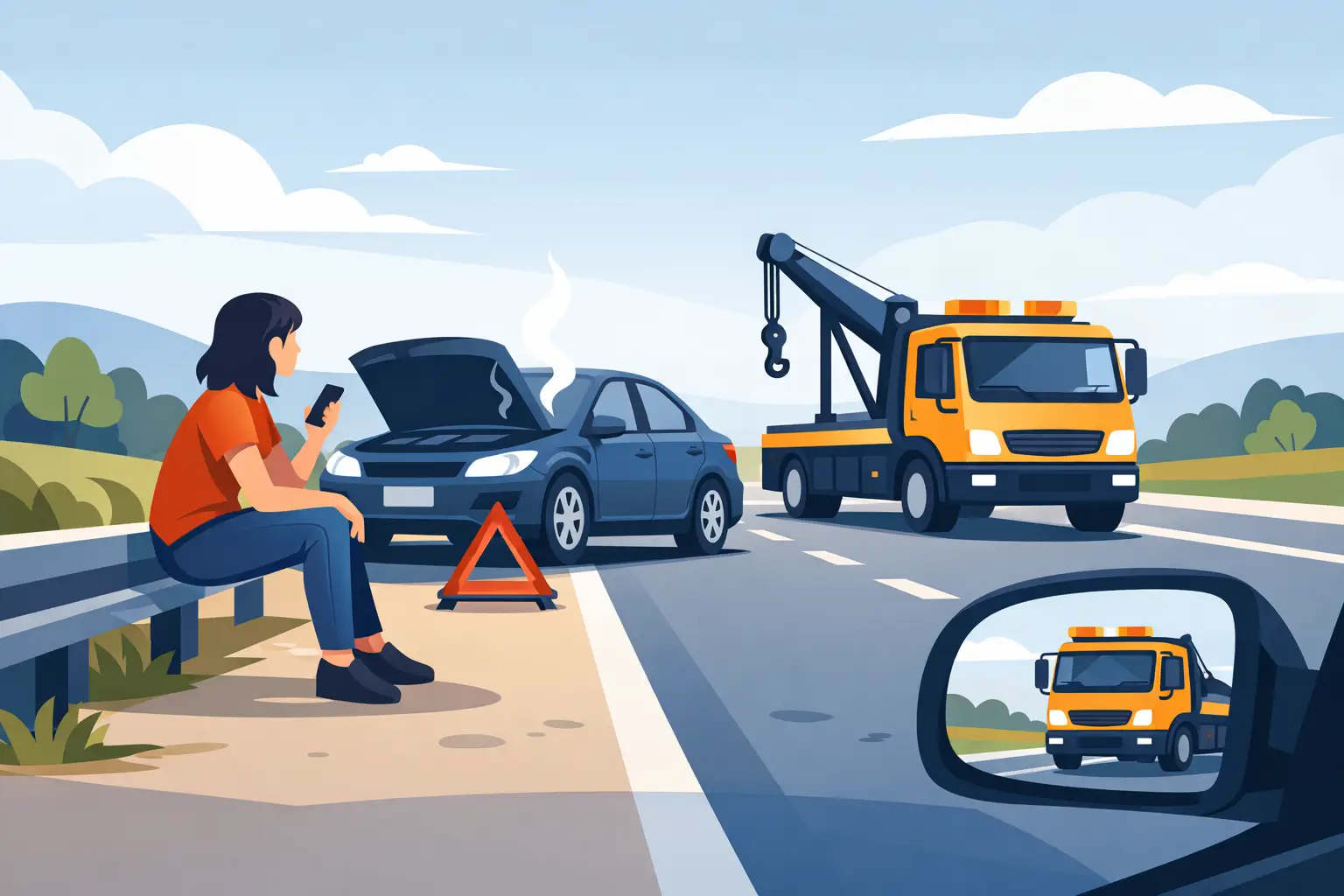
A stalled car on the shoulder can make a few minutes feel much longer. Knowing how to wait for tow truck help safely can protect you, your passengers, and the roadside technician coming to assist. The goal is not to fix the vehicle yourself or stand outside watching for the truck. It is to make smart, calm decisions until help arrives.
First, decide whether your vehicle is in a safe place
If your vehicle is still moving, focus on getting as far from traffic as possible. Turn on your hazard lights, slow down smoothly, and aim for a parking lot, wide shoulder, side street, or other safe area. Avoid stopping just over a hill, around a blind curve, or in a narrow lane whenever you have another option.
Once stopped, put the vehicle in park, set the parking brake, and keep your hazard lights on. At night, in heavy rain, or during fog, visibility matters even more. If it is safe to do so, turn on interior lights after dark so approaching drivers can see that someone is inside. Do not stand in front of or behind your vehicle near traffic.
Sometimes the safest choice is to stay in the vehicle. That is usually true on busy roads, highways, narrow shoulders, or anywhere traffic is moving quickly. Keep doors locked, seat belts fastened, and remain on the side of the car farthest from traffic.
Call for help with details that speed up service
A tow company can reach you faster when it knows exactly where you are and what kind of problem you have. Give the dispatcher your nearest cross streets, road name, mile marker, recognizable business, or a map pin if available. Let them know the vehicle make, model, color, and whether it is a car, truck, motorcycle, trailer, or another type of vehicle.
Explain the situation clearly. A vehicle that will not start in a driveway may need a different response than a car disabled after an accident or a truck stuck on the roadside. Mention flat tires, dead batteries, keys locked inside, fuel issues, visible damage, or whether the vehicle can roll. If you are in Gresham, Troutdale, or nearby and need prompt local assistance, those details help the dispatcher send the right equipment from the start.
Ask for the estimated arrival window and the technician or truck description if available. This gives you a better idea of what to expect and helps you recognize legitimate help when it arrives.
How to wait for tow service without creating more risk
After calling, keep your phone nearby, charged, and audible. Do not repeatedly call the dispatcher unless your location changes, conditions become unsafe, or you have new information. A technician may call when they are close, especially if the address is difficult to find or traffic has shifted.
If you are safely parked away from traffic, you can prepare the vehicle for pickup. Gather your wallet, medications, phone charger, house keys, and anything you will need if the car is taken to a repair shop. Take photos of the vehicle's condition if it has been damaged, particularly after a collision. Remove valuables that are easy to carry, but do not spend extra time unloading the vehicle in an unsafe location.
Keep children and pets inside the vehicle when you are near moving traffic. A frightened child or loose pet can quickly create a dangerous situation. If you must exit the vehicle because of smoke, fire, a crash hazard, or another immediate threat, move well away from traffic and stay behind a barrier if one is available. Call 911 if anyone is hurt, if the vehicle is creating an immediate road hazard, or if you feel unsafe.
Be visible, but do not take unnecessary chances
Hazard lights are your first line of visibility. If you have reflective gear, a flashlight, or emergency triangles, use them only when you can place them without walking into traffic. On a busy highway, it may be safer to remain in the vehicle than to set out warning devices.
At night, avoid relying on your phone flashlight while standing near the road. It can make you visible, but it can also distract drivers or cause you to focus on the screen rather than traffic. Stay in a protected spot and let your hazard lights do the work.
If someone stops and offers help, trust your judgment. A well-meaning driver may offer a ride, tools, or a jump-start, but you are not obligated to accept. It is reasonable to say that help is already on the way. Do not share more personal information than necessary, and do not get into a stranger's vehicle if you do not feel comfortable.
Prepare for weather, traffic, and a longer wait
Oregon weather can turn an ordinary breakdown into an uncomfortable wait. During rain or cold conditions, keep warm layers, a blanket, water, and a basic phone charger in your vehicle if possible. In summer heat, avoid running the engine in a closed or poorly ventilated space. Never run a vehicle inside a garage or enclosed area because of carbon monoxide risk.
On the roadside, weather and traffic can affect arrival times. A tow truck may be delayed by an active accident scene, road closures, severe weather, or demand from multiple emergency calls. That does not mean you have been forgotten. If the estimate has passed significantly, contact the company for an update rather than attempting a risky repair or walking along an unfamiliar roadway.
Use the waiting time to confirm your next step. Decide where the vehicle should go, such as your home, a trusted repair facility, or another safe destination. If you need a ride after the tow, arrange it early if you can. This keeps the handoff simple when the technician arrives.
Know what to do when the tow truck arrives
When a tow truck pulls up, wait for the driver to park and secure the work area before approaching. The technician needs room to position the truck, operate equipment, and work around traffic. Follow their directions about where to stand. A professional operator will explain what they are doing and tell you whether you can remain in the vehicle, need to ride separately, or should arrange another ride.
Before the vehicle is loaded, confirm the destination and ask any questions you have about the process. If there has been damage from an accident, point it out and make sure the technician understands any special concerns, such as low ground clearance, all-wheel drive, a locked wheel, or a trailer connection.
Do not stand between the tow truck and your vehicle, climb onto equipment, or try to help connect chains, straps, or wheel lifts. Even a routine tow involves heavy equipment and moving parts. Giving the operator space is one of the best ways to keep everyone safe.
A few items worth keeping in your car
You do not need a full garage in your trunk, but a small roadside kit can make a breakdown less stressful. Keep a charged portable battery pack, flashlight, reflective vest, rain poncho, drinking water, basic first-aid supplies, and seasonal clothing in the vehicle. A printed card with emergency contacts and your roadside provider's number is also useful when your phone battery is low or someone else is driving your car.
For families, add items that match your real needs: snacks, a small blanket, infant supplies, or a pet leash. For motorcycle riders, a compact rain layer and a charged phone can make a major difference while waiting in changing weather.
A breakdown is frustrating, but you do not have to solve every problem from the shoulder. Get to the safest available location, make the call, stay aware of traffic, and let trained help handle the recovery. A calm wait gives your tow technician the best chance to get you moving again safely.
Need a tow in Gresham or East County? Call Tow Guys 24/7 at (971) 222-7994.