
How to Describe Car Trouble to Get Help Faster
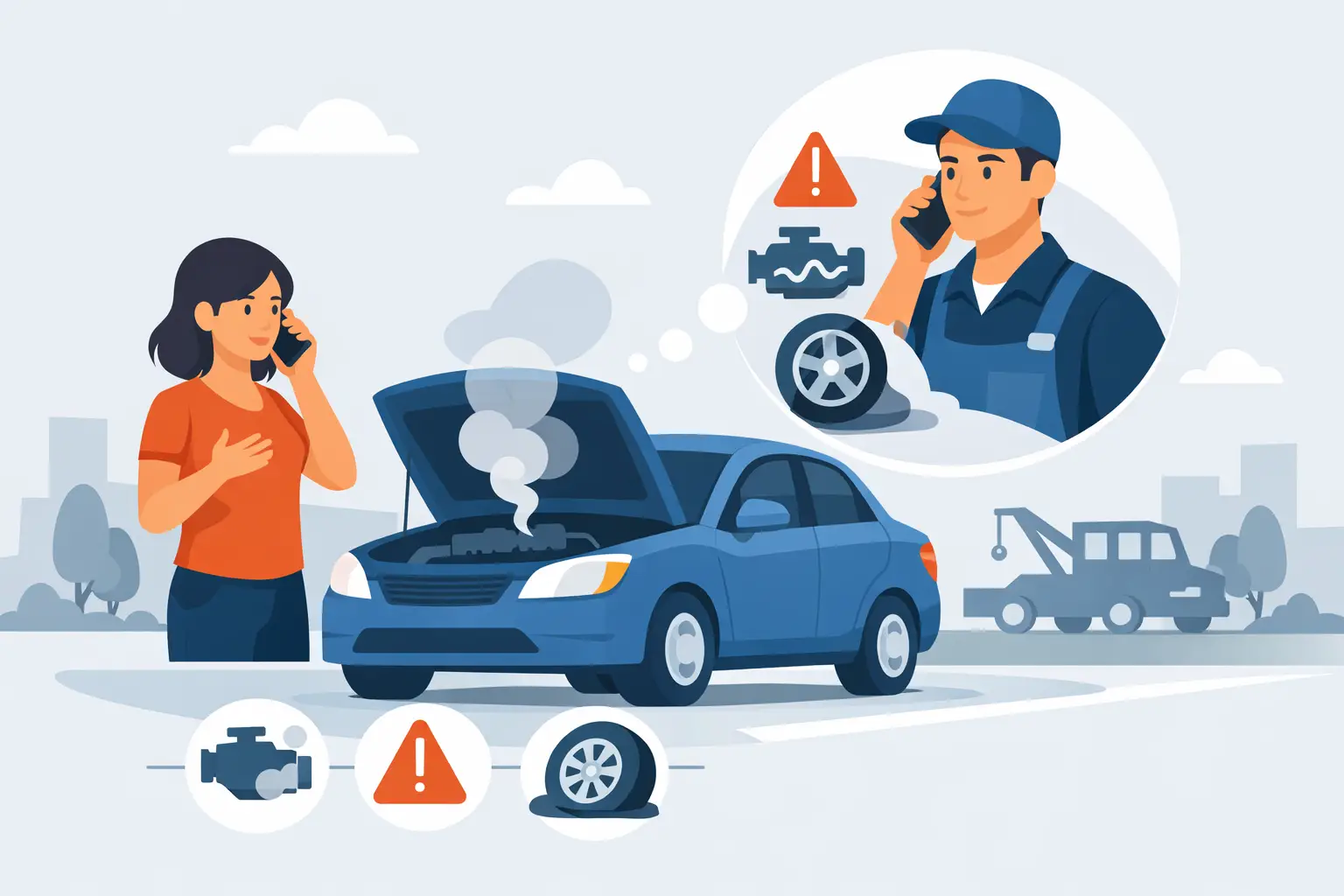
A breakdown is stressful enough without trying to explain an unfamiliar noise, warning light, or no-start problem over the phone. Knowing how to describe car trouble in plain, specific terms helps roadside assistance or a tow operator send the right equipment, arrive prepared, and get you out of a dangerous spot sooner.
You do not need to know the mechanical diagnosis. In fact, guessing can sometimes send the conversation in the wrong direction. What matters is describing what you saw, heard, smelled, and experienced, along with where the vehicle is and whether you are safe.
Start With Your Safety and Exact Location
Before discussing the vehicle, say whether you are in immediate danger. If you are stopped in a travel lane, near fast-moving traffic, on a blind curve, or after a collision, make that clear first. If anyone is injured or there is an immediate hazard, call 911 before arranging a tow.
Then give the most precise location you can. A street address is helpful, but it is not always available on a highway, parking lot, or back road. Share the road name, direction of travel, nearest cross street, mile marker, recognizable business, or exit number. If you are in Gresham or Troutdale, saying which side of a major road you are on and where the vehicle is positioned can save valuable time.
Also explain whether the vehicle is in a driveway, parking garage, apartment complex, gravel lot, ditch, shoulder, or another difficult-access area. A truck can tow a vehicle from many locations, but access conditions affect the safest approach and the equipment needed.
Describe Car Trouble by What Happened
The clearest explanation follows a simple timeline: what the vehicle was doing before the problem, what changed, and what happens now. A dispatcher or roadside technician does not need a dramatic story. They need useful facts.
For example, instead of saying, "My car just died," try: "I was driving about 40 mph when the battery light came on. The steering got hard, the engine lost power, and now it will not restart." That tells the responder far more than a general statement and may indicate that a tow is safer than a jump-start.
Think about these details:
- Did the issue begin while driving, when starting the vehicle, after fueling up, or after parking?
- Did the engine shut off, lose power, overheat, shake, or make a new sound?
- Is the vehicle still movable, or is it completely disabled?
- Did the problem happen suddenly or get worse over several days?
- Has the vehicle been in an accident, hit a curb, run over debris, or been stuck?
You do not have to answer every question perfectly. Give the details you know, and say when you are unsure. Honest uncertainty is more useful than trying to name a failed part.
If the Car Will Not Start
"It will not start" can mean several different things. A little more detail helps determine whether roadside service may solve the issue or whether the vehicle needs towing.
Say what happens when you turn the key or press the start button. Does nothing happen at all? Do you hear rapid clicking? Does the engine crank but fail to fire? Do the dashboard lights come on? Is there one click, a grinding sound, or a message on the display?
For instance: "The dash lights come on, but when I press start, I hear repeated clicks and the engine does not turn over." Or: "The engine cranks normally, but it will not start, and the check engine light is on." These descriptions give the technician a practical starting point without requiring you to diagnose a battery, starter, fuel, or ignition issue yourself.
If the vehicle has an electronic parking brake, push-button start, key fob issue, or is parked in a tight space, mention that too. Those details can affect how the vehicle is moved.
If the Engine Overheated or Warning Lights Appeared
Warning lights should be described by color, symbol, and what the vehicle did afterward. A red temperature warning, oil-pressure light, or flashing check engine light can point to a more urgent problem than a steady yellow reminder light.
You can say, "The temperature gauge moved into the red, steam came from under the hood, and I pulled over immediately." Do not open a hot radiator cap or keep driving an overheating vehicle just to reach a better location. Let it cool, stay clear of traffic, and arrange help.
For a check engine light, explain whether it is steady or flashing and whether the vehicle is running normally. A flashing light with shaking, power loss, or a strong fuel smell is a reason to stop driving when safe to do so. Continuing can turn a manageable repair into a much larger one.
If You Heard, Smelled, or Felt Something Unusual
Your senses provide useful clues. Describe a sound by when it occurs, where it seems to come from, and whether it changes with speed, braking, or turning. You might say the vehicle makes a squeal when you brake, a grinding noise while moving, a clunk over bumps, or a knocking sound when accelerating.
Smells matter too. A burning rubber smell, smoke, fuel odor, or a sweet smell with visible fluid can help a technician understand the situation. If you see smoke or flames, move away from the vehicle if it is safe and call 911.
Tell the dispatcher if the steering pulls, the brake pedal feels soft, a tire is flat, the wheel vibrates, or the transmission will not shift. Avoid driving on a flat tire, with poor braking, or with severe steering trouble. The trade-off is simple: leaving the vehicle briefly may be inconvenient, but driving a compromised vehicle can put people at risk and cause more damage.
Give the Vehicle Details That Affect the Tow
A tow provider needs more than the make and model. Share the year, color, and license plate if requested, especially if you are waiting somewhere busy. State whether it is a car, SUV, pickup, motorcycle, van, trailer, or light-duty work truck.
Be upfront about conditions that may change the recovery plan. Is the vehicle all-wheel drive, lowered, loaded with heavy items, pulling a trailer, or unable to roll because of a locked wheel? Is it parked nose-in, blocked by another vehicle, or in a garage with low clearance? These are not minor details. They help the operator bring the right truck and avoid delays at the scene.
If you have a preferred repair shop, tell the dispatcher. If you do not, say whether you need the vehicle taken home, to a dealer, or to a nearby shop. Confirm the destination address before the truck arrives, particularly after hours when some repair facilities may be closed.
A Short Call Script for Roadside Help
When nerves are high, use this straightforward order: safety, location, vehicle, problem, and destination. You can keep these notes in your phone for the next time you need them.
"I am safe, but my vehicle is on the right shoulder of eastbound [road] near [cross street or exit]. I have a [year, make, model, and color]. It [will not start / overheated / has a flat / was in an accident], and [brief useful detail]. The vehicle [can or cannot] roll. I need it taken to [destination]," is usually enough to begin dispatch.
If you are not with the vehicle, explain who is there and provide their phone number. If you are arranging help for a family member, confirm that they know the vehicle, location, and plan. Clear communication avoids the frustrating situation where a tow truck reaches the right address but cannot identify the right vehicle or safely access it.
What Not to Do While You Wait
After calling for help, keep yourself visible and safe. Turn on hazard lights if the vehicle has power. If you can safely move away from traffic, do so, but do not stand in front of or behind the vehicle. On a busy road, remaining inside with your seat belt fastened may be safer than standing on a narrow shoulder. It depends on the location, traffic, and condition of the vehicle.
Do not attempt repairs in an active traffic lane. Avoid accepting help from an unverified person who arrives unexpectedly and claims to be your tow provider. A professional operator should be able to confirm the service company and the details of your request.
A family-owned local company such as Tow Guys LLC understands that most callers are not looking for a lesson in auto repair. They need calm, capable help. Your job is not to solve the problem before calling. It is to share enough accurate information for the right help to reach you safely.
The next time your vehicle acts up, pause, take a breath, and describe what you can see and what changed. A few clear details can turn a confusing roadside moment into a safer, faster path forward.
Need a tow in Gresham or East County? Call Tow Guys 24/7 at (971) 222-7994.