
How Long Does Towing Take? What to Expect
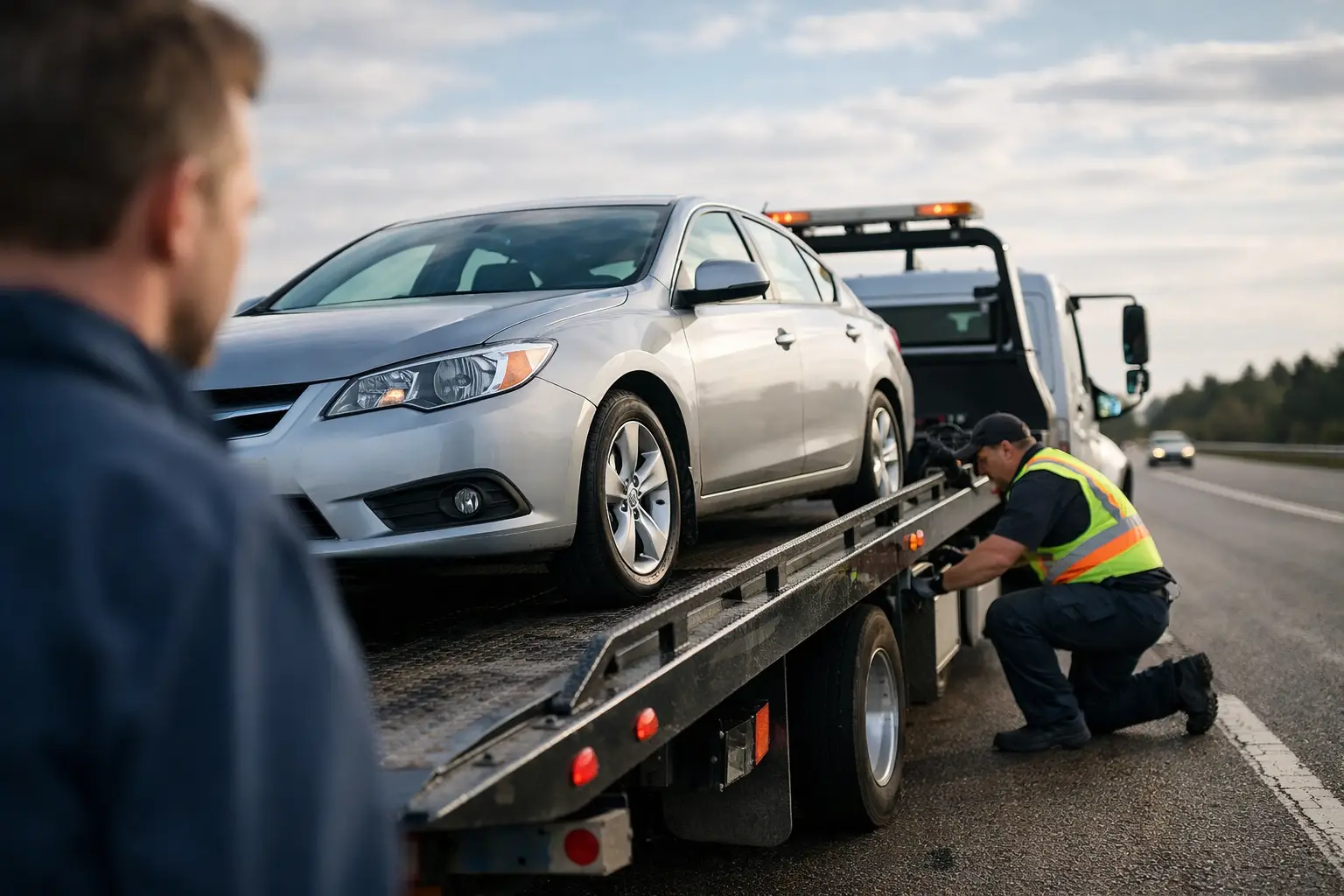
A breakdown never seems to happen when you have extra time. It happens before work, after dark, in the rain, or when you have kids in the car and need answers fast. If you're asking how long does towing take, the honest answer is usually somewhere between 30 minutes and 90 minutes for arrival, with total service time depending on what happened, where you are, and what kind of vehicle needs help.
That range may sound broad, but there is a good reason for it. Towing is not just about driving a truck from one point to another. A dispatcher has to confirm your location, send the right equipment, work around traffic, and make sure the operator can load your vehicle safely. A simple tow from a parking lot is usually faster than an accident recovery on a busy road.
How long does towing take from call to drop-off?
Most towing jobs happen in stages. First comes the call and dispatch. Then the driver travels to your location. After that, the vehicle is inspected, loaded, secured, and transported. Finally, it is unloaded at the repair shop, your home, or another destination.
For a routine local tow, the loading process often takes about 10 to 20 minutes once the truck arrives. The drive time depends on distance and road conditions. A short in-town tow may be done quickly, while a longer trip across the area can add another 20 to 40 minutes or more. If everything goes smoothly, the full process can be wrapped up in under an hour after arrival. If conditions are difficult, it can take longer.
That is why the better question is not only how long the tow truck takes to arrive, but how long the whole service will take from your first call until your vehicle is safely where it needs to be.
What affects how long towing takes?
The biggest factor is location. If you are in a common service area near available trucks, response is usually faster. If you are farther out, on a shoulder with limited access, or in an area with heavy traffic, that can stretch the wait.
The next factor is the type of problem. A vehicle with a flat tire in a safe parking lot is straightforward. A car with front-end damage after a collision may need extra care, special equipment, or more time to position and load. If the vehicle is stuck in mud, a ditch, or a tight garage, that is no longer a basic tow. Recovery work takes more time because safety has to come first.
Vehicle size also matters. Motorcycles, cars, SUVs, light trucks, and trailers do not all load the same way. Some vehicles require a flatbed. Others can be wheel-lifted. If your vehicle has drivetrain damage, locked wheels, steering problems, or sits unusually low to the ground, the operator may need to adjust the approach.
Traffic plays a bigger role than many drivers expect. A tow truck may be close by on the map, but rush hour, construction, blocked lanes, train crossings, and bad weather can slow the route. In a place like Gresham or Troutdale, local knowledge helps, but no towing company can control road conditions.
Another factor is call volume. During storms, freezing temperatures, heat waves, and major commute hours, roadside calls often spike all at once. That does not mean you are being ignored. It means dispatch is prioritizing emergencies and working through a heavy queue as quickly as possible.
Typical towing timelines in real situations
If your car will not start in a driveway or parking lot, a tow is often fairly quick once the truck gets there. The operator can usually access the vehicle easily, winch or load it, secure it, and head out without much delay.
If you are on the side of a busy road, the process may move fast for safety reasons, but arrival can depend on traffic and where the nearest truck is finishing another call. On high-risk roads, the goal is to reach you quickly and get you out of a dangerous spot as safely as possible.
If you have been in an accident, towing can take longer than people expect. The scene may need to clear first. Your vehicle may have damaged wheels, broken suspension parts, or body panels dragging on the ground. In those cases, loading is slower because the operator has to prevent further damage and protect everyone nearby.
If your vehicle is stuck rather than simply broken down, recovery time can add quite a bit. Pulling a truck from soft ground, repositioning a trailer, or recovering a vehicle from an awkward angle is skilled work. It is worth taking extra time to do that job correctly.
Why some tow trucks arrive faster than others
Not every company handles dispatch the same way. A local operator with a smaller service area often has an advantage because they know the roads, common trouble spots, and fastest routes. They also tend to communicate more directly, which matters when you are standing beside a disabled vehicle and trying to figure out what is going on.
That said, faster is not always better if it comes at the cost of doing the job right. A rushed hookup can create damage. A poor estimate can leave you waiting without updates. The best towing experience is not just a quick ETA. It is a realistic one, followed by professional service when the truck arrives.
That is where experienced local teams make a difference. A family-owned company like Tow Guys LLC is built around prompt response, clear communication, and treating people with respect when they are under stress. For most drivers, that matters just as much as the clock.
What you can do to avoid delays
You can help move the process along by giving clear information during the call. Start with your exact location, including nearby landmarks, cross streets, or business names if the address is hard to spot. Then explain the vehicle type and what happened. If the car will not start, say that. If the wheels are locked, mention it. If you were in an accident or the vehicle is in a ditch, say so right away.
It also helps to share where the vehicle needs to go. If you already know the repair shop or destination, dispatch can plan the job more accurately. If you are in an unsafe place, let them know immediately so they understand the urgency.
When the driver is on the way, keep your phone nearby. If the operator needs to confirm your location and cannot reach you, that can slow things down. If it is safe, turn on your hazard lights so the truck can spot you more easily.
How long should you wait before calling for a tow?
In most cases, not long. If your vehicle is disabled and you do not have a quick, safe fix, calling early is usually the better move. Waiting on the shoulder to see if the problem clears up can waste valuable time and put you at more risk.
If you are dealing with a dead battery, flat tire, empty tank, or similar issue, roadside assistance may solve the problem faster than a full tow. But if the vehicle will not move safely, makes severe mechanical noise, overheats badly, leaks fluid, or has been in a collision, towing is often the safest next step.
The goal is not just getting the vehicle moved. It is getting you out of a stressful situation without making the problem worse.
How long does towing take when conditions are bad?
Bad weather, nighttime calls, holiday traffic, and multi-car accidents can all extend response times. That is the part most people do not see. Tow trucks are still working, but every call may take longer because roads are slick, scenes are more dangerous, and demand is higher.
A good company will give you the most accurate estimate possible instead of promising an unrealistically short wait. If the ETA changes, communication matters. Most drivers can handle a longer wait better than silence.
If you ever need a tow, think in terms of safe, steady progress rather than a perfect clock. Some calls are quick. Some are complicated. The right team will tell you what to expect, show up prepared, and focus on getting you and your vehicle where you need to be without adding more stress to an already hard day.
When you're stuck, a clear answer and a dependable response go a long way.
Need a tow in Gresham or East County? Call Tow Guys 24/7 at (971) 222-7994.