
Guide to Roadside Fuel Delivery
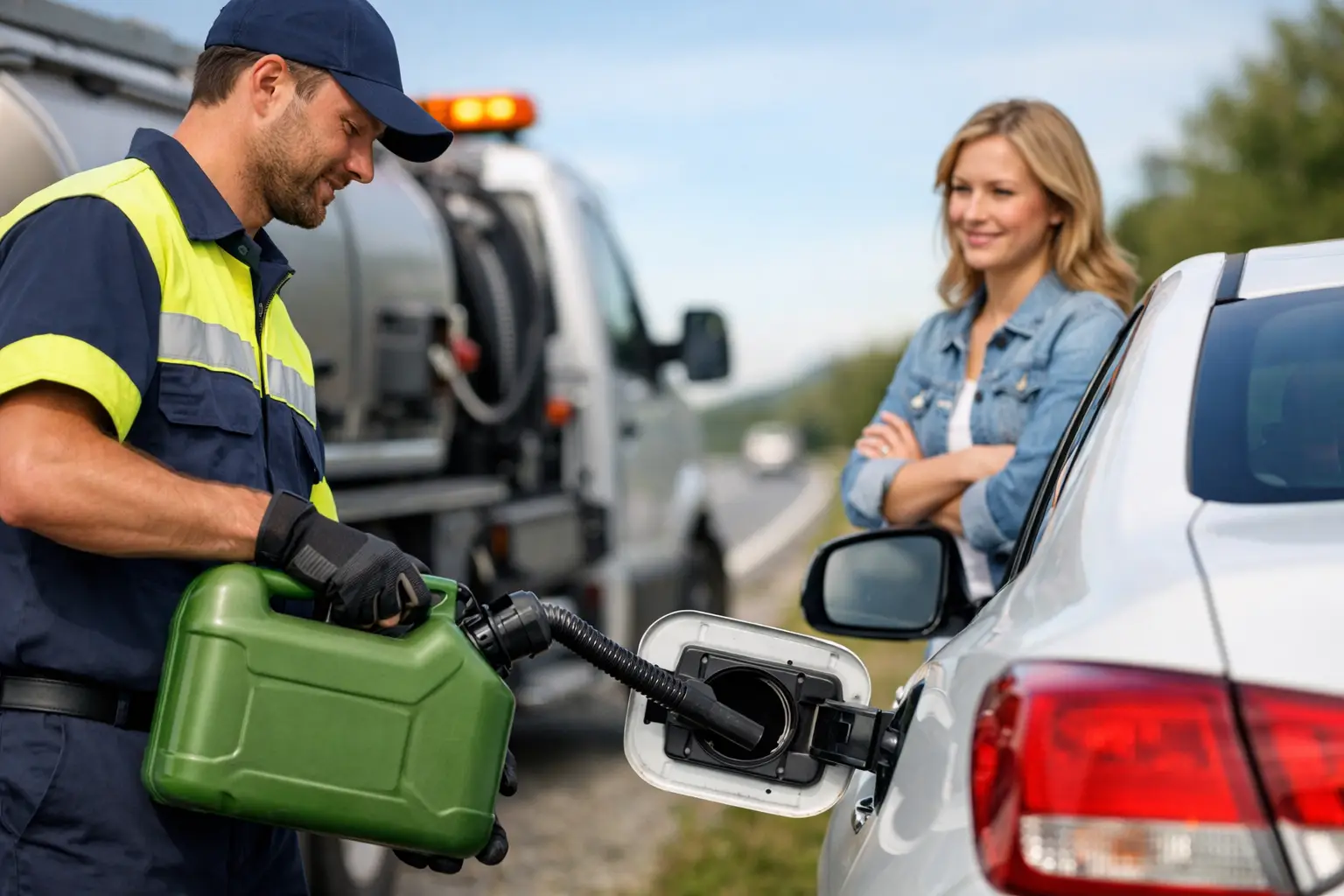
Running out of gas rarely happens at a convenient time. It hits during the school pickup, on the way to work, late at night, or when you're already stressed and trying to get somewhere important. This guide to roadside fuel delivery is here to make that moment feel a lot less overwhelming, with clear steps on what to do, what kind of help to expect, and how to stay safe until assistance arrives.
If your tank is empty, the first priority is your safety, not your schedule. A roadside fuel delivery service is meant to get you moving again without adding more risk, confusion, or delay. For many drivers, that means one simple call and a trained local operator bringing enough fuel to help you reach a nearby gas station safely.
What roadside fuel delivery actually includes
Roadside fuel delivery is exactly what it sounds like. A roadside assistance provider brings fuel to your location when your vehicle runs out and you cannot make it to a gas station on your own.
In most cases, the technician will confirm your location, ask what type of fuel your vehicle uses, and deliver enough gas or diesel to get you back on the road. The goal is not usually to fill the tank completely. It is to get you started again so you can drive to a station and fuel up properly.
That sounds simple, but there are a few details that matter. The right fuel type matters. Your location matters. Your vehicle's position on the road matters. And if you're stopped in an unsafe place, the call may involve more than fuel alone.
When to call for roadside fuel delivery
Sometimes the answer is obvious. Your car sputtered, stalled, and the fuel gauge is sitting on empty. Other times, it is less clear.
Modern fuel gauges are not perfect. A low-fuel warning light can stay on longer than expected, or a faulty gauge can make it seem like you have more fuel than you do. Drivers also get caught out by detours, heavy traffic, bad weather, or unfamiliar roads where gas stations are farther apart than expected.
Call for roadside fuel delivery when you know or strongly suspect your vehicle is out of fuel and you cannot safely reach a gas station. That is usually the better choice than walking along a shoulder with a gas can, especially on busy roads, at night, or in poor weather.
It also makes sense to call if you are transporting children, traveling with pets, dealing with a medical issue, or parked somewhere that feels unsafe. In those moments, the fastest solution is not always doing it yourself. It is getting professional help to your location quickly.
Your first steps after running out of gas
The safest response is calm and simple. If the vehicle is still moving, steer it as far off the road as possible. Turn on your hazard lights right away. If you can stop in a parking lot, wide shoulder, or side street, that is always better than stopping near moving traffic.
Once parked, stay aware of your surroundings. If you are in a safe spot away from traffic, you can remain in the vehicle with the doors locked while you call for help. If you are stopped in a dangerous location, such as a narrow shoulder or blind curve, your next move depends on immediate risk. In some situations, getting away from the vehicle is safer. In others, staying inside is better. It depends on traffic, visibility, weather, and whether your vehicle is exposed to oncoming cars.
When you call, be ready to share your exact location, your vehicle make and model, and the fuel type you need. If you are not sure where you are, use nearby street signs, mile markers, business names, or your phone's map to help pinpoint your location.
What to expect from a roadside fuel delivery service
A good roadside provider will keep the process straightforward. First, they will ask where you are and what happened. Then they will confirm the fuel type your vehicle needs. This matters more than people think. Putting the wrong fuel in a vehicle can cause major problems, so if you are unsure, say that clearly instead of guessing.
Next comes dispatch and arrival. Response time depends on traffic, weather, and how busy service demand is at that moment. Local companies often have an advantage here because they know the roads, common breakdown areas, and how to reach drivers quickly without routing everything through a distant call center.
When the technician arrives, they will usually add enough fuel to help you restart the vehicle and reach a station. If the car still does not start, the issue may not be fuel alone. A dead battery, starter problem, fuel system issue, or engine problem can look similar to an empty tank. In that case, you may need additional roadside help or towing.
A practical guide to roadside fuel delivery costs
Cost is one of the first questions drivers ask, and that is fair. Pricing can vary based on your location, time of day, mileage to reach you, and the amount and type of fuel delivered.
In general, roadside fuel delivery is less expensive and less disruptive than arranging a tow just because the tank is empty. But late-night calls, long-distance dispatches, or remote locations can increase the total. Some drivers also have roadside coverage through insurance, a vehicle warranty, or a motor club, though coverage details vary a lot.
The best approach is to ask for a clear explanation of charges when you call. A trustworthy company should be able to tell you what is included, whether fuel cost is separate, and what happens if the vehicle still will not start after delivery.
Safety matters more than saving a few minutes
A lot of people feel embarrassed when they run out of gas. That leads to rushed decisions, like trying to walk to a station on a busy road or accepting help from a stranger without thinking it through. The better move is to slow down and treat it like any other roadside problem.
Visibility matters. Hazard lights help, but they are not a guarantee that other drivers will see you in time. Weather matters too. Rain, fog, and darkness make a stalled vehicle harder to spot and raise the risk around the shoulder.
If you have emergency reflectors or cones and it is safe to place them, they can help alert traffic. If not, do not put yourself in danger trying. Your main job is to stay safe and make it easy for the service provider to find you.
When fuel delivery is not enough
Sometimes an empty tank is only part of the story. If your vehicle was driven completely dry, it may take a little extra time to restart. Some diesel vehicles can be more complicated after running out of fuel. Older vehicles and certain mechanical systems may need more than a quick refill.
There is also the chance that the fuel gauge was wrong and the real issue is something else. If the engine cranks but will not start after fuel is added, or if there are warning lights beyond low fuel, you may be dealing with a different breakdown.
That is where working with a company that also handles roadside assistance and towing makes a difference. You do not have to start over with another provider if the problem turns out to be bigger than an empty tank.
How to lower your chances of needing roadside fuel delivery again
No one plans to run out of gas, but a few habits help. Refueling before your tank drops too low is the obvious one. Beyond that, pay attention if your fuel gauge seems inconsistent, your range estimate swings wildly, or your low-fuel light comes on too early or too late.
If you drive longer rural stretches, commute in heavy traffic, or tow a trailer, build in more fuel margin than usual. Those situations can burn fuel faster than expected. The same goes for cold weather, long idling, and stop-and-go driving.
It also helps to keep your phone charged and location services available. If you ever do need help, being able to share an accurate location can save time and reduce stress. For drivers in Gresham and nearby Troutdale, working with a local team like Tow Guys LLC can also mean faster, more familiar support when time matters.
Why local roadside help feels different
Roadside service is not just about equipment. It is about how you are treated when you are stuck, frustrated, and trying to solve a problem fast. A local company often understands the roads, traffic patterns, and pressure points in the area better than a larger dispatch network.
That can mean quicker arrival, clearer communication, and less back-and-forth while you sit on the shoulder wondering what happens next. It also means you are more likely to get practical, direct help from someone who sees this community every day and knows that a small roadside problem can feel huge when it is happening to you.
If you ever need this guide to roadside fuel delivery in real life, remember that the smartest move is often the simplest one. Get to safety, make the call, and let someone bring the help to you so you can get back on the road with less stress.
Need a tow in Gresham or East County? Call Tow Guys 24/7 at (971) 222-7994.