
Guide to Dead Car Help When You Need It Most
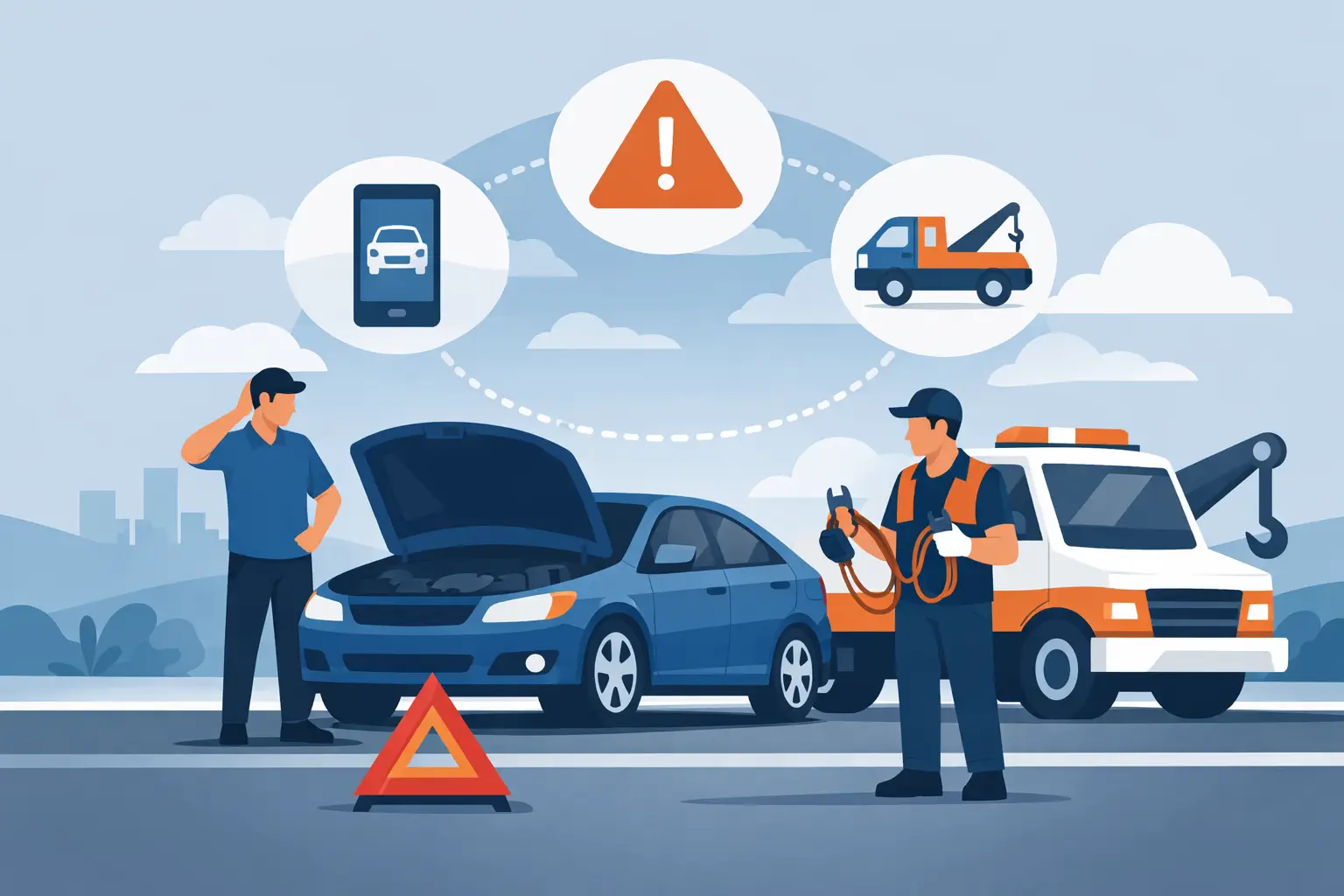
A car that will not start changes the whole day in a few seconds. Maybe you are outside work, parked at a grocery store, headed home with your family, or stopped on a busy road. This guide to dead car help gives you a clear next move: protect yourself first, check for obvious causes only when it is safe, and call for professional roadside assistance when the vehicle will not get going.
Start With Safety, Not the Engine
If your car dies while you are driving, avoid sudden turns or hard braking. Ease off the accelerator, turn on your hazard lights, and guide the vehicle toward the shoulder, a parking lot, or another safe place away from moving traffic. Steering and braking can feel different when the engine is off, so use steady pressure and give yourself room.
Once stopped, put the vehicle in park, set the parking brake, and keep your seat belt on if traffic is close. On a highway, narrow road, or poorly lit area, staying inside the car with the doors locked is often safer than standing beside it. If smoke is coming from the vehicle, you smell fuel, or there is any sign of fire, get everyone away from the car and call 911.
A dead car in a safe parking space is frustrating. A dead car on a high-speed road is a safety situation. Treat those two scenarios differently.
What “Dead Car” Usually Means
The phrase can describe several problems, and the sound your car makes can help a roadside technician decide what equipment or service may be needed. You do not need to diagnose it perfectly. A few useful details are enough.
The Lights Come On, but the Engine Will Not Crank
A rapid clicking sound or a slow, struggling crank often points to a weak or dead battery. Interior lights may still work because they need less power than the starter. Leaving headlights on, an older battery, cold weather, loose battery connections, and charging-system problems can all cause this.
A jump-start may get the engine running, but it is not always the full fix. If the battery dies again soon afterward, the battery may be worn out or the alternator may not be charging it. Do not assume a successful jump means you can safely drive across town or onto the freeway.
The Engine Cranks but Will Not Start
If the engine turns over normally but does not fire up, the issue may involve fuel delivery, ignition, a sensor, or another mechanical problem. This is usually not a roadside repair. Repeatedly trying to start it can drain the battery and make the situation harder.
Check the fuel gauge, but remember that a gauge is not always accurate. If you are out of gas, fuel delivery may be all you need. If fuel is not the issue, towing to a repair shop may be the sensible choice.
Nothing Happens When You Turn the Key or Press Start
No lights, no sound, and no response can indicate a fully discharged battery, a loose battery cable, a failed starter, or an electrical issue. If the vehicle has a key fob, try holding it close to the start button or use the backup starting procedure in the owner's manual. A weak key-fob battery can occasionally prevent a push-button vehicle from recognizing the key.
If that does not work, avoid taking panels apart or touching damaged wiring. Professional help is safer and usually faster.
Simple Checks That Are Worth Trying
Only perform these checks when you are safely parked and away from traffic. Keep the process short. The goal is to spot an easy oversight, not to turn a roadside problem into a long repair attempt.
Make sure the car is fully in park. For a manual transmission, press the clutch firmly and make sure the shifter is in neutral. Some vehicles will not start unless they detect the correct gear position. Turn off accessories such as the radio, climate control, and headlights before trying again.
If you suspect a dead battery and have jumper cables, use them only if you know the correct process and both vehicles are in a safe location. Never jump a battery that is cracked, leaking, swollen, hot, or frozen. Do not smoke near either vehicle, and do not allow cable clamps to touch each other once connected to power.
For many drivers, calling for a jump-start is the better choice. It prevents cable mistakes and gives you someone who can assess whether the vehicle is likely to restart reliably or should be towed.
When to Call for Dead Car Help Right Away
There is no prize for fixing every no-start problem yourself. Call for roadside assistance or towing immediately if you are stranded in an unsafe location, traveling with children, dealing with severe weather, or unable to identify the problem. The same goes for a car that has stalled in traffic, has warning lights along with a no-start condition, or smells like fuel or burning electrical parts.
You should also request help if a jump-start does not work, the vehicle starts but dies quickly, or you have already needed multiple jumps in a short period. Continuing to drive can leave you stranded again in a worse location.
In Gresham and Troutdale, quick local response matters because conditions can change fast. A family-owned provider such as Tow Guys LLC can help with a jump-start, fuel delivery, lockout-related roadside support, or a tow when a repair is the safer answer.
Give Dispatch the Details That Speed Up Service
A clear call helps the right truck arrive with the right plan. Begin with your exact location. If you are on a road, provide the street name, direction of travel, nearest cross street, exit number, or recognizable landmark. Phone maps can help, but confirm what you see around you in case your location pin is inaccurate.
Explain the vehicle's year, make, model, color, and whether it is a car, truck, motorcycle, or vehicle with a trailer. Mention whether it is in a garage, parking structure, driveway, ditch, or a tight parking area. Access conditions affect which towing equipment is appropriate.
Then describe what happened in plain language: “It clicks but will not start,” “the dashboard is dark,” or “it ran, then stalled at the light.” Let dispatch know if the vehicle was in an accident, has flat tires, is all-wheel drive, or has special loading considerations. A few accurate details can prevent delays and protect your vehicle during transport.
Avoid These Common Mistakes While Waiting
Do not leave your vehicle unattended on a roadside unless police or emergency responders direct you to move away from it. Keep your phone charged if possible, and make sure the roadside provider has a number where they can reach you. If you need to step outside in a safe parking lot, watch for other vehicles and avoid standing between cars.
Be cautious about accepting help from strangers, especially after dark or in an isolated place. A kind offer may be genuine, but you do not know the person's experience, intentions, or whether their equipment is safe for your vehicle. It is reasonable to wait for the company you contacted.
If you arrange a tow, remove valuables, medications, work materials, and important documents before the vehicle is loaded. Take a quick photo of the car's condition if an accident or damage is involved. Ask where the vehicle will be taken and keep the repair shop's contact information available.
Plan for the Repair After the Immediate Problem
Once you are out of danger, decide whether the car should go home, to a trusted mechanic, or to a dealership. A jump-start can be enough when a known battery drain caused the problem, but an unexplained no-start deserves a proper inspection. Battery testing, charging-system checks, and diagnostic scans can prevent another stressful call later.
If your battery is more than a few years old, have it tested before the next cold spell or long trip. Keep basic emergency supplies in the vehicle: a phone charger, flashlight, reflective vest, warm layer, water, and current roadside contact information. These items do not stop a breakdown, but they make the wait safer and less stressful.
The best next step after a dead car is not always getting it running again. Sometimes it is choosing the safer tow, getting a real diagnosis, and knowing that you and your passengers are no longer stuck at the side of the road.
Need a tow in Gresham or East County? Call Tow Guys 24/7 at (971) 222-7994.