A Guide to Breakdown Towing When You Need Help
A breakdown can turn an ordinary drive into a stressful situation in minutes. This guide to breakdown towing gives you a clear plan for staying safe, getting the right help, and making sure your vehicle is handled properly when it cannot be driven.
Whether you are on a busy road, parked at work, or stuck close to home, the first priority is not figuring out the mechanical problem. It is getting yourself and your passengers out of danger. Once everyone is safe, a professional tow can move your vehicle to a repair shop, your home, or another agreed-upon location.
What to Do Before the Tow Truck Arrives
If your vehicle is still moving, steer as far away from traffic as you safely can. A parking lot, wide shoulder, side street, or designated pullout is better than stopping in a travel lane. Turn on your hazard lights right away, even if you are only slowing down.
If it is safe to exit, move away from traffic and stand well clear of the roadway. On a freeway, narrow shoulder, blind curve, or other high-risk location, staying buckled inside the vehicle may be safer than getting out. Lock the doors and keep an eye on traffic. Use your judgment based on where you are, weather conditions, visibility, and the flow of vehicles around you.
There are a few situations where emergency services should come first. Call 911 if there is an injury, fire, smoke, fuel leak, vehicle blocking traffic, collision hazard, or immediate threat from nearby traffic. A towing company can help with vehicle recovery, but police, fire, or medical responders may need to secure the scene first.
Before help arrives, avoid trying to push your vehicle through traffic or make a roadside repair that puts you in danger. Do not stand between your vehicle and another car. If you have warning triangles or road flares and can place them without risk, they may improve visibility, but your personal safety matters more than protecting the vehicle.
Information a Towing Company Needs
Clear information helps the dispatcher send the right truck and technician. You do not need to diagnose the problem. Explain what happened in simple terms: the engine will not start, the tire is damaged, the vehicle overheated, the car ran out of fuel, or you were involved in an accident.
Be ready to share your exact location. A street address is ideal, but a cross street, mile marker, highway direction, nearby business, or a phone map pin can also help. On unfamiliar roads, look for signs before calling. A small detail such as whether you are eastbound or westbound can prevent delays.
The dispatcher will also need your vehicle’s make, model, color, and condition. Mention if it is all-wheel drive, a low-clearance car, electric vehicle, motorcycle, pickup, trailer, or light truck. These details affect the equipment and loading method used. Tell them if your wheels are locked, the vehicle is in a parking garage, the keys are missing, or damage may make it hard to move.
Finally, confirm the destination before the truck is dispatched. If you have a preferred repair shop, check whether it is open and able to accept your vehicle. If you are unsure where repairs will be done, towing it home or to a safe location may be the better choice. It depends on the time of day, the problem, and whether the vehicle can be safely stored where it is going.
How Breakdown Towing Works
A professional tow is more than attaching a chain and pulling. The operator first checks the vehicle’s location, damage, drivetrain, ground clearance, and access around it. That inspection determines whether a flatbed, wheel-lift, or another recovery approach is appropriate.
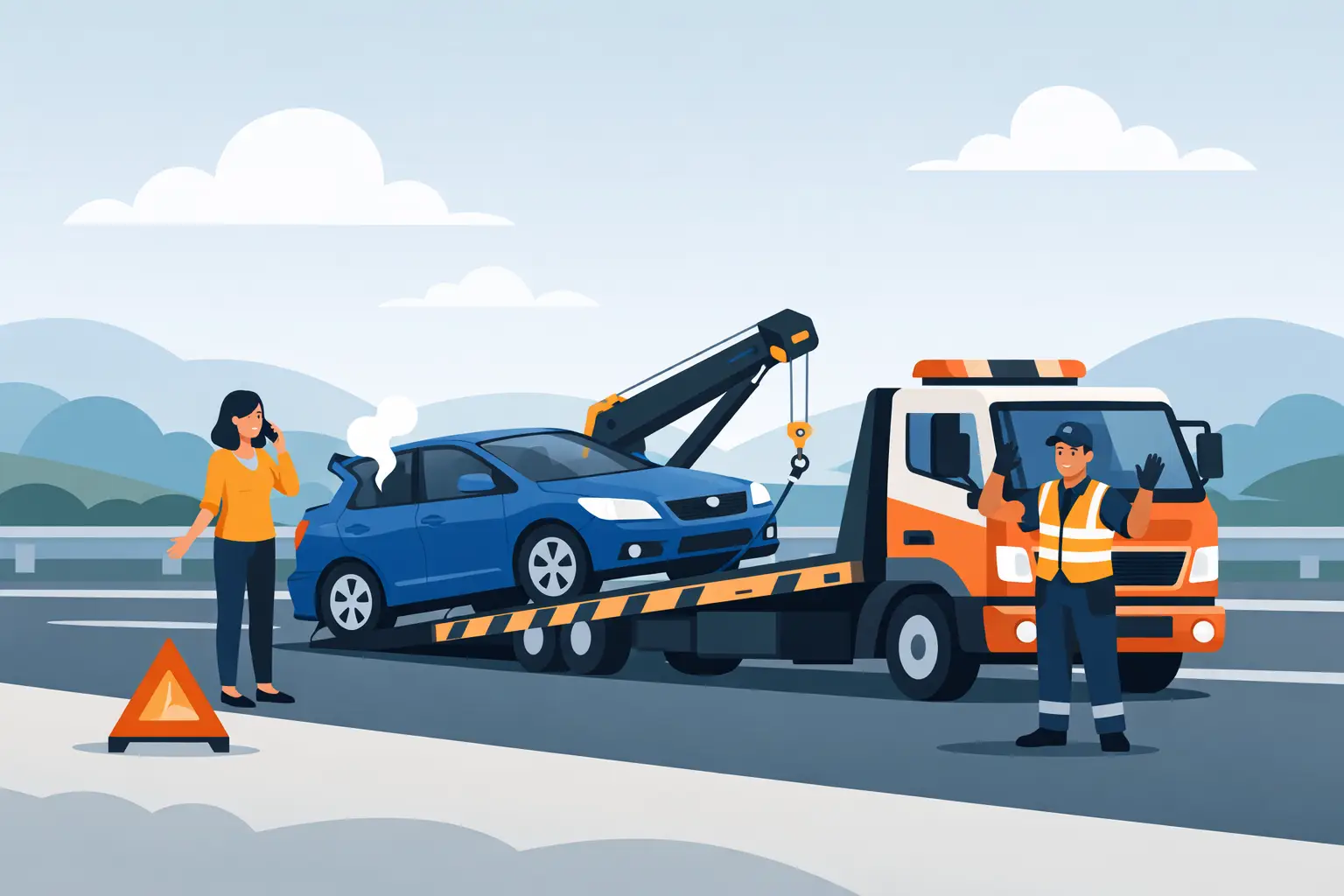
Flatbed towing is often the preferred choice for vehicles with all-wheel drive, significant damage, low ground clearance, or mechanical issues that make rolling unsafe. The vehicle is loaded onto the truck and secured for transport, keeping all four wheels off the road. It is also commonly used for motorcycles and specialty vehicles when the right restraints and equipment are available.
A wheel-lift may be suitable for certain standard towing situations, especially when space is limited or the vehicle can be moved with its non-driven wheels rolling safely. The proper method depends on the vehicle manufacturer’s towing guidance and the condition of the car. A good operator will not guess when drivetrain damage is a risk.
Once your vehicle is loaded, verify where it is going and make sure you have taken the items you need from inside. Bring your driver’s license, insurance information, registration if available, phone charger, medications, work materials, child seats if needed, and valuables. If the vehicle is being dropped after hours, ask where it will be left and how the keys will be handled.
A Guide to Breakdown Towing for Different Vehicles
Not every breakdown calls for the same response. A dead battery may be solved with a jump-start if the battery and electrical system are safe to service. An empty fuel tank may only require fuel delivery. A lockout might be handled without towing at all. When roadside service can get you moving safely, it is usually faster and less disruptive than a tow.
Towing becomes the right choice when the vehicle will not start, has a serious mechanical warning, overheats repeatedly, has unsafe tire or suspension damage, or cannot be driven after a collision. Continuing to drive with an overheating engine, oil-pressure warning, grinding wheel noise, or severe vibration can turn a repairable issue into a much larger repair.
All-wheel-drive and four-wheel-drive vehicles deserve special attention. Towing them incorrectly can damage the transmission, transfer case, or differential. The same care applies to electric and hybrid vehicles, which may have manufacturer-specific transport requirements and high-voltage components. Tell the towing provider what you drive before they arrive.
Motorcycles need secure, purpose-built handling rather than ordinary straps or improvised methods. Trailers and light trucks may require additional planning because of their length, weight, load, and hitch configuration. If cargo has shifted, a trailer wheel is damaged, or the unit is blocking a lane, tell the dispatcher immediately so the response can match the situation.
Protect Yourself From Avoidable Problems
During a stressful roadside emergency, it is easy to agree to the first option without asking questions. You should feel comfortable confirming the estimated arrival window, the tow destination, and the expected charges before service begins. Prices can vary based on distance, vehicle type, recovery difficulty, storage needs, after-hours service, and whether your vehicle is accessible.
Ask whether there are separate fees for loading, mileage, winching, dollies, storage, or special equipment. This is not about delaying help during an emergency. It is about knowing what to expect and avoiding surprises later. Keep the receipt and take a few photos of the vehicle’s condition if it is safe to do so, especially after an accident or when there is visible damage.
You can also contact your insurance company or roadside-assistance plan after arranging immediate help. Some plans require you to use a specific provider or submit a receipt for reimbursement. Do not let paperwork distract you from getting out of an unsafe roadside location. Safety and prompt transport come first.
Choosing Local Help When Time Matters
When your vehicle is disabled, a local towing company can make a real difference. A team familiar with Gresham and Troutdale roads, traffic patterns, repair shops, and common roadside trouble spots can respond with practical local knowledge. More importantly, you want a provider that communicates clearly, treats you with respect, and sends equipment suited to your vehicle.
Tow Guys LLC provides around-the-clock towing and roadside assistance for drivers who need prompt, professional help without the runaround. When you call, describe the situation honestly, ask the questions you need answered, and focus on getting yourself to a safe place while the vehicle is handled correctly.
A breakdown is frustrating, but you do not have to solve it alone on the shoulder of the road. Take a breath, protect the people with you, share your location clearly, and choose help that puts safety before speed alone.
Need a tow in Gresham or East County? Call Tow Guys 24/7 at (971) 222-7994.