
Guide to Accident Scene Towing
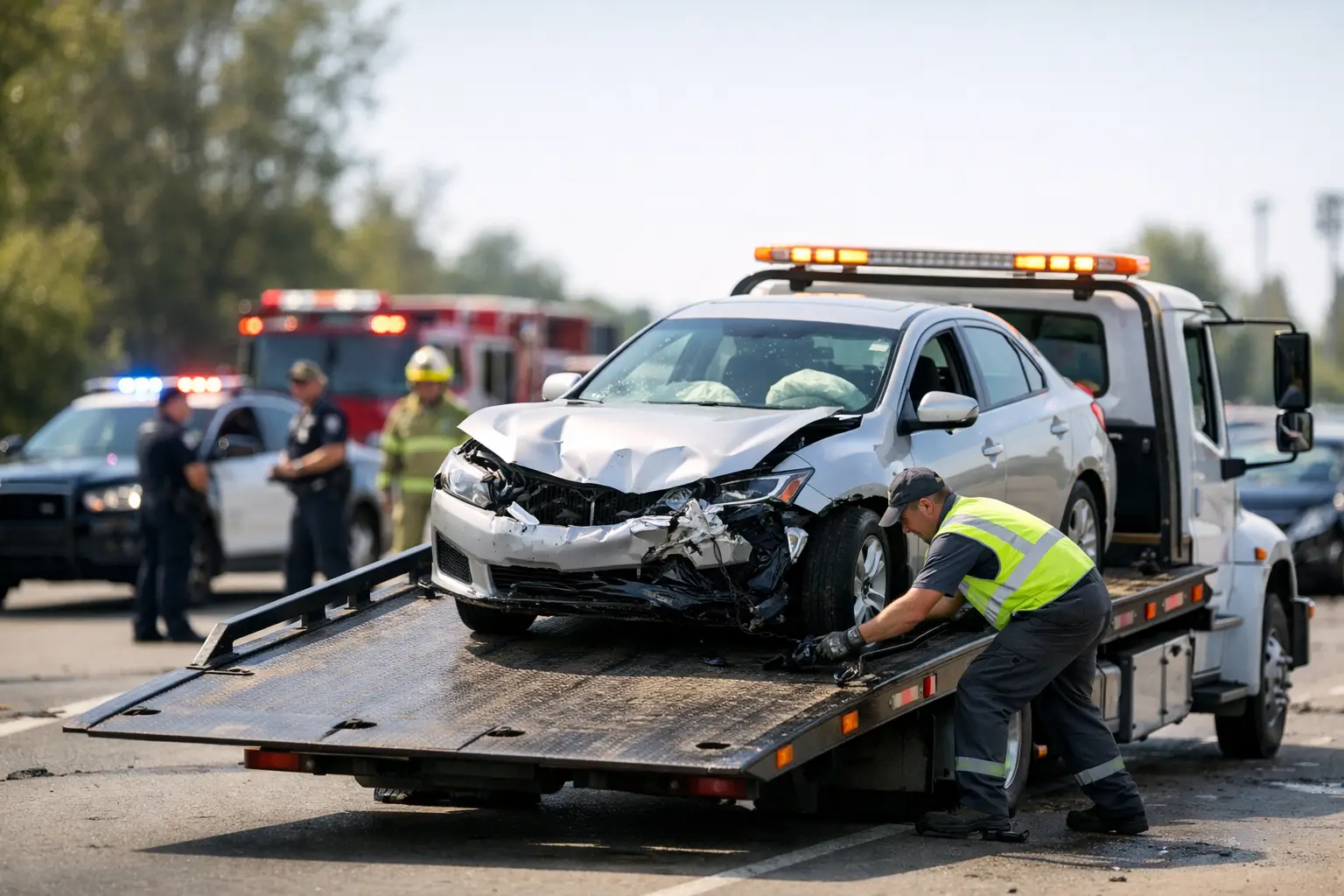
The hardest part of a crash is often the first few minutes after it happens. You are shaken up, traffic may still be moving around you, and decisions need to be made fast. A good guide to accident scene towing should make that moment simpler - not more confusing.
If your vehicle cannot be driven safely, towing is not just about moving a car from one place to another. It is about protecting you, keeping the roadway clear, preventing more damage, and making sure your vehicle is handled the right way from the start. When people are stressed, they do not need complicated explanations. They need calm, safe next steps.
What accident scene towing actually means
Accident scene towing is different from a routine tow after a breakdown. A disabled vehicle after a crash may have damage to the steering, suspension, wheels, frame, or fuel system. It may be blocking traffic, sitting at an awkward angle, or resting in a ditch, median, or shoulder. In some cases, debris and leaking fluids add another layer of risk.
That is why the towing process starts with scene safety, not with the hook-up. The first priority is making sure the area is safe for drivers, passengers, first responders, and the tow operator. After that, the focus turns to recovering the vehicle without causing avoidable damage.
First steps before the tow truck arrives
If you can move safely, get yourself and your passengers out of traffic and to a safer spot. If the vehicle is in a dangerous location and cannot be moved, turn on the hazard lights if they still work. Then call 911 if anyone is hurt, if the crash is blocking traffic, or if law enforcement needs to respond.
Once emergency needs are handled, call for a tow. Be ready to describe your location as clearly as possible. Road name, nearest intersection, direction of travel, and visible landmarks all help. If you are in an area like Gresham or Troutdale where roads can get busy fast, even a small location detail can save time.
It also helps to explain the condition of the vehicle. Tell the dispatcher whether the car is drivable, whether airbags deployed, whether a wheel is bent, whether the vehicle is off the road, and whether there are fluids leaking. A crash-damaged truck, SUV, motorcycle, or trailer may require different equipment than a standard roadside tow.
A guide to accident scene towing and safety
The safest tow is the one planned around the actual condition of the vehicle, not the fastest guess. That is why accurate information matters. If the front end is crushed, a simple wheel-lift approach may not be the right choice. If a vehicle has all-wheel drive, improper towing can create additional mechanical damage. If a motorcycle goes down, securing it takes a different kind of care than loading a sedan.
This is also where professional experience matters. An accident scene can be chaotic. A trained operator knows how to assess damage, protect the vehicle as much as possible, and work around traffic or uneven ground. There is a big difference between moving a broken-down car from a parking lot and recovering a damaged vehicle from an active roadside scene.
You should never try to force a damaged vehicle to move just to avoid a tow. If the steering feels off, a tire is folded under, fluids are pouring out, or the car is making grinding noises, driving it even a short distance can make things worse. In some cases, it can also create a second accident.
What happens when the tow operator gets there
When the tow truck arrives, the operator will usually begin with a quick assessment. They look at the vehicle position, visible damage, road conditions, and the safest loading method. Sometimes the vehicle can be winched onto a flatbed with minimal extra handling. Other times, recovery takes more time because the vehicle is stuck against a curb, in a ditch, or at an angle.
If law enforcement is on scene, the tow process may also need to follow their direction. That can affect when the vehicle is moved and where it goes. In some crashes, officers may need to finish documenting the scene before recovery begins.
Once the operator starts loading, they will secure the vehicle based on its condition. That may include stabilizing damaged wheels, using skates or dollies, or adjusting the pull angle to avoid additional strain. Good accident towing is careful work. Speed matters, but careless speed can create more problems than it solves.
Where your vehicle should be towed
This depends on the condition of the vehicle, your insurance situation, and whether law enforcement has specific instructions. If the vehicle is badly damaged, it may need to go to a collision repair facility, storage yard, or another approved location. If the damage is minor and you already know where you want it taken, you may be able to direct the tow there.
This is a good time to ask clear questions. Where is the vehicle going? Will it be stored there? What paperwork or release will you need later? If you need personal items from the vehicle, ask before it is transported, since access rules can vary once it reaches a yard or shop.
There is no single answer that fits every crash. A newer vehicle with moderate body damage may be headed to a repair center. An older vehicle with major structural damage may be headed somewhere else. The right destination depends on what happens next with the claim and the condition of the vehicle.
Common concerns drivers have after a crash
One of the biggest concerns is cost. That is understandable. Accident towing can involve more than a basic hookup and drop-off, especially if recovery work is needed. A vehicle that is hard to access, needs special equipment, or has to be carefully winched out of a difficult position may require more time and labor.
Another concern is damage during towing. That is why the right equipment matters. Flatbeds are often preferred for collision-damaged vehicles because they reduce the chance of further stress on damaged components. Still, it depends on the vehicle and the scene. The best method is the one that matches the situation, not a one-size-fits-all approach.
People also worry about what to do if the vehicle will not start after a minor crash. In some cases, that can be due to battery disruption, safety system shutoff, or hidden mechanical damage. Even if the body damage looks light, a non-starting vehicle after impact should be treated carefully until it is properly checked.
How to make the process easier on yourself
After a crash, it helps to stay focused on a few practical things. Take photos if you can do so safely. Keep your insurance information ready. Make note of the tow company name, the destination of the vehicle, and any paperwork you receive. Small details are easy to forget when adrenaline is high.
It also helps to remove essentials before the vehicle leaves, if you are allowed to and it is safe. That might include your wallet, phone charger, child car seat base, garage remote, medication, or work items. Do not climb into an unsafe vehicle to retrieve anything. If the car is unstable or badly damaged, ask for guidance first.
Most of all, choose a towing company that treats accident calls with urgency and care. This is not the moment for vague arrival windows or poor communication. You want a team that answers quickly, explains what is happening, and handles the vehicle with professionalism. That kind of response can lower stress right away.
Guide to accident scene towing for local drivers
For drivers in and around Gresham, accident scenes can develop quickly on busy roads, ramps, and intersections. Fast dispatch matters, but local knowledge matters too. A towing team that knows the area can often locate you faster, understand traffic patterns, and respond with the right equipment for the situation.
That is one reason many drivers prefer a local, family-owned company over a distant dispatch model. The service feels more personal because it is. When you are standing beside a damaged vehicle, you want someone who talks to you clearly, shows up prepared, and helps you through the next step without adding more frustration. That is the standard Tow Guys LLC aims to meet on every emergency call.
A crash can leave you feeling rattled long after the tow truck pulls away. The right help at the scene does more than remove a vehicle - it gives you one less thing to worry about when the day has already gone sideways.
Need a tow in Gresham or East County? Call Tow Guys 24/7 at (971) 222-7994.