Car Broke Down in Gresham? What to Do Next
A stalled car changes the whole day in a few seconds. One moment you are headed to work, picking up a child, or driving home from Troutdale. The next, you are watching warning lights come on or hearing an engine that will not start. If your car broke down in Gresham, the first job is not figuring out the mechanical problem. It is getting yourself, your passengers, and your vehicle to a safer position.
A breakdown is stressful because it creates decisions you did not plan for. Do you try to restart the vehicle? Is it safe to wait where you are? Do you need fuel, a jump-start, a tire change, or a tow? A calm, practical approach can keep a frustrating situation from becoming a dangerous one.
Get Out of Traffic if You Can
If the vehicle is still moving, use your signal and carefully guide it to the nearest safe place. A parking lot, wide shoulder, side street, or other area away from moving traffic is better than stopping in an active lane. Turn on your hazard lights as soon as you know there is a problem.
If the engine has died in a travel lane and you cannot safely move the vehicle, stay focused on visibility. Keep your hazards on, remain buckled if traffic is close, and call for help. Do not stand outside near passing vehicles unless you can reach a safe location well away from traffic.
Where you break down matters. A vehicle parked safely at a grocery store may leave room for a quick assessment. A vehicle stopped along a busy road, at night, in heavy rain, or near a blind curve often needs professional help right away. There is no benefit in taking risks just to save a short wait.
Take a Minute to Read the Warning Signs
You do not need to diagnose your car on the roadside. Still, noticing a few details helps determine the right kind of assistance. Look for warning lights, smoke, steam, an unusual smell, a flat tire, or fluid leaking beneath the vehicle.
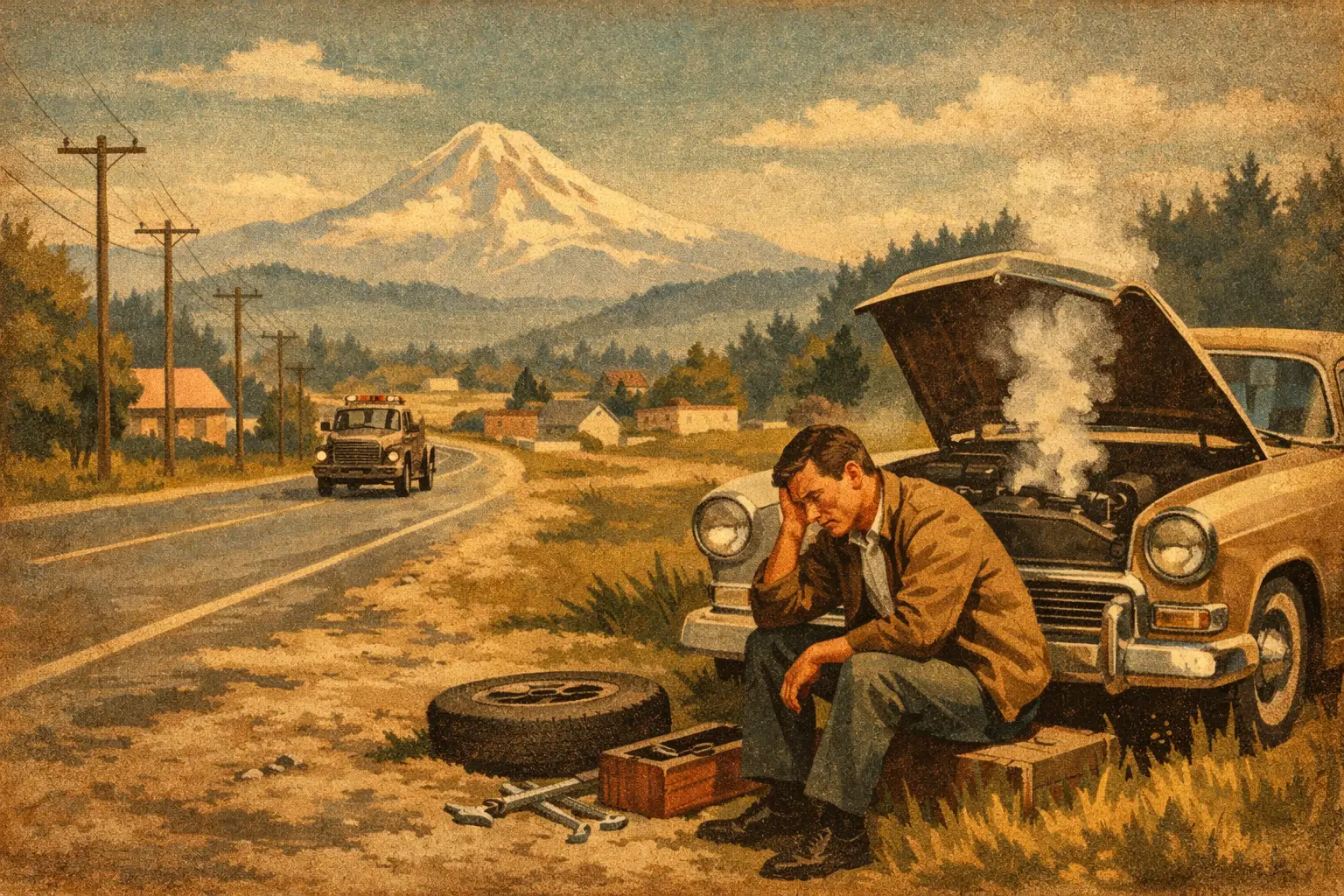
If you see steam from under the hood, smell something burning, or notice smoke, turn the vehicle off if it is safe to do so. Do not open a hot radiator cap. An overheating engine needs time to cool, and adding coolant too soon can cause serious injury. In this situation, a tow is usually the safer choice than attempting to continue driving.
A flashing check-engine light, hard shifting, loud knocking, loss of steering response, brake trouble, or a vehicle that will not stay running are also signs to stop driving. Getting the car a few more miles down the road can turn a repairable issue into a larger repair, or put you in a more hazardous position.
When Roadside Help May Be Enough
Not every breakdown requires a tow. Sometimes the problem is simple and can be handled where you are parked or stopped safely. A professional roadside technician may be able to help with a dead battery, an empty fuel tank, a flat tire, or a lockout.
A jump-start can be useful when you left a light on, the battery is weak, or cold weather has reduced battery power. But a vehicle that starts after a jump may still have an underlying battery, alternator, or electrical problem. If it dies again quickly or the battery light remains on, do not assume the issue is solved.
Fuel delivery can get you moving after an empty tank, provided the vehicle is otherwise operating normally. A tire change can also be a practical roadside fix when you have a usable spare and the vehicle is in a safe place to work. If your spare is damaged, missing, or unsafe for the distance you need to travel, towing may make more sense.
The right decision depends on the symptom and your location. Roadside service is helpful for a straightforward issue. Towing is the better call when the vehicle has a mechanical failure, collision damage, unsafe handling, or no dependable way to get back on the road.
When Your Car Broke Down in Gresham and Needs a Tow
A tow is not an overreaction when your vehicle cannot be driven safely. It is a way to protect the car, avoid further damage, and get it to a repair shop, home, or another appropriate destination without adding more stress to the situation.
Call for towing when the engine will not start after basic roadside assistance, the transmission is slipping or stuck, a wheel is damaged, the vehicle overheats, or you have been in an accident. Towing is also a smart choice if you are stranded after dark, are transporting children, or simply do not feel safe waiting alone.
Be ready to describe the vehicle and situation clearly. The make, model, color, approximate location, direction of travel, and a nearby landmark can help speed up dispatch. Let the operator know whether the car is in a garage, parking lot, ditch, active lane, or difficult-to-reach spot. Mention special circumstances too, such as a locked steering wheel, low clearance, trailer attachment, or collision damage.
Tow Guys LLC provides local towing and roadside assistance for drivers who need prompt, respectful help during these moments. Whether the job involves a passenger car, motorcycle, light truck, or trailer, clear communication makes it easier to send the right equipment and provide the right support.
Protect Yourself While You Wait
Once help is on the way, avoid creating new problems. Keep your phone charged if possible, and share your location with a trusted family member or friend when you are waiting in an unfamiliar place. If you are in a safe parking area, lock the doors and keep valuables out of sight.
Do not accept help from someone who makes you uncomfortable or pressures you to make a quick decision. Kind strangers may have good intentions, but you are allowed to wait for the professional service you contacted. If someone says they are there to tow your vehicle, confirm the company and details before handing over keys or approving service.
If you must exit the vehicle, move away from traffic and stay aware of your surroundings. Keep children and pets close. On a narrow shoulder or busy roadway, remaining in the vehicle with seat belts fastened can be safer than standing near moving traffic, unless the vehicle itself is in immediate danger.
What to Remove Before the Vehicle Is Towed
Before a tow, take a quick look through the car for essentials you may need. Bring your phone, wallet, medications, house keys, work items, and anything you cannot afford to leave behind. If the vehicle is being taken to a repair shop after hours, you may not have access to it again until the next business day.
Tell the driver where you want the vehicle taken and confirm the destination before loading begins. If it is going to a repair facility, make sure the shop can accept it or has instructions for after-hours drop-off. If the vehicle will be parked at your home, choose a location that does not block access or create a problem for neighbors.
You can also ask what to expect during the tow. A professional operator should explain the plan in plain language and handle your vehicle carefully. That matters especially for lowered vehicles, all-wheel-drive cars, motorcycles, trucks, and trailers that may require specific equipment or loading methods.
A Small Preparation Step for the Next Breakdown
Nobody plans to break down, but a few items in the car can make the wait easier. Keep a charged phone cable, basic first-aid supplies, drinking water, a flashlight, and warm layers during colder months. Your owner’s manual, insurance information, and roadside contact details are worth keeping accessible too.
Routine maintenance also reduces surprises, though it cannot prevent every failure. Pay attention to slow cranking, recurring warning lights, tire wear, overheating, and changes in braking or steering. Addressing those signs early is usually easier than dealing with them from the side of the road.
If your vehicle stops running, trust your instincts about safety. Getting help quickly is not just about moving the car. It gives you a clear next step when the road has interrupted everything else.
Need a tow in Gresham or East County? Call Tow Guys 24/7 at (971) 222-7994.