
Your Breakdown Towing Checklist for Safer Stops
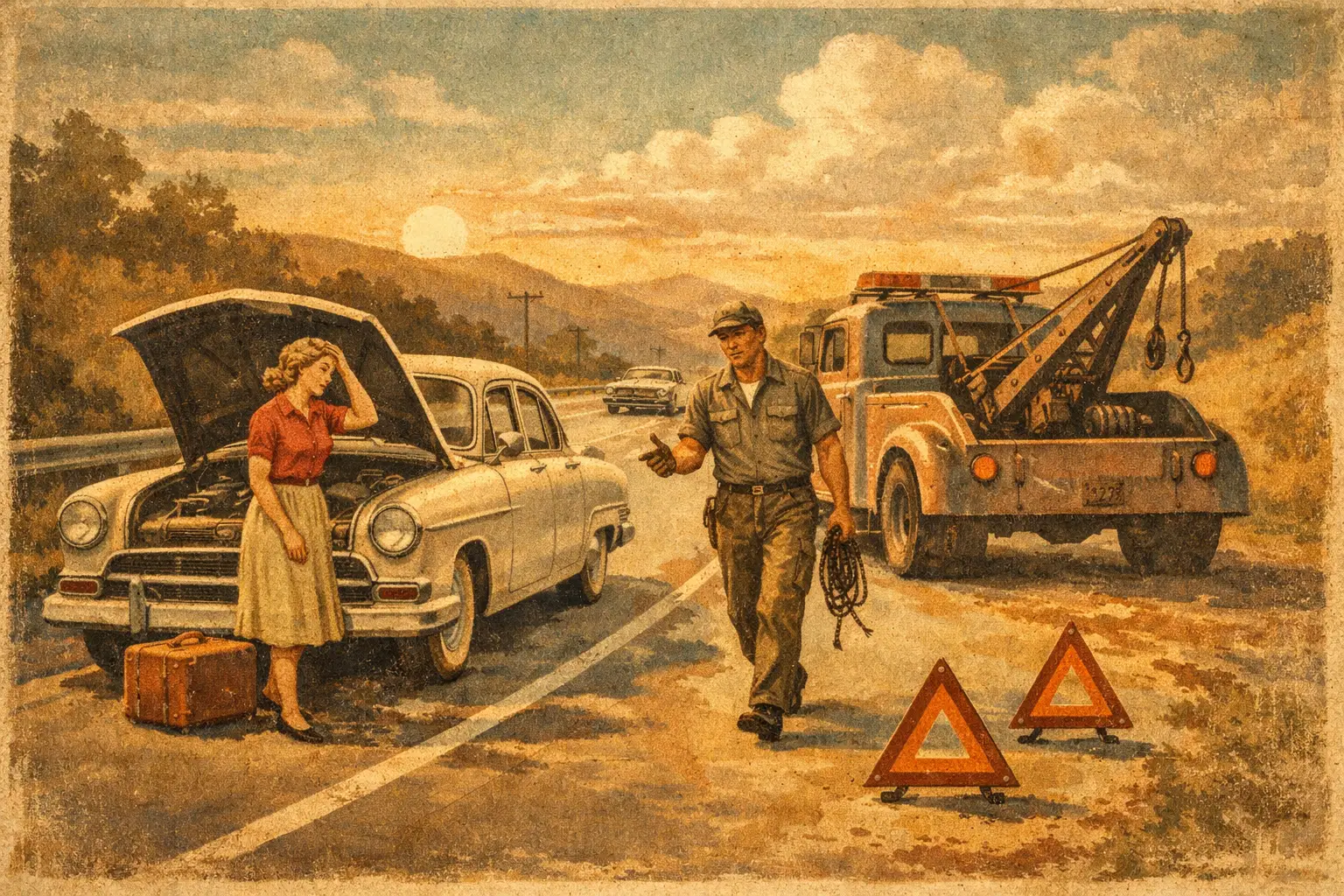
A breakdown towing checklist gives you something steady to follow when your car quits, a tire fails, or an accident leaves your vehicle unsafe to drive. The first few minutes matter most. Your goal is not to diagnose every problem at the roadside. It is to protect yourself, your passengers, and other drivers while getting the right help on the way.
1. Get Out of Moving Traffic if You Can
If the vehicle still moves safely, guide it to the shoulder, a parking lot, a side street, or another location away from active traffic. Avoid stopping just beyond a curve, on a narrow bridge, or where approaching drivers have little time to see you. If you are on a busy road, getting a few more feet to a safer area can make a real difference.
Do not force a vehicle to move if you smell fuel, see smoke, have a flat tire that is shredding, or suspect serious damage after a collision. Turn on your hazard lights right away. At night, in rain, or during fog, leave them on until help arrives.
If you are stuck in a travel lane and cannot move the vehicle, call 911 first. Tell the dispatcher that your vehicle is blocking traffic and share the nearest cross street, landmark, or direction of travel. A tow can be arranged after emergency responders know about the immediate hazard.
2. Decide Whether to Stay in the Vehicle
There is no single rule that fits every breakdown. On a wide shoulder with traffic moving quickly, staying inside with your seat belt fastened is often safer than standing outside near passing vehicles. Keep the doors locked and call for assistance.
If your vehicle is smoking, on fire, leaking fuel, or positioned where it could be struck, move away from it as soon as you can do so safely. Bring everyone with you and stand well away from traffic. Never stand directly in front of or behind a disabled vehicle, especially on a hill.
For families, make a quick passenger check. Children, older adults, and pets may need extra attention in hot, cold, or stressful conditions. If you must wait outside, choose a protected spot well off the roadway and stay together.
3. Make the Vehicle Easy to See
Hazard lights are your first line of visibility. If it is safe to exit the vehicle, use reflective triangles, road flares, or a reflective vest from your emergency kit. Place warning devices only when you can do it without walking into traffic.
At night, your phone flashlight can help you see, but do not rely on it as a warning signal for approaching drivers. Preserve your phone battery for calls, location sharing, and updates from your towing provider. If the vehicle has power, keep interior lights off unless needed so you do not drain the battery further.
4. Call for the Right Kind of Help
Before requesting a tow, consider whether roadside service may solve the problem. A dead battery, empty fuel tank, lockout, or minor tire issue may not require transporting the vehicle. On the other hand, overheating, steering trouble, transmission problems, collision damage, or an engine that will not start may make towing the safer choice.
When you call, be clear about what happened and what you need. A good dispatch conversation helps send the proper truck, equipment, and technician the first time. This is especially useful for motorcycles, trailers, light trucks, all-wheel-drive vehicles, and cars with low ground clearance.
Have these details ready:
- Your exact location, including nearby cross streets, mile markers, business names, or a safe landmark.
- The vehicle year, make, model, color, and license plate number.
- The problem you noticed, such as a no-start, flat tire, accident damage, overheating, or fuel issue.
- Whether the vehicle is in a driveway, parking garage, ditch, travel lane, or other difficult position.
- Your destination, if you already know where the vehicle needs to go.
Be honest about the vehicle's condition. A car with a locked wheel, missing wheel, damaged suspension, or severe front-end damage may need specialized handling. Giving complete information protects your vehicle and helps avoid delays at the scene.
5. Do Not Attempt a Risky Roadside Repair
A simple check can be reasonable when you are in a safe place. You might confirm that the car is in park, look for an obvious loose battery connection, or check whether you simply ran out of fuel. But a busy roadside is not the place to crawl under a vehicle, open a hot radiator cap, or attempt a repair that puts you close to traffic.
Changing a tire is another situation where conditions matter. On level ground in a quiet, well-lit area, it may be practical if you have the tools and know how to use them. Along a freeway, in poor weather, or beside fast-moving traffic, roadside assistance is usually the better call. Saving a little time is not worth taking a serious risk.
6. Protect Your Belongings and Your Vehicle
Before the tow truck arrives, gather your wallet, keys, phone, medications, work materials, and other essentials. Remove valuables that are easy to carry, but do not spend extra time sorting through the vehicle if the location is unsafe. If you are leaving the vehicle for transport, take photos of its overall condition and any damage related to the breakdown or accident.
Ask the technician where you can ride or whether you need another way to reach your destination. Towing rules and available seating can vary by truck type, passenger count, and the nature of the call. If your vehicle is going to a repair shop after hours, confirm the shop name, address, and any key-drop instructions before the tow begins.
For accident-related towing, contact your insurance company when you are safe and keep any paperwork provided at the scene. If law enforcement has directed the tow, ask where the vehicle is being taken and how you can retrieve personal property later.
7. Avoid Common Towing Mistakes
Never accept a tow from an unsolicited operator who appears before you have called for help, unless police or emergency personnel have directed them. Confirm the company name, truck identification, and destination before your vehicle is loaded. A legitimate provider should be willing to answer straightforward questions about the plan.
Do not let someone tow your car with a rope, chain, or another personal vehicle unless it is a true emergency and the situation is legal and safe. Improper towing can damage bumpers, transmissions, all-wheel-drive systems, or steering components. It can also create a much larger road hazard.
If you drive an electric or hybrid vehicle, tell the dispatcher. Some vehicles require a flatbed or specific towing procedure to prevent damage. The same goes for motorcycles, trailers, and vehicles carrying heavy loads.
Keep a Small Emergency Kit Ready
A basic kit makes this checklist easier to follow when stress is high. Keep a charged phone cable, flashlight, reflective gear, water, a blanket, basic first-aid supplies, and your insurance information in the vehicle. A portable battery pack is especially helpful when a dead battery or long wait threatens your phone charge.
It also helps to save a trusted local towing number before you need it. For drivers in Gresham and Troutdale, Tow Guys LLC provides prompt towing and roadside assistance when a breakdown cannot wait. Knowing who to call lets you focus on safety instead of searching for help from the roadside.
A breakdown can interrupt your day without taking control of it. Get to a safer position, make yourself visible, share clear information, and let trained help handle the recovery. Those few calm decisions can turn a stressful stop into a safer, faster path forward.
Need a tow in Gresham or East County? Call Tow Guys 24/7 at (971) 222-7994.