
12 Best Items for Car Breakdowns to Keep Handy
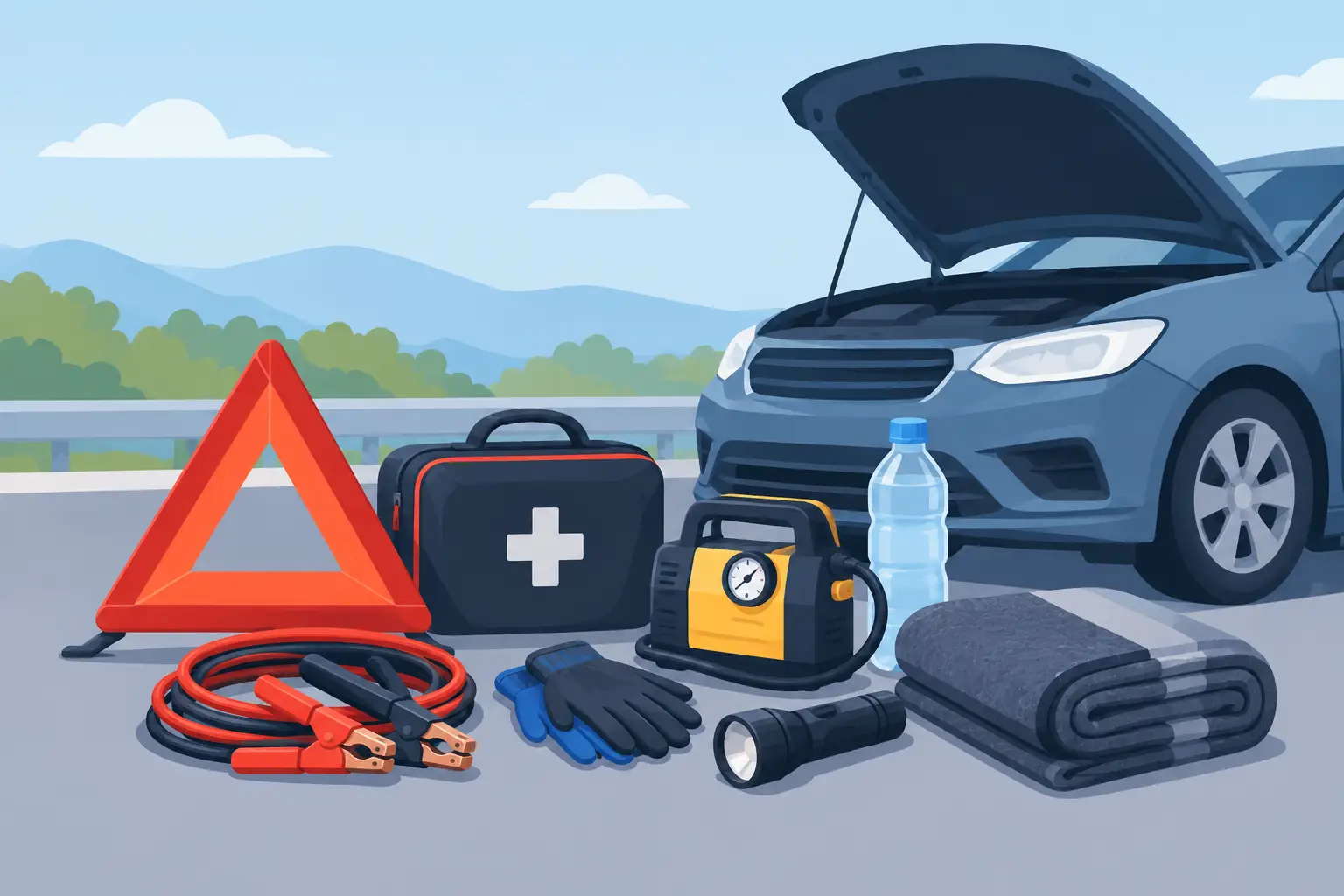
A dead battery in a dark parking lot, a flat tire on a rainy commute, or an unexpected warning light outside town can turn an ordinary drive stressful fast. The best items for car breakdowns will not fix every problem, but they can help you stay visible, safe, warm, and prepared while help is on the way.
For drivers around Gresham and Troutdale, a roadside kit should account for wet weather, cold evenings, busy roads, and trips through less-populated areas. Keep the essentials together in a sturdy tote or bag in the trunk, and check the kit twice a year. A kit is only useful if the batteries work, the supplies are dry, and you know where it is.
Best Items for Car Breakdowns: Start With Safety
Your first job during a breakdown is not diagnosing the vehicle. It is getting yourself and your passengers out of immediate danger. If your vehicle can move, pull as far from traffic as possible, turn on the hazard lights, and avoid standing near moving vehicles. If you are stuck in an unsafe location, such as a travel lane or a narrow shoulder, call for emergency or roadside help rather than trying to repair the problem yourself.
The following items cover the situations local drivers face most often. You do not need the most expensive version of everything. You need reliable gear that is easy to use under pressure.
1. Reflective warning triangles or road flares
Reflective triangles make a stopped vehicle easier for other drivers to see, especially at night, in rain, or around a bend. Choose triangles with a stable base and reflective surfaces that are visible from a distance. Traditional flares can also work, but battery-powered LED flares are generally safer to store and use near fuel, dry grass, or a damaged vehicle.
Place warning devices only when it is safe to walk outside the vehicle. Visibility matters, but it never outweighs personal safety on a busy road.
2. A bright flashlight and spare batteries
A phone flashlight is helpful, but it drains the battery you may need to call for assistance. Keep a durable LED flashlight in the kit, along with spare batteries stored in a sealed bag. A headlamp is even better for a flat tire or engine check because it leaves both hands free.
Check the flashlight regularly. A forgotten flashlight with corroded batteries is one of the most common weak points in a roadside kit.
3. Portable jump starter
A compact jump starter can get you moving after a weak or dead battery without needing another car nearby. Look for one rated for your vehicle type, since light trucks and larger engines may need more power than a compact sedan. Many models also include USB charging ports and a built-in light.
Read the instructions before you need it. Connecting jumper cables or a jump pack incorrectly can damage electronics or create sparks. If the vehicle will not start after a proper jump, do not keep trying indefinitely. The issue may be more than the battery, and professional roadside assistance is the safer next step.
4. Jumper cables
Jumper cables remain a practical backup, particularly if you travel with family members or coworkers who can help. Choose heavy-gauge cables with well-insulated clamps. Thin, bargain cables may struggle to transfer enough power, especially in cold weather.
Remember the trade-off: cables require a second vehicle and a safe place to position both cars. They are not a good option on a narrow shoulder, in heavy traffic, or when you are unsure about the condition of either battery.
5. Tire pressure gauge and portable inflator
A low tire can become a dangerous flat if it is ignored long enough. A simple pressure gauge helps you identify a slow leak, while a portable 12-volt or rechargeable inflator may add enough air to reach a nearby repair shop. Keep your vehicle's recommended tire pressure in mind - it is usually listed on the driver-side door jamb.
An inflator is useful for a small leak or seasonal pressure drop. It cannot safely repair a shredded tire, sidewall damage, or a tire that will not hold air. In those cases, stop driving and arrange for a tow.
6. A usable spare tire, jack, and lug wrench
Many drivers assume these came with the car and are ready to go. That assumption can leave you stranded. Check that your spare is properly inflated, your jack is present, and the lug wrench fits your wheels. If your vehicle has locking lug nuts, make sure the key is in the kit too.
Not every roadside location is safe for a tire change. Soft ground, steep slopes, poor visibility, or fast traffic can make the task too risky. A temporary spare also has speed and distance limits, so treat it as a short-term solution, not a replacement tire.
7. Work gloves and a basic tool kit
A pair of sturdy work gloves protects your hands from sharp metal, hot surfaces, wet wheel components, and dirt. Add a compact tool kit with pliers, screwdrivers, an adjustable wrench, and a small roll of duct tape. These tools are useful for minor issues such as a loose battery connection or a hanging plastic shield.
Keep expectations realistic. Modern vehicles have complex electrical systems, sensors, and safety components. Avoid taking apart anything you do not understand on the roadside. A small tool kit is for simple, safe tasks, not major repairs.
8. First-aid kit
A first-aid kit belongs in every vehicle, not just a family car. Include bandages, gauze, antiseptic wipes, medical tape, gloves, a cold pack, and any personal medications you may need. Add a printed card with emergency contacts if you regularly drive with children, older relatives, or someone who may have trouble using a phone under stress.
For injuries from a collision or a serious roadside incident, call emergency services. A first-aid kit supports immediate care while help is coming; it is not a substitute for medical attention.
9. Warm blanket, rain poncho, and hand warmers
Oregon weather can change quickly. A vehicle that will not start can become a cold, uncomfortable situation, especially at night. Keep a warm blanket or emergency bivy, a compact rain poncho, and a few hand warmers in the trunk. These items take little space and can make a long wait far more manageable.
If you are safely off the road and the vehicle is operable enough to provide shelter, staying inside is often better than walking for help. Do not run the engine in an enclosed space or where snow, debris, or a blocked exhaust could allow carbon monoxide to build up.
10. Drinking water and shelf-stable snacks
Store sealed water bottles and a few nonperishable snacks such as protein bars, crackers, or trail mix. They are especially useful during extended waits, when traveling with children, or when a breakdown happens away from stores and services.
Rotate food and water a few times each year. Extreme heat and freezing temperatures can affect both, so replace anything damaged, expired, or questionable.
11. Phone charger and power bank
Your phone is your connection to roadside help, family, navigation, and weather updates. Keep a charging cable that fits your phone, plus a charged power bank. A 12-volt vehicle charger is useful when the car still has power, while a power bank matters when the battery is dead.
Before a trip, make sure your phone is charged and location services are available. When calling for help, share your location, vehicle description, and the problem you are seeing. Clear details help a service provider send the right equipment.
12. Paper information and a roadside contact plan
Keep copies of your insurance information, vehicle registration, and warranty or roadside coverage details in a waterproof pouch. Add a pen and paper, since a dead phone or poor signal can make digital information difficult to access. It also helps to have the contact information for a trusted local towing company saved in your phone before an emergency happens.
If your vehicle cannot be safely driven, needs accident recovery, or has a problem beyond a simple jump or tire change, do not take chances. Tow Guys LLC provides around-the-clock roadside assistance and towing for drivers who need prompt, professional help in the Gresham area.
Pack the Kit for Your Vehicle and Your Trips
The best roadside kit is not identical for every driver. A commuter may prioritize a jump starter, charger, and rain gear. Families may need extra water, blankets, and medications. Motorcycle riders should focus on compact, weatherproof supplies, while truck and trailer owners should carry gear sized for their equipment and know when a professional tow is required.
Store heavier items low and secure so they do not become hazards in a sudden stop. Put the flashlight, warning lights, charger, and first-aid kit where you can reach them without unpacking the entire trunk. Then take five minutes at home to learn how your spare tire, jack, and jump starter work. That small bit of preparation can make a hard roadside moment feel much more manageable.
A breakdown is never convenient, but you do not have to face one unprepared. Keep your kit current, put safety ahead of speed, and call for help whenever the road, weather, or vehicle problem makes a DIY fix too risky.
Need a tow in Gresham or East County? Call Tow Guys 24/7 at (971) 222-7994.